
- Accueil

- Impression sur toile
- Adriaen Brouwer
- Brawling Peasants

 Preview
 Commander la reproduction Acheter l'image haute résolution
 Partager
 Partager
 Détails de l'œuvre
 Ajouter aux favoris

 Télécharger
 Articles similaires
 Radiographie
 Diaporama
Brawling Peasants
 Oil On Canvas
- WallArt
- Romanticism
 26.0 x 34.0 cm
 Gemäldegalerie Alte Meister
 Afficher la suite
Giclée / Impression d'art
Impression giclée ou sur toile de qualité musée, avec une production rapide et des finitions au choix.




P118B $10

P118H $10

P118W $10

P438Z $10

P508JH $12

P508YH $12

P805H $10

P805Z $10

P919BZ $10

P919G $10

P919XJ $10

P959ZH $10

P968JZ $12

W106C $8

W218G $10

W218JH $8

W218Y $10

W307PJ $10

W316G $10

W316PJ $8

W316Y $10

W398PJ $8

W4111J $10

W500HY $15

W500JH $15

W692G $12

W849H $8

W940BG $15

W953PJ $8




Choisissez parmi nos formats prédéfinis qui respectent les proportions originales de l’œuvre.

Vous pouvez saisir vos propres dimensions pour vous adapter à un cadre ou à un espace spécifique. Si la taille sélectionnée ne correspond pas aux proportions de l'image originale, nous recadrerons l'œuvre ou étendrons l'image avec une bordure en miroir ou une couleur unie. Une maquette numérique vous sera envoyée pour approbation avant le début de la production.
Veuillez noter que l'aperçu à l'écran ne reflète pas le recadrage ou l'extension réelle. Seule la maquette montrera avec précision la composition finale.
Bien que des tailles personnalisées soient disponibles, nous vous recommandons de choisir une dimension dans la liste prédéfinie afin de préserver les proportions originales.
Livraison dans le monde entier () en 2 semaines au lieu des 4/5 semaines habituelles. (26 juillet)

Livraison express gratuite dans le monde entier

Toile de lin de haute qualité

Assurance transport complète

Garantie de remboursement des frais de douane

Garantie de fidélité des couleurs

Politique de retour de 60 jours (uniquement en cas de défaut)

Garantie de remboursement à 100%

Réduction sur les achats groupés
 L'option verre n'est disponible que pour les dimensions inférieures à 110 cm.

Brawling Peasants
Giclée / Impression d'art
Format de reproduction
-


Prix total final
-
Description de l'œuvre
A Chaotic Tableau of Human Nature: Adriaen Brouwer’s “Brawling Peasants”
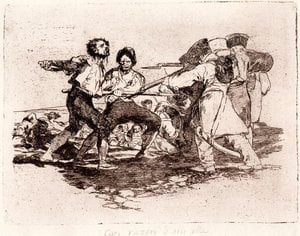
Adriaen Brouwer's "Brawling Peasants" isn’t merely a depiction of a brawl; it’s a visceral snapshot of 17th-century life, a raw and unflinching portrayal of the everyday struggles and simmering tensions that underpinned rural existence. Painted around 1630 – a period marked by social unrest and economic hardship in the Netherlands – this work transcends simple violence to offer a profound commentary on human nature itself. Brouwer, a master of genre painting, eschews idealized representations, instead presenting a scene of brutal honesty, capturing the messy reality of peasant life with remarkable immediacy. The composition is deliberately crowded, almost claustrophobic, drawing the viewer into the heart of the conflict and forcing them to confront the physicality of the struggle.
The scene unfolds within what appears to be a dimly lit workshop or storage area – a space that immediately suggests confinement and perhaps even a degree of desperation. A single man lies prone on the floor, subjected to a vicious beating with a club; his face contorted in agony, his body a testament to the violence inflicted upon him. Around him, other men engage in a chaotic dance of aggression, their movements frenzied and uncontrolled. The figures are rendered with a remarkable lack of sentimentality – no heroic gestures, no noble motivations, simply the brutal act of physical confrontation. Brouwer’s skill lies not in glorifying conflict but in exposing its ugly core.
A Masterclass in Technique: Impasto and Gesture
Brouwer's technique is a crucial element in conveying the painting’s emotional intensity. He employs a thick, impastoed application of oil paint, building up layers of color to create a remarkably tactile surface. This heavy use of paint isn’t merely decorative; it adds weight and physicality to the scene, mirroring the violence depicted within. The brushstrokes are loose and gestural, capturing the energy and movement of the figures with remarkable dynamism. Lines are rough and expressive, conveying a sense of urgency and unrestrained emotion – a deliberate departure from the smoother, more polished styles prevalent at the time.
Notice particularly the rendering of skin and clothing. The impasto technique creates a shimmering effect, highlighting the textures of fabric and flesh with remarkable realism. Shadows are deep and dramatic, contributing to the painting’s overall sense of darkness and foreboding. The uneven lighting further emphasizes the chaos of the scene, drawing attention to key moments of action while obscuring details and creating an atmosphere of suspense.
Historical Context: Peasant Life and Social Unrest
To fully appreciate “Brawling Peasants,” it’s essential to understand the historical context in which it was created. The 17th century was a period of significant social upheaval in the Netherlands, marked by economic hardship, religious tensions, and widespread poverty among the peasantry. Brouwer's paintings often depicted scenes from this marginalized segment of society – their drinking habits, their disputes, their struggles for survival. The painting reflects a broader trend within Dutch art to move away from idealized depictions of aristocratic life and towards a more realistic portrayal of everyday people.
Brouwer’s work aligns with the burgeoning genre of “tronies” – small, intimate portraits that focused on capturing fleeting expressions of emotion. “Brawling Peasants,” however, transcends the conventions of the tronie by presenting a full-scale drama, exploring themes of violence, power, and social inequality. The painting serves as a powerful reminder of the precariousness of life for those living on the margins of society.
Symbolism and Emotional Resonance
Beyond its immediate depiction of violence, “Brawling Peasants” is rich in symbolic meaning. The prone figure represents vulnerability and helplessness, while the aggressors embody the forces of power and control. The chaotic scene can be interpreted as a metaphor for the broader social unrest that plagued the Netherlands during Brouwer’s time – a reflection of simmering tensions beneath the surface of everyday life. The painting's raw emotional intensity continues to resonate with viewers today, prompting questions about human nature, social justice, and the enduring cycle of violence.
Reproductions of this powerful work offer an opportunity to experience Brouwer’s masterful technique and insightful commentary on the human condition. Its dramatic composition and visceral depiction of conflict make it a compelling addition to any collection, while its historical context provides valuable insight into the social and economic realities of 17th-century Europe.
Œuvres apparentées




Biographie de l'artiste
Première Vie et Contexte Familial
- Né: Oudenarde, Belgique (1605/1635)
- Décédé: 1638
- Son père était concepteur de tapisseries.
- Adriaen Brouwer a connu des difficultés dès son plus jeune âge ; la mort de son père à l'âge de 15 ans l'a forcé à quitter sa maison.
Développement Artistique et Peinture d’Genre
- Brouwer est devenu célèbre pour ses représentations vives de la vie quotidienne, en particulier des scènes mettant en scène des paysans, des soldats et le peuple commun.
- Il était un innovateur clé dans la peinture d'genre – l'art qui dépeint des scènes de la vie ordinaire.
- Ses peintures représentaient souvent des scènes de boisson, de tabagisme, de jeu de cartes et autres activités des classes populaires.
- Œuvres notables : "Pauvres gens buvant dans une taverne", "Petits propriétaires jouant aux cartes", "Le Fumeur", "La Schlachtfest", "La Bagarre", "Paysage éclairé par la lune", "Paysan ivre dans une taverne", "Paysans jouant aux cartes dans une taverne" et "Buveurs dans la cour".
Influences et Style Artistique
- Primitifs Flamands : Le travail de Brouwer a été influencé par le réalisme détaillé des peintres primitifs flamands.
- Art Baroque : Ses peintures incorporaient souvent un éclairage dramatique et des émotions intenses, caractéristiques de l'art baroque.
- Son style mêlait réalisme à un sens de l’humour et d’une observation animée.
Héritage et Influence
- Le travail de Brouwer a considérablement influencé les générations suivantes de peintres flamands et néerlandais.
- Il a contribué à établir la peinture d'genre comme une force majeure dans l'art du XVIIe siècle.
- David Teniers le Jeune était parmi les artistes qui se sont inspirés de l’approche innovante de Brouwer pour dépeindre la vie quotidienne.
Signification Historique
- Les peintures de Brouwer offrent des aperçus précieux des coutumes sociales et des routines quotidiennes de la Flandre et de la République néerlandaise au XVIIe siècle.
- Son accent sur les gens ordinaires a élevé la peinture d'genre, contribuant à sa popularité croissante et à son importance dans le monde de l’art.
- Ses œuvres sont conservées dans des musées tels que le Koninklijk Museum voor Schone Kunsten à Anvers, en Belgique.

Adriaen Brouwer
1635 - 1638 , Belgique
En bref
- Artistes Influencés: ['David Teniers le Jeune']
- Artistes Influents: ['Primitifs flamands']
- Date De Décès: 1638
- Date De Naissance: 1605 (approximative)
- Lieu De Naissance: Oudenarde, Belgique
- Mouvement Artistique: Baroque, Genre
- Nationalité: Flamand(e)
- Nom Complet: Adriaen Brouwer
- Oeuvres Notables:
- Taverne populaire
- Petits paysans jouant aux cartes
- Le fumeur
- La Schlachtfest
- La bagarre
- Paysage nocturne
- Paysan ivre à la taverne
- Paysans jouant aux cartes
- Buveurs dans la cour
Articles connexes

Les 25 Chefs-d'œuvre du Metropolitan Museum of Art : Voyage Artistique et Décor d'Exception
Plongez au cœur du Metropolitan Museum of Art avec notre sélection des 25 œuvres les plus emblématiques. Découvrez l'histoire de Van Gogh, Monet et d'autres maîtres, et trouvez l'inspiration pour une décoration intérieure raffinée. Reproductions de qualité muséale sur ArtsDot.com.

Adriaen Brouwer: Capturing Dutch Life & Social Commentary Through Genre Painting
Explore the captivating world of Adriaen Brouwer, a master of Dutch Golden Age genre painting. Discover his vivid depictions of peasant life, social commentary, and lasting influence on art history. Learn more at ArtsDot.

James Abbott McNeill Whistler : Les 25 Œuvres Maîtresses d'un Précurseur de l'Art Moderne
Plongez dans l'univers de James Abbott McNeill Whistler : découvrez ses 25 œuvres les plus emblématiques, des nocturnes aux portraits saisissants. Explorez son esthétisme unique et trouvez l'inspiration déco avec ArtsDot.com.

Henri Matisse : Les 25 Œuvres Maîtresses d'un Génie de la Couleur | ArtsDot
Plongez dans l'univers vibrant d'Henri Matisse ! Découvrez les 25 œuvres majeures du fauvisme et de la peinture moderne. Explorez La Danse, L'Atelier Rouge & plus encore. Reproductions de qualité musée sur ArtsDot.com.
Les 25 Chefs-d'œuvre Incontournables de la National Gallery of Art : Peintures et Décor d'Exception
Plongez au cœur des 25 chefs-d'œuvre de la National Gallery of Art, Washington ! Découvrez l'histoire fascinante de Cézanne, Matisse, Picasso et bien d'autres. Trouvez l'inspiration déco et admirez les reproductions tableaux exceptionnelles sur ArtsDot.com.


