Kiven ja pigmentin renessanssisinfonia
Italian Materan lumoavassa syleilyssä – UNESCO:n maailmanperintökohden, joka on kuuluisa muinaisista Sassi-luolastoistaan – Villa Barbaro seisoo vertaansa vailla olevana todistuksena Andrea Palladion ja Paolo Veronesen taiteellisesta neroudesta. Se ei ole pelkkä rakennus, vaan syvällinen vuoropuhelu klassisten ihanteiden ja paikallisen perinteen välillä, kutsuen vierailijat pohtimaan humanismin pyrkimysten kestävää perintöä. Aquilian patriarkka Daniele Barbaro tilasi villan yhdessä veljensä Marcantonion kanssa, ja rakennus ilmentää harvinaista arkkitehtonisen ja maalaustaiteellisen synergian kohtaamista. Se on paikka, jossa palladiolaisen suunnittelun tiukka geometria kohtaa Veronesen siveltimen liikkuvan ja valoisan loiston, nostaen kartanon pelkän asuinrakennuksen loistokkuudesta renessanssin kukoistuksen upottavaksi kokemukseksi.
Villan synty itsessään juontaa juurensa Palladion tietoiseen päätökseen välttää aikansa suosimia valtavia ja prameilevia tiloja. Sen sijaan hän valitsi strategisen paikan, joka avautuu dramaattisen maiseman ylle, suunnitellen sen maksimoimaan luonnonvalon ja luomaan intiimin yhteyden ympäröivään maastoon. Arkkitehtuuria hallitsee tiukka symmetria ja monumentaaliset joonialaiset pylväät, jotka heijastavat roomalaisten temppelien suuruutta. Kyseessä ei ollut pelkkä koristelu, vaan tietoinen pyrkimys kunnioittaa antiikkia samalla, kun rakennus ankkuroitiin osaksi välitöntä ympäristöään. Innovatiivisten rakenteellisten tekniikoiden ja täydellisessä tasapainossa olevien mittasuhteiden avulla Palladio saavutti harmonisen vakauden, joka antaa villan hengittää yhdessä italialaisen maiseman karun kauneuden kanssa.
Sisätilojen valoisa taiteellisuus
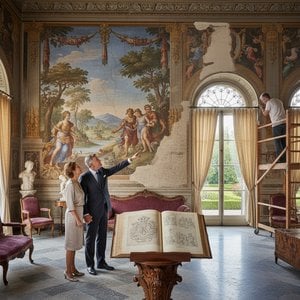
Astuessaan villan sisälle, ihminen siirtyy välittömästi 1500-luvun puoliväliin Salonen monumentaalisten freskojen äärelle. Nämä kankaat ovat paljon enemmän kuin koristeellisia yksityiskohtia; ne muodostavat vangitsevan kertomuksen, joka juhlistaa mytologisia teemoja ja allegorisia esityksiä. Keskipisteenä toimiva ”Neljä mannerta” on henkeäsalpaava kattofresko, joka esittää idealisoituja versioita Euroopasta, Aasiasta, Afrikasta ja Amerikasta. Veronese käyttää mestarillista perspektiiviä luodakseen illuusion laajasta panoraamasta, joka vetää katsojan katseen ylöspäin kohti avointa, maalattua maailmaa. Tämän suuren kokonaisuuden takana seinät kuiskaavat tarinoita klassisesta mytologiasta, heijastaen renessanssin älyllistä uteliaisuutta, joka pyrki sovittamaan ihmiskokemuksen ja jumaluuden yhteen taiteen keinoin. Keräilijöille ja sisustussuunnittelijoille villa toimii ikuisena vertailukohtana klassiselle mittasuhteelle ja kromaattiselle harmonialle . Näiden seinien sisällä näkyvä tekninen taituruus on suorastaan legendaarista, erityisesti siinä, miten Veronese käytti pigmentin kerroksia rakentaakseen aistittavan syvyyden ja tekstuurin tunnun. Hänen palettinsa on edelleen venetsialaisen värinkäytön mestarinäyte, jota leimaavat:
- Rikkaat vihreät ja maanläheiset ruskeat , jotka ankkuroivat arkkitehtoniset elementit.
- Valoisat korostukset , jotka vangitsevat tilan läpi suodattuvan pehmeän, hajavalon.
- Monimutkaiset tekstuurit , jotka saavat katsojan melkein tuntemaan kiven karheuden ja silkin pehmeyden.
Villa Barbaron historia on erottamattomasti sidoksissa Italian muuttuvaan poliittiseen ja kulttuuriseen kudokseen. Arbilin ja Giustinianin kaltaisten aatelissukujen omistamana villa on todistanut vuosisatojen muutokset ja toimi jopa sotilaskomentona ensimmäisen maailmansodan aikana. Nykyään se seisoo säilyneenä jalokivenä, jossa viimeaikaiset restaurointiponnistukset ovat turvanneet sen eheyden tutkijoille ja taiteen ystäville, varmistaen, että kiven ja pigmentin välinen vuoropuhelu jatkaa inspiroimista sukupolvesta toiseen.