A Sanctuary of Stone and Spirit
In the heart of the picturesque Piedmontese town of Acqui Terme, where the air is often scented with the promise of the nearby Brachetto d’Acqui vineyards, stands a monument that transcends the boundaries of mere architecture. The Cathedral of Santa Maria Assunta is not simply a religious edifice; it is a living chronicle of Italian history, a silent witness to the passage of centuries from the early Lombard kingdoms to the vibrant Renaissance. To enter its doors is to step into a profound dialogue between eras, where the robust, grounded strength of Romanesque design meets the delicate, soaring aspirations of later artistic movements. The very stones of the cathedral seem to breathe with the weight of a thousand years of devotion and cultural evolution.
The architectural journey begins at its foundation, where the echoes of the eleventh century still resonate through the visible apses and the solemn transept. Consecrated in 1067, the structure retains much of its original Romanesque soul, characterized by a sense of permanence and rhythmic stability. Yet, as one wanders through its aisles, the eye is drawn to the exquisite transformations that occurred as tastes shifted toward the light and grace of the Renaissance. The magnificent Pilacorte Portal, sculpted by Antonio Pilacorte in the late fifteenth century, serves as a breathtaking threshold, inviting the observer into a space where marble and craftsmanship converge to celebrate divine beauty. This seamless fusion of styles creates an atmosphere that is both ancient and eternally renewed.
Masterpieces of Light and Devotion
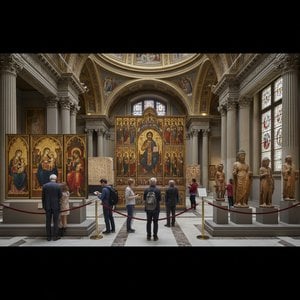
For the discerning art lover and collector, the cathedral houses treasures that are nothing short of legendary. The crown jewel of this sacred collection is undoubtedly the Bermejo Triptych, a monumental masterpiece by the Spanish Renaissance pioneer Bartolomé Bermejo. This work is a triumph of technical virtuosity, where every brushstroke serves to illuminate the profound narrative of “The Good Samaritan.” Bermejo’s ability to manipulate light and texture creates a sense of hyper-realistic depth that commands the viewer's absolute attention, offering a meditative experience on compassion and grace. To stand before this triptych is to witness the pinnacle of late Gothic and early Renaissance mastery, where the boundaries between the painted world and our own seem to dissolve.
Beyond the singular brilliance of Bermejo, the cathedral’s interior is a tapestry of visual storytelling. The walls are adorned with beautifully preserved frescoes that illuminate biblical narratives with a vibrant, devotional fervor. These paintings, alongside intricate stucco work and Baroque woodwork added in later centuries, create a layered aesthetic experience. For an interior designer or an enthusiast of classical aesthetics, the cathedral offers an unparalleled study in how art can transform a space into an immersive environment. The interplay of the 17th-century portico, the terracotta bell tower completed in 1479, and the delicate rose window creates a complex, harmonious composition that continues to inspire those who seek beauty in the intersection of history and artistry.