Varhaisvuodet ja taiteellinen koulutus
Vittore Carpaccio syntyi Venetsiassa noin vuonna 1465, ja hänen lapsuuttaan määritti kaupunki, jota hallitsivat merenkulku, kaupankäynti ja sen ainutlaaatuinen, kimalteleva valo. Nuorena venetsialaisen koulukunnan jäsenenä hän hakeutui Gentile Bellinin oppipojaksi. Tämä oppisopimusaika oli hänen elämänsä muovaava vaihe, joka ei ainoastaan hionut hänen teknistä osaamistaan, vaan loi myös vankan perustan hänen tulevalle menestykselleen merkittävänä taiteilijana.
Bellinin alaisuudessa saatu koulutus antoi Carpacciolle varman käden ja kyvyn havainnoida venetsialaisen elämän pienimpiäkin, eläväisiä yksityiskohtia. Hän oppi hallitsemaan aikakaudelle ominaisia sommittelun ja värin monimutkaisia suhteita, mikä oli välttämätöntä taiteen kehittymisen kannalta. Tämä varhainen koulutus auttoi häntä vakiinnuttamaan asemansa tasavallan kilpaillussa taiteellisessa maailmassa, valmistellen häntä urasta, jonka aikana hän dokumentoi sekä pyhiä kertomuksia että kotikaupunkinsa arjen todellisuutta.
Taiteellinen tyyli ja vaikutteet
Carpaccion lähestymistapa maalaamiseen säilyi huomattavan konservatiivisena, vaikka maailma hänen ympärillään muuttuikin. Siinä missä monet hänen aikalaistensa omaksuivat laajoja humanistisia trendejä, jotka määrittelivät italialaisen renessanssin taiteen uudelleen, hän katsoi usein aivan eri suuntaan. Hänen teoksissaan on aistittavissa tiettyä fantasiaa, joka kurottaa usein takaisin keskiaikaisen romantiikan henkeen pikemminkin kuin seuraavan sukupolven taiteilijoiden suosimaan pastoraaliseen ihanteeseen. Tämä mieltymys antoi hänen kohtauksilleen ainutlaatuisen tunnelman, joka tuntui erilliseltä Venetsian Manner-Euroopan kehittyvistä mauista.
Hänen visuaalinen kielensä muovautui tietynlaisen vaikutteiden sulatuksen myötä. Hän ammenti voimakkaasti Antonello da Messinan tyylistä sekä varhaisen hollantilaisen taiteen huolellisista perinteistä. Tämä yhdistelmä antoi hänelle kyvyn hallita perspektiiviä ja tuoda esiin arkkitehtonista yksityiskohtaisuutta, joka erotti hänet muista aikansa taiteilijoista. Hänellä oli tapa sijoittaa kohteensa erittäin tarkasti ja rakenteellisesti määriteltyihin ympäristöihin, käyttäen valoa ja varjoa luodakseen syvyyden tuntua, joka tuntui samanaikaisesti sekä maanläheiseltä että toisesta maailmasta kumpuavalta.
Tämä yksityiskohtiin keskittyminen on erityisen ilmeistä hänen suurissa narratiivisissa teoksissaan, joissa hän pystyi kutomaan monimutkaisia tarinoita osaksi ympäristön todellista olemusta. Hänen kykynsä kuvata vaatteiden tekstuureja ja rakennusten tarkkaa geometriaa auttoi luomaan realismin tuntua, joka tuki hänen mielikuvituksellista tarinankerrontaan. Keskittymällä näihin tarkkoihin elementteihin hän rakensi maailman, joka tuntui elävältä ja asutulta, vaikka itse aihe viittaisikin legendaariseen tai pyhään.
Merkittävät teokset ja narratiiviset syklit
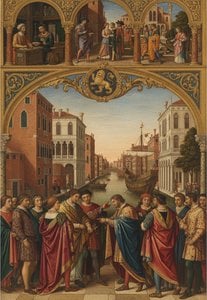
Carpaccio löysi suurenmoisimman ilmaisunsa tarinankerronnan kautta, jossa hän kykeni luomaan valtavia, eläviä kokonaisuuksia. Hänen tunnetuin saavutuksensa on vuonna 1490 käynnistämä yhdeksän maalauksen sarja, Pyhän Ursulan legenda. Nämä teokset antoivat hänelle mahdollisuuden rakentaa monimutkaisia maailmoja, jotka kutsuivat katsojan syvälle pyhimyksen elämän yksityiskohtiin. Hänellä oli myös harvinainen kyky vangita kotikaupunkinsa sielu; teoksessa Ristin reliikin ihme Rialton sillalla hän kuvasi Venetsiaa sen mahtavimmassa loistossaan, käyttäen kaupunkimaisemaa ankkurina, joka upotti uskonnolliset kertomukset tunnistettavaan todellisuuteen.
Taiteilijan monipuolisuus eri aiheiden parissa näkyy hänen vaihtelevissa tilaustöissään. Hän loi Doge Leonardo Loredanin muotokuvan, teoksen, joka heijastaa hänen vankkaa asemaansa merkittävänä hahmona venetsialaisessa renessanssissa. Toinen mestarillinen teos on Pyhä Yrjö ja lohikäärme, puupaneelille temperalla maalattu kuva, joka sijaitsee nykyään Venetsian Scuola di San Giorgio degli Schiavoni -museossa. Tämä teos vangitsee dramaattisen jännityksen harkitun sommittelunsa ja hahmojen välisen vuorovaikutuksen kautta.
Carpaccion taiteellinen perintö koostuu muun muassa seuraavista keskeisistä teoksista:
- Pyhän Ursulan legenda (alkanut 1490)
- Ristin reliikin ihme Rialton sillalla
- Pyhä Yrjö ja lohikäärme
- Doge Leonardo Loredanin muotokuva
Ura ja merkittävät tilaustyöt
Vittore Carpaccion tuottavin kausi sijoittui vuosien 1490 ja 1519 väliselle ajalle. Tänä aikana hänestä tuli vakiintunut osa Venetsian uskonnollista elämää, ja hän sai lukuisia kirkollisia tilaustöitä, jotka antoivat hänelle mahdollisuuden tutkia monimutkaisia ja syvällisiä narratiiveja. Hänen teoksensa liikkuivat usein kaupungin katujen rytmissä, vangiten Venetsian tasavallan hengen suuressa mittakaavassa kuvatuissa urbaaneissa kohtauksissa. Erinomainen esimerkki tästä on Miracle of the Relic of the Cross at the Ponte di Rialto, teos, joka kuvaa Venetsiaa sen siviilioikeudellisen ylpeyden huipulla.
Uran edetessä myös hänen suojelijoidensa luonne alkoi muuttua. Siinä missä hänen varhaiset vuotensa määrittyivät suurten uskonnollisten syklejen ja julkisten teosten kautta, vuoden 1510 jälkeinen tuotanto kääntyi kohti yksityisempää sfääriä. Hän alkoi työskennellä ensisijaisesti yksittäisten venetsialaisten tilaajien puolesta, luoden teoksia, jotka heijastivat kaupungin kasvavan kauppiasluokan henkilökohtaisia mieltymyksiä. Tämä siirtymä vei hänet nuoruuden suuren ja julkisen tarinankerronnan ääreltä kohti intiimimpiä kohtaamisia keräilijöidensä kanssa.
Hänen uskonnollinen tuotantonsa pysyi vakaana 1500-luvun ensimmäisen vuosikymmenen ajan. Tältä ajalta peräisin olevia merkittäviä tilaustöitä ovat muun muassa:
- St. Thomas Aquinas Enthroned (1507)
- Presentation of Christ in the Temple (1510)
Perintö ja historiallinen merkitys
Vittore Carpaccio on vakiinnuttanut asemansa venetsialaisen renessanssin varhaisena mestarina, aikana, jolloin italialainen taide koki syvällisiä murroksia. Siinä missä hänen aikalaistensa katseet kääntyivät kohti uusia humanistisia trendejä, Carpaccio pysyi usein ankkuroituna perinteisempään tapaan nähdä maailma. Vuoteen 1510 tultaessa ne, jotka elivät ja työskentelivät hänen rinnallaan, alkoivat pitää hänen tyyliään liian konservatiivisena. Hän ei kuitenkaan hakenut mukaansa aikakauden muuttuvia virtauksia, vaan suosi menetelmää, joka katsoi taaksepäin menneisyyden yksityiskohtaiseen ja narratiiviseen perinteeseen.
Tämä järkähtämättömyys tarkoitti, että hänen nimensä on toisinaan jäänyt suurten mestareiden, kuten Giovanni Bellinin tai Giorgionen, varjoon. Vaikka muut siirtyivät kohti täysin uudenlaista visuaalista kieltä, Carpaccio jatkoi omien maailmojensa rakentamista tarkalla arkkitehtonisella yksityiskohtaisuudella ja eksoottisuuden lumouksella. Hänen tuotantonsa on säilynyt ikkunana tiettyyn hetkeen Venetsiassa; se vangitsee kaupungin kansallisen ylpeyden ja sen yhteyden Levantiin linssin läpi, joka tuntui hänen vertaisilleen yhä vanhanaikaisemmalta. Hän kuoli vuonna 1526 jättäen jälkeensä taideteoksia, jotka heijastavat ainutlaatuista, ehkä hieman itsepäistäkin omistautumista omalle käsityölleen.
Hänen merkittävimpiä teoksiaan ovat muun muassa:
- The Legend of Saint Ursula
- The Miracle of the Relic of the True Cross at the Ponte di Rialto
- St. George and the Dragon
Kysymykset ja vastaukset
Mistä voin nähdä Vittore Carpaccio's teokset 3D-galleriassa?
Vittore Carpaccio-taiteilijan 3D-galleria esittelee taiteilijan teoksia virtuaalisessa kolmiulotteisessa galleriassa.
Miten löydän tietyn teeman mukaisia Vittore Carpaccio teoksia?
Löytääksesi tiettyyn teemaan liittyviä Vittore Carpaccio teoksia, käytä taiteilijan Avainsanojen mukaan -sivua, joka ryhmittelee teokset avainsanojen mukaan.
Miten Vittore Carpaccioin ura on jaettu eri aikakausiin?
Vittore Carpaccio:n tuotanto esitellään kronologisesti taiteilijan Ura kronikka -sivulla, jossa teokset etenevät luomisjärjestyksessä luku luvulta.