François Boucher muotokuva

Your Guide to the 100 Most Famous François Boucher Paintings

Päivitetty lokakuu 2026 · järjestetty suosituimmuuspisteiden mukaan (jokaisen teoksen haut, vierailut ja tilaukset) · 377 teosta taiteilijalta François Boucher luettelossamme

In short

François Boucher's best-known piece is Diana getting out of her bath (1742). Next on the list are Bouguereau Song of the Angels and Madame de Pompadour (Jeanne-Antoinette Poisson, 1721 - 1764) (1758). We have 377 works by François Boucher in our catalogue; this guide picks out the 100 best known, with the year, the museum and the story of each piece.

1703 – 1770, Pariisi Rococo elegance Eniten teoksia: Hermitage-museo

The 10 François Boucher paintings to know first

1
Diana getting out of her bath (1742) tekijä François Boucher

Diana getting out of her bath

1742 · Oil On Canvas

François Boucher created Diana getting out of her bath in 1742. The work centers on the Roman goddess Diana, portrayed in a state of nudity. She is situated within a dense forest setting, a natural environment that provides the backdrop for her emergence from the water.

2
Bouguereau Song of the Angels tekijä François Boucher

Bouguereau Song of the Angels

Oil On Canvas

The air in this 18th-century French Rococo scene vibrates with an invisible melody. At the center, the quiet devotion of Mary and the infant Jesus anchors the composition. Around them, a choir of heavenly beings gathers to perform. One angel rests on the left, another occupies the middle, while two more flank the right side. They hold lyres, flutes, and strings, their movements precise and graceful. The music of the…

3
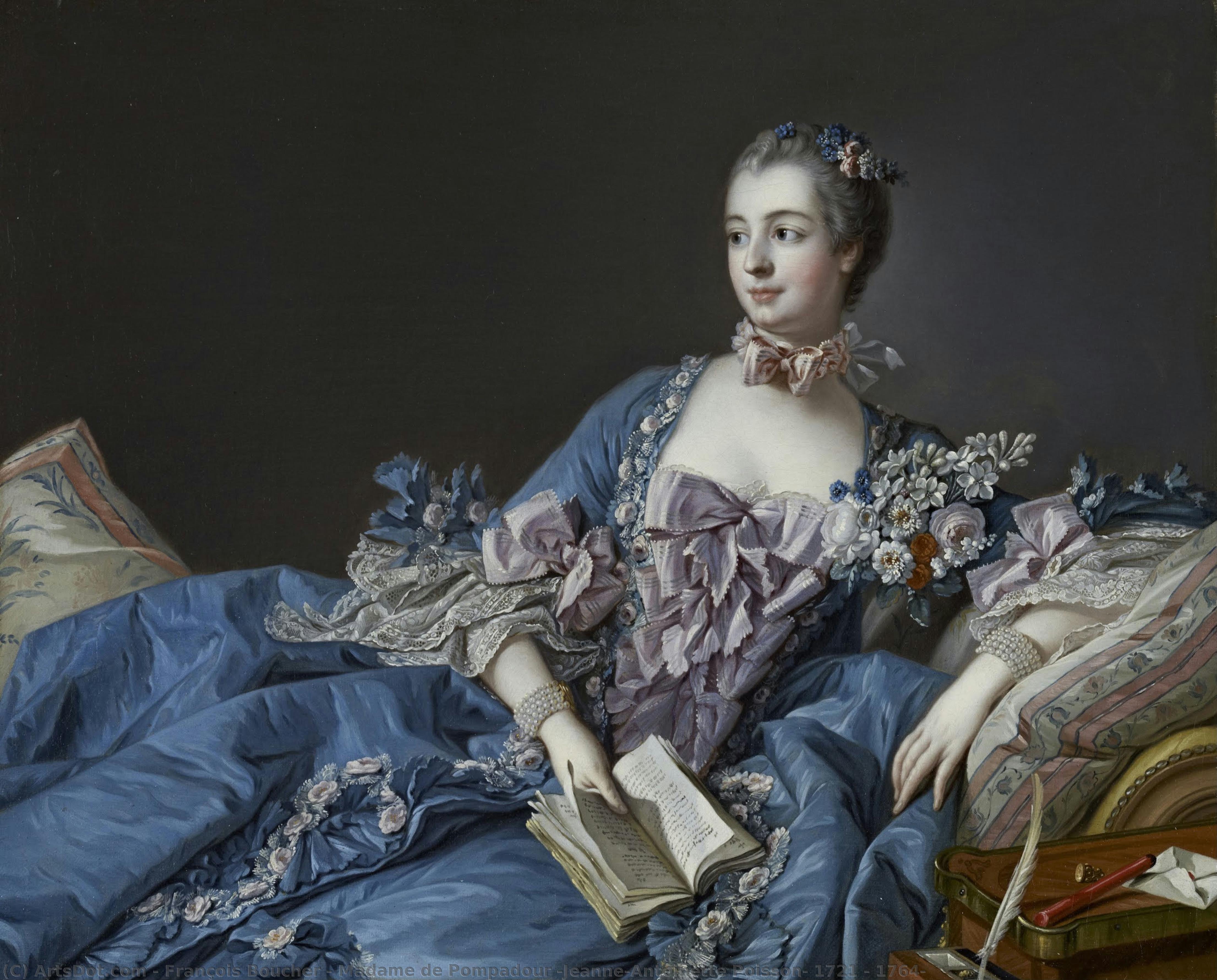
Madame de Pompadour (Jeanne-Antoinette Poisson, 1721 - 1764) (1758) tekijä François Boucher

Madame de Pompadour (Jeanne-Antoinette Poisson, 1721 - 1764)

1758 · Oil On Canvas · Scottish National Gallery, Edinburgh

To gaze upon this portrait of Madame de Pompadour is to step directly into the gilded salons of 18th-century France, a world steeped in exquisite taste and whispered intrigue. Painted around 1758 by the master hand of François Boucher, this work transcends mere likeness; it captures an ephemeral moment of cultivated grace. The subject, Jeanne-Antoinette Poisson, is presented not just as a woman of high standing, but as an embodiment…

4
Madame Bergeret (1766) tekijä François Boucher

Madame Bergeret

1766 · Oil On Canvas · National Gallery of Art, Washington

François Boucher’s “Madame Bergeret,” completed in 1766, stands as a quintessential exemplar of Rococo artistry—a style synonymous with aristocratic refinement and sensual beauty. More than just a depiction of a woman, it's an immersive experience into the opulent aesthetic sensibilities of Louis XV’s court, capturing not merely likeness but also an idealized vision of feminine grace.

5
The Interrupted Sleep (1750) tekijä François Boucher

The Interrupted Sleep

1750 · Öljyväri kankaalle · Metropolitan Museum of Art, New York

In the heart of the French Rococo era, few works capture the ephemeral magic of a summer afternoon as tenderly as François Boucher’s The Interrupted Sleep. Created in 1750, this masterpiece serves as a window into an idealized world where the rigors of reality are replaced by a soft, melodic dreamscape. The painting invites the viewer to step into a lush, sun-drenched woodland, where the boundaries between music, nature, and…

6
The Setting of the Sun tekijä François Boucher

The Setting of the Sun

Oil On Canvas

In the luminous realm of 18th-century French artistry, few works capture the ephemeral magic of twilight as profoundly as François Boucher’s The Setting of the Sun. This masterpiece serves as a breathtaking window into the Rococo era, an age defined by its pursuit of elegance, pleasure, and a certain dreamlike sensuality. As the sun descends, the canvas erupts into a dramatic and opulent spectacle, where the boundaries between the earthly…

7
Pastoral Scene (1745) tekijä François Boucher

Pastoral Scene

François Boucher’s “Pastoral Scene,” painted in 1745, isn't merely a depiction of a rural landscape; it’s a carefully constructed invitation into an idealized world—a sanctuary of innocence and leisure nestled within the heart of France. The painting immediately draws the viewer in with its soft palette of browns, beiges, and muted greens, evoking a sense of gentle warmth and timeless serenity. Two young figures – a boy and girl –…

8
Venus at Vulcan (1769) tekijä François Boucher

Venus at Vulcan

1769 · Oil On Canvas · Kimbell Art Museum, Fort Worth

François Boucher’s “Venus at Vulcan’s Forge,” painted in 1769, isn't merely a depiction of mythological figures; it’s a vibrant embodiment of reconciliation and the potent dance between opposing forces. Rooted firmly within the opulent Rococo style that defined late 18th-century France, the painting transports us to a dramatic tableau inspired by Virgil’s *Aeneid*. Here, Venus, goddess of love and beauty, and Vulcan, god of fire and craftsmanship, find themselves caught…

9
The Toilette (1742) tekijä François Boucher

The Toilette

1742 · Oil On Canvas · Thyssen-Bornemisza Museum, Madrid

In the soft, luminous atmosphere of François Boucher’s 1742 masterpiece, La Toilette, we are invited to step into a world of refined grace and quiet domesticity. This exquisite oil on canvas serves as a quintessential window into the Rococo era—a period defined by its celebration of pleasure, light, and the delicate nuances of everyday life. The scene unfolds within a richly appointed room, where the warmth of a fireplace anchors…

10
Boreas Abducting Oreithyia (1769) tekijä François Boucher

Boreas Abducting Oreithyia

1769 · Oil On Canvas · Kimbell Art Museum, Fort Worth

François Boucher’s “Boreas Abducting Oreithyia,” completed in 1769, is a captivating distillation of classical mythology rendered with the characteristic exuberance and sensual grace that defined the Rococo style. This painting, measuring an impressive 273 x 205 cm, transports us to a moment of violent disruption – a dramatic retelling of Ovid’s tale from the *Metamorphoses*, where the icy North Wind god, Boreas, forcibly claims the Athenian princess Oreithyia.

Numbers 11 to 100: more François Boucher paintings

11Juno Asking Aeolus to Release the Winds (1769) tekijä François BoucherJuno Asking Aeolus to Release the Winds1769 · Kimbell Art Museum 12Study for The Bath of Venus (1751) tekijä François BoucherStudy for The Bath of Venus1751 · Hermitage-museo 13Painter in his Studio tekijä François BoucherPainter in his StudioLouvre 14The Setting of the Sun (1752) tekijä François BoucherThe Setting of the Sun1752 · Wallace Collection 15Young Woman Sleeping (1760) tekijä François BoucherYoung Woman Sleeping1760 · Hermitage-museo 16The Forest (1740) tekijä François BoucherThe Forest1740 · Louvre 17Vertumnus and Pomona tekijä François BoucherVertumnus and PomonaBavarian State Painting Collections 18Madame de Pompadour (1754) tekijä François BoucherMadame de Pompadour1754 · National Gallery of Victoria 19Mill at Charenton (1758) tekijä François BoucherMill at Charenton1758 · Toledon taidemuseo 20Madame de Pompadour (1758) tekijä François BoucherMadame de Pompadour1758 · Victoria and Albert Museum 21Young Country Girl Dancing (1770) tekijä François BoucherYoung Country Girl Dancing1770 · Art Gallery of Ontario 22Blond Odalisque (L'Odalisque Blonde) (1752) tekijä François BoucherBlond Odalisque (L'Odalisque Blonde)1752 · Alte Pinakothek 23The Mill (1751) tekijä François BoucherThe Mill1751 · Louvre 24The Afternoon Meal (1739) tekijä François BoucherThe Afternoon Meal1739 · Louvre 25Imaginary Landscape with the Palatine Hill from Campo Vaccino (1730) tekijä François BoucherImaginary Landscape with the Palatine Hill from Campo Vaccino1730 · Metropolitan Museum of Art 26Pastorale (1760) tekijä François BoucherPastorale1760 · Staatliche Kunsthalle Karlsruhe 27Vertumnus and Pomona (1757) tekijä François BoucherVertumnus and Pomona1757 · Fine Arts Museums of San Francisco 28Death of Meleager (1727) tekijä François BoucherDeath of Meleager1727 · Los Angelesin maakunnallinen taidemuseo 29Venus in the Workshop of Vulcan (1757) tekijä François BoucherVenus in the Workshop of Vulcan1757 · Yale University Art Gallery 30Standing Nude Girl tekijä François BoucherStanding Nude GirlAlbertina 31Arcadian Nymphs Making Music (1770) tekijä François BoucherArcadian Nymphs Making Music1770 · Victoria and Albert Museum 32Triumph of Venus tekijä François BoucherTriumph of VenusHermitage-museo 33Landscape with a Pond (1746) tekijä François BoucherLandscape with a Pond1746 · Hermitage-museo 34Washerwomen (1768) tekijä François BoucherWasherwomen1768 · Metropolitan Museum of Art 35The Billet-Doux tekijä François BoucherThe Billet-Doux 36Venus and Mercury Instructing Cupid (1738) tekijä François BoucherVenus and Mercury Instructing Cupid1738 · Los Angelesin maakunnallinen taidemuseo 37Monument to Mignard (1735) tekijä François BoucherMonument to Mignard1735 · Los Angelesin maakunnallinen taidemuseo 38Venus Demanding Arms from Vulcan for Aeneas (1732) tekijä François BoucherVenus Demanding Arms from Vulcan for Aeneas1732 · Louvre 39Young Girl and Eros (1750) tekijä François BoucherYoung Girl and Eros1750 · Detroit Institute of Arts 40The Rising of the Sun (1750) tekijä François BoucherThe Rising of the Sun1750 · Plantin–Moretus-museo 41Hercules and Omphale (1735) tekijä François BoucherHercules and Omphale1735 · Pushkinin Valtion Taidemuseo 42Project for a Cartouche: An Allegory of Minerva, Fame, History and Faith Overcoming Ignorance and Time (1727) tekijä François BoucherProject for a Cartouche: An Allegory of Minerva, Fame, History and Faith Overcoming Ignorance and Time1727 · Los Angelesin maakunnallinen taidemuseo 43A young lady holding a pug dog (1745) tekijä François BoucherA young lady holding a pug dog1745 · Art Gallery of New South Wales 44Saint John the Baptist (1755) tekijä François BoucherSaint John the Baptist1755 · Minneapolis Institute of Art 45Bathing Nymph (1747) tekijä François BoucherBathing Nymph1747 · Art Institute of Chicago 46River Landscape with an Antique Temple (1762) tekijä François BoucherRiver Landscape with an Antique Temple1762 · Thyssen-Bornemisza Museum 47The Modiste (1746) tekijä François BoucherThe Modiste1746 · Wallace Collection 48Head of a Young Girl (1750) tekijä François BoucherHead of a Young Girl1750 · Hermitage-museo 49The Beautiful Country Woman (1732) tekijä François BoucherThe Beautiful Country Woman1732 · Norton Simonin museo 50The Distorted Child (1742) tekijä François BoucherThe Distorted Child1742 · Staatliche Kunsthalle Karlsruhe 51Breakfast tekijä François BoucherBreakfast 52Diana and Callisto (1760) tekijä François BoucherDiana and Callisto1760 · Slovak National Gallery 53Cupids. Allegory of Painting (1760) tekijä François BoucherCupids. Allegory of Painting1760 · Hermitage-museo 54Pastoral (1730) tekijä François BoucherPastoral1730 · Walters Art Museum 55A Pastoral Scene ('La Jardiniere Endormie') (1762) tekijä François BoucherA Pastoral Scene ('La Jardiniere Endormie')1762 · Scottish National Gallery 56Virgin and Child with the Young Saint John the Baptist and Angels (1765) tekijä François BoucherVirgin and Child with the Young Saint John the Baptist and Angels1765 · Metropolitan Museum of Art 57The Cherry Gatherers (1768) tekijä François BoucherThe Cherry Gatherers1768 · Kenwood House 58A Pastoral Scene ('L'Offrande a la Villageoise') (1761) tekijä François BoucherA Pastoral Scene ('L'Offrande a la Villageoise')1761 · Scottish National Gallery 59Allegory of Autumn (1753) tekijä François BoucherAllegory of Autumn1753 · Metropolitan Museum of Art 60The Education of Cupid (1742) tekijä François BoucherThe Education of Cupid1742 · Charlottenburgin palatsi 61The Birth of Venus (1740) tekijä François BoucherThe Birth of Venus1740 · Nationalmuseum 62The Judgement of Susannah (1720) tekijä François BoucherThe Judgement of Susannah1720 · National Gallery of Canada 63The Sleep of Loves (1725) tekijä François BoucherThe Sleep of Loves1725 64Rebecca Receiving from the Hands of Eliezer the Gifts of Abraham (1728) tekijä François BoucherRebecca Receiving from the Hands of Eliezer the Gifts of Abraham1728 65The Sacrifice of Gideon (1728) tekijä François BoucherThe Sacrifice of Gideon1728 66Rest at the Fountain (1730) tekijä François BoucherRest at the Fountain1730 · Bavarian State Painting Collections 67The Hunting Breakfast, Sketch. (1733) tekijä François BoucherThe Hunting Breakfast, Sketch.1733 68"La Fontaine", Rococo Scene at the Fountain (1728) tekijä François Boucher"La Fontaine", Rococo Scene at the Fountain1728 69Rebecca receives Abraham's gifts from Eliezer (1725) tekijä François BoucherRebecca receives Abraham's gifts from Eliezer1725 · Musée des Beaux-Arts de Strasbourg 70Mercury Confiding the Infant Bacchus to the Nymphs (1733) tekijä François BoucherMercury Confiding the Infant Bacchus to the Nymphs1733 · Wallace Collection 71Bacchus and Erigone (1745) tekijä François BoucherBacchus and Erigone1745 · Wallace Collection 72Bird-Catching Cherubs (1732) tekijä François BoucherBird-Catching Cherubs1732 · Rhode Island School of Design Museum of Art 73Head of a Young Woman (1732) tekijä François BoucherHead of a Young Woman1732 · Clevelandin taidemuseo 74'La vie champêtre' (1728) tekijä François Boucher'La vie champêtre'1728 · Belton House 75La Femme au Chat: Les caresses dangereuses (1731) tekijä François BoucherLa Femme au Chat: Les caresses dangereuses1731 · Fine Arts Museums of San Francisco 76The Bird Catchers (1748) tekijä François BoucherThe Bird Catchers1748 · J. Paul Getty Museum 77Putti with Birds (1730) tekijä François BoucherPutti with Birds1730 · Honolulu Museum of Art 78sleeping Amor (1728) tekijä François Bouchersleeping Amor1728 79boy playing with a dog (1728) tekijä François Boucherboy playing with a dog1728 · Musée d'Art et d'Histoire de Cholet Native Name 80Allegory of Autumn: Putti Playing with a Goat (1730) tekijä François BoucherAllegory of Autumn: Putti Playing with a Goat1730 81Five Naked Children Playing by a Rocky Pool (1732) tekijä François BoucherFive Naked Children Playing by a Rocky Pool1732 · National Trust 82The Forges of Vulcan (1737) tekijä François BoucherThe Forges of Vulcan1737 83Pastoral Subject. The Sleeping Shepherdess (1743) tekijä François BoucherPastoral Subject. The Sleeping Shepherdess1743 · Palais Bourbon 84The Marriage of Cupid and Psyche (1744) tekijä François BoucherThe Marriage of Cupid and Psyche1744 · Musée des Beaux-Arts de Rouen 85Stable interior with amorous scene (1735) tekijä François BoucherStable interior with amorous scene1735 · Musée Cognacq-Jay 86Air: Three Putti with Birds (1741) tekijä François BoucherAir: Three Putti with Birds1741 · Victoria and Albert Museum 87The Egg Seller (1734) tekijä François BoucherThe Egg Seller1734 · Wadsworth Atheneum 88Cupid and the Three Graces (1738) tekijä François BoucherCupid and the Three Graces1738 · Calouste Gulbenkian Museum 89Cupids in Conspiracy (1740) tekijä François BoucherCupids in Conspiracy1740 · Clevelandin taidemuseo 90Music and Dance (1740) tekijä François BoucherMusic and Dance1740 · Clevelandin taidemuseo 91Mercury Entrusting the Infant Bacchus to the Nymphs of Nysa (1734) tekijä François BoucherMercury Entrusting the Infant Bacchus to the Nymphs of Nysa1734 · Cincinnati Art Museum 92Rural idyll (1735) tekijä François BoucherRural idyll1735 · Bavarian State Painting Collections 93The Nest, also known as the Berger Present (1737) tekijä François BoucherThe Nest, also known as the Berger Present1737 94Young Lady with a Muff (1737) tekijä François BoucherYoung Lady with a Muff1737 95Putti as Fisherman (1744) tekijä François BoucherPutti as Fisherman1744 · Museum of Fine Arts 96Cupid Wounding Psyche (1741) tekijä François BoucherCupid Wounding Psyche1741 · Los Angelesin maakunnallinen taidemuseo 97Young Woman with Flowers in Her Hair (1734) tekijä François BoucherYoung Woman with Flowers in Her Hair1734 · Museum of Fine Arts 98The Rest of the Holy Family during the Flight into Egypt (1744) tekijä François BoucherThe Rest of the Holy Family during the Flight into Egypt1744 · Statens Museum for Kunst 99Leopard hunt (1736) tekijä François BoucherLeopard hunt1736 · Musée de Picardie 100Crocodile hunt (1739) tekijä François BoucherCrocodile hunt1739 · Musée de Picardie

François Boucher's paintings, period by period

What François Boucher painted most

The four subjects that come up most often in these pieces, each with its best-known example.

Where you can see François Boucher's paintings

Tämän sivun teoksista eniten sisältävät 8 museota.

Museo Kaupunki François Boucher teokset Tämän listan maalaukset
Hermitage-museo, PietariHermitage-museo Pietari 12 Study for The Bath of Venus, Young Woman Sleeping, Triumph of Venus
Metropolitan Museum of Art, New YorkMetropolitan Museum of Art New York 13 The Interrupted Sleep, Imaginary Landscape with the Palatine Hill from Campo Vaccino, Washerwomen
Louvre, PariisiLouvre Pariisi 8 Painter in his Studio, The Forest, The Mill
Los Angelesin maakunnallinen taidemuseo, Los AngelesLos Angelesin maakunnallinen taidemuseo Los Angeles 6 Death of Meleager, Venus and Mercury Instructing Cupid, Monument to Mignard
Wallace Collection, LontooWallace Collection Lontoo 21 The Setting of the Sun, The Modiste, Mercury Confiding the Infant Bacchus to the Nymphs
Scottish National Gallery, EdinburghScottish National Gallery Edinburgh 5 Madame de Pompadour (Jeanne-Antoinette Poisson, 1721 - 1764), A Pastoral Scene ('La Jardiniere Endormie'), A Pastoral Scene ('L'Offrande a la Villageoise')
Clevelandin taidemuseo, ClevelandClevelandin taidemuseo Cleveland 5 Head of a Young Woman, Cupids in Conspiracy, Music and Dance
Kimbell Art Museum, Fort WorthKimbell Art Museum Fort Worth 4 Venus at Vulcan, Boreas Abducting Oreithyia, Juno Asking Aeolus to Release the Winds

Decade by decade: the best-known François Boucher piece of each

Teokset vuosikymmenittäin

Pick a decade to see its standout piece.

François Boucher: quick answers about the paintings

What is François Boucher's best-known painting?See the answer

Top of the list is Diana getting out of her bath (1742). Right behind it: Bouguereau Song of the Angels and Madame de Pompadour (Jeanne-Antoinette Poisson, 1721 - 1764) (1758).

What age was François Boucher when creating Diana getting out of her bath?See the answer

39 years old. François Boucher was born in 1703, and Diana getting out of her bath dates from 1742.

What are François Boucher's top 10 paintings?See the answer

Diana getting out of her bath, Bouguereau Song of the Angels, Madame de Pompadour (Jeanne-Antoinette Poisson, 1721 - 1764), Madame Bergeret, The Interrupted Sleep, The Setting of the Sun, Pastoral Scene, Venus at Vulcan, The Toilette ja Boreas Abducting Oreithyia. You'll find the year and the museum of each in the list above.

How many works by François Boucher are in your catalogue?See the answer

We have 377 works by François Boucher in our catalogue, dated 1720 to 1770.

In which museums can you see François Boucher's famous works?See the answer

You'll find most of them in Hermitage-museo (Pietari), Metropolitan Museum of Art (New York) ja Louvre (Pariisi). The museum list above has the full breakdown.

When did François Boucher make the most famous pieces?See the answer

In 1730s, more than any other time: 28 of the 100 pieces on this page date from then, The Afternoon Meal among them.

What are François Boucher's first and last famous pieces?See the answer

The earliest piece here is The Judgement of Susannah (1720); the most recent is Young Country Girl Dancing (1770).

Which subjects did François Boucher paint most often?See the answer

Woman (21), Trees (14) ja Man (10), out of the 100 pieces on this page.

Which medium shows up most in François Boucher's paintings?See the answer

Oil On Canvas, used in 45 of the 100 pieces on this page.

What style or movement is François Boucher known for?See the answer

Rococo elegance, as you can see in the pieces on this page.

Which famous François Boucher paintings are at the Hermitage-museo?See the answer

You can see 6 of the pieces on this page at the Hermitage-museo, Pietari, including Study for The Bath of Venus, Young Woman Sleeping ja Triumph of Venus.

Where can I order a François Boucher reproduction?See the answer

Yes. Every painting on this page is available as a hand-painted oil reproduction or a print, in the size that suits you. Just open the painting's page to order.

François Boucher's story

Varhainen elämä, perhe ja koulutus

Ranskan Pariisin vilkkailla kaduilla François Boucherin tarina sai alkunsa 29. syyskuuta 1703. Hän syntyi kotiin, jossa visuaalinen taide oli jo osa elämänrytmiä; hänen isänsä Nicolas Boucher oli mies, joka ansaitsi elantonsa pitsikuvioiden suunnittelijana. Tämä varhainen altistuminen kuvioiden ja muotoilun monimutkaisuudelle muokkasi todennäköisesti nuoren pojan silmää yksityiskohdille jo kauan ennen kuin hän koskaan nosti pensselin kankaalle. Isä antoi hänelle ensimmäiset opetukset, istuttaen häneen ne perustaidot, joita kaupungin kilpailullisissa taidepiireissä menestyminen vaati.

Pojan kasvaessa hänen lahjakkuutensa herätti jo vakiintuneiden käsityöläisten huomion. Seitsemänvuotiaana François Boucher joutui François Lemoynen oppipojaksi, mieheksi, jolla oli merkittävä asema taidepiireissä. Tämä opetuksen vaihe oli kuitenkin lyhyt, sillä nuoren taiteilijan polku kääntyi äkillisesti vain kolmen kuukauden kuluttua. Hän siirtyi Lemoynen ohjauksesta kaivertaja Jean-François Carsin työskentelyyn, siirtymä, joka antoi hänelle mahdollisuuden hallita viivan tarkkuuden ja grafiikan mekaniikan.

Kunnianhimo ja lahjakkuus kohtasivat pian suuren voiton hetkellä. Vuonna 1720 François Boucher saavutti kunnian, joka muuttaisi hänen elämänsä suunnan: hän voitti arvostetun Grand Prix de Rome’n. Tämä voitto ei ollut pieni saavutus; se merkitsi häntä nousevaksi voimaksi vertaistensa joukossa ja antoi tarvittavan sysäyksen liikkua Pariisin työpajoista kohti eurooppalaisen taiteen suurempia näyttämöitä.

Taiteellinen kehitys ja italialainen vaikutus

Saavutettuaan arvostetun Grand Prix de Rome -palkinnon, nuori taiteilija käänsi katseensa Italiaan. Hän saapui Roomaan vuonna 1728 opiskelemaan ranskalaiseen akatemiaan, ja tämä ajanjakso muovasi perustavanlaatuisesti hänen taiteellista herkkyyttään. Italialaisen valon hehku ja suurmestareiden teokset eivät opettaneet hänelle pelkästään tekniikkaa, vaan ne antoivat hänelle uudenlaisen tavan nähdä maailma. Hän huomasi hakevansa inspiraatiota barokin mestareiden ilmeikkäästä siveltimenkäytöstä ja maanläheisestä, maalauksellisesta otteesta – mieltymyksestä, joka erotti hänet lopulta vertaisjensa jäykistä akateemisista perinteistä.

Palattuaan Ranskaan hänen nousunsa taide-elämän huipulle oli nopea. Hänet hyväksyttiin Académie Royale de Peinture et de Sculpture -akatemiaan vuonna 1731, ja vuoteen 1734 mennessä hän oli saavuttanut historiamaalari-statuksen akatemian sisällä. Tämä virallinen tunnustus loi pohjan uralle, joka siirtyi pian klassisten muotojen hiljaisesta tutkimisesta Ranskan hovin vilkkaaseen ja loistokkaaseen elämään. Hänen varhaiset menestyksensä lepäsivät tiukan koulutuksen ja ulkomailla opittujen eläväisten, ekspressiivisten oppien täydellisessä liitossa.

Suosijat, työpaja ja tilaukset

Menestys Ranskan hovissa vaati usein muutakin kuin pelkkää lahjakkuutta; se edellytti suosiota niiltä, jotka hallitsivat kuninkaallista makua. Boucher löysi tällaisen vaikutusvaltaisen liittolaisen Madame de Pompadourista, kuningas Ludvig XV:n vaikutusvaltaisesta rakastajattaresta. Heidän välisensä yhteys oli syvä, sillä Pompadourista tuli hänen merkittävin asiakkaansa, joka tilasi lukuisia teoksia, jotka auttoivat määrittelemään koko aikakauden visuaalista kieltä. Hänen tukensa myötä Boucherin maine kasvoi taitavasta maalarista hahmoksi, joka oli keskeisessä asemassa itse Ranskan hovin identiteetin muodostumisessa.

Hänen vaikutusvaltansa levisi lopulta myös niihin instituutioihin, jotka säätelivät Ranskan taidetta. Vuonna 1755 hänet nimettiin kuninkaallisen Gobelinsin tekstiilitehtaan johtajaksi, mikä antoi hänen visiolleen mahdollisuuden laajentua koristeellisen taiteen maailmaan. Hän antoi myös kätensä palvelukseen Beauvaisin työpajoille, joissa hänen suunnitelmansa muuttuivat kudotuiksi taideteoksiksi. Hänen luovuutensa ei ollut rajoitettu vain kankaalle; hän liikkui teatterin maailmassa suunnitellen niin lavastuksia kuin puvustuksiakin, jotka herättivät dramaattiset spektaakkelit eloon. Tämä monipuolisuus varmisti, että hänen estetiikkansa tuntui aristokraattisen elämän jokaisessa kolkassa, palatsien seinistä aina teatterin lavalle saakka.

Hänen virallisen tunnustuksensa huipentuma saavutettiin vuonna 1765, kun hänet nimitettiin kuninkaan ensimaalariksi, Premier Peintre du Roi. Tämä arvonimi merkitsi hänen nousuaan ammattinsa huipulle. Hänestä oli tullut mies, jonka nimi oli synonyymi koko aikakaudelle – luoja, jonka työtä tavoittelivat maan korkeimmat vallankäyttäjät. Hänen uransa oli vakaata nousua Akatemian riveissä: professoreista rektoreiksi ja lopulta suoraan kruunun palvelukseen.

Tekniikka ja rokokoo-tyyli

François Boucher liikkui taiteen maailmassa valon ja kauneuden suosijaksi kääntyneenä, kääntäen usein selkänsä menneisyyden raskaille varjoille. Hänen kättään ohjasi herkkä siveltimenkäyttö, joka suosi hehkuvia värejä ja pehmeää pastellisävyistä palettia. Hän pyrki vangitsemaan nautinnon ja sielukkuuden tunnun, hyödyntäen usein epäsymmetrisiä sommitelmia luodakseen liikkeen ja vaivattomuuden tuntua. Tämä lähestymistapa antoi hänelle mahdollisuuden muuttaa jopa vakavimmat mytologiset kertomukset intohimon ja intiimin erotiikan kohtauksiksi, joissa jumalat esiintyivät pikemminkin leikkisivinä rakastavaisina kuin etäisinä jumaluuksina.

Luonnon tarkastelussa hänen työssään oli tiettyä kapinallisuutta. Hän totesi kuuluisasti, että luonto oli "trop verte et mal éclairée" — liian vihreää ja huonosti valaistua — viitaten siihen, että paljas ja koristelematon maailma oli vailla sitä hienostuneisuutta, jota hän pyrki tarjoamaan. Ulkoilman karun todellisuuden sijaan hän suosi idealisoidun, idyllisen valtakunnan rakentamista. Hänen käsissään maisemasta tuli vapaa-ajan ja kauneuden näyttämö, paikka, jossa valo tuntui aina lankeavan juuri oikein imartelemaan kohteidensa ihoa.

Hänen taitonsa ulottui kankaan pintaa syvemmälle kohteidensa tekstuureihin. Hänellä oli huolellinen silmä yksityiskohdille, erityisesti hienojen kankaiden kiiltoa tai ihmisen ihon pehmeyttä kuvatessaan. Tämä tekninen tarkkuus auttoi häntä määrittelemään ranskalaisen rokokoon visuaalisen kielen, luoden ylellisyyden ja hienostuneisuuden maailman, joka heijasti hovin mieltymyksiä. Hänen työnsä ei koskaan perustunut pelkästään kohtauksen kuvaamiseen, vaan se oli tunnelman luomista, jossa yhdistyivät eleganssi ja hienostunut nautinto.

Keskeiset teokset ja mestariteokset

Kun François Boucherin lahjakkuus kukoisti Akatemian salissa, hän pyrki osoittamaan arvonsa antiikin suuria kertomuksia hyödyntämällä. Vuonna 1734 hän esitteli teoksen Rinaldo ja Armida niin kutsuttuna morceau de réception -teoksena, mikä sinetöi hänen nousunsa aikakauden mestareiden joukkoon. Tämä teos antoi hänelle mahdollisuuden osoittaa hallitsevansa mytologisen draaman, luoden näyttämön uralle, jota määrittivät sivistynyt eleganssi ja idealisoidun kauneuden tavoittelu.

Hänen pensselinsä löysi suosituimmat aiheensa jumalallisesta ja sensuaalisesta maailmasta. Noin vuonna 1740 hän viimeisteli Venuksen syntymän, kankaan, joka vangitsi jumalattaren nousemassa meren vaahdosta. Tämä kiehtoutuminen feminiinisyyttä ja mytologiaa kohtaan jatkui 1750-luvulle asti. Vuonna 1751 hän loi teokset Venuksen kaunistautuminen ja Venus lohduttamassa rakkautta, teokset, jotka korostivat ihon pehmeää tekstuuria ja sommitelmien leikkisää, intiimiä luonnetta. Nämä maalaukset heijastivat maailmaa, jossa jopa jumalat elivät hienostuneen vapaa-ajan tilassa.

Mytologioiden ulkopuolella François Boucherin kättä tarvittiin usein vangitsemaan niiden henkilöiden muotokuvia, jotka hallitsivat Ranskan vaikutusvaltaa. Hänen vuonna 1756 luomansa Marquise de Pompadourin muotokuva on edelleen merkittävä tallenne hänen tärkeimmän suojelijansa hahmosta. Tällaisten muotokuvien kautta hän käänsi hovin eleganssin pastellisävyiseksi ja hienostuneeksi visuaaliseksi kieleksi.

  • Rinaldo ja Armida (1734)
  • Venuksen syntymä (noin 1740)
  • Venuksen kaunistuminen (1751)
  • Venus lohduttamassa rakkautta (1751)
  • Marquise de Pompadourin muotokuva (1756)

Missä teoksia voi nähdä tänään

Todistaakseen tämän mestarin perinnön, katsojan on usein vaellettava halki monien maiden, sillä François Boucher’n sivellin kosketti kauas Ranskan rajojen ulkopuolelle. Pariisissa Louvre säilyttää useita hänen maalauksiaan, vaalien sitä hovielämän henkeä, jonka hän niin huolellisesti kankaalle vangitsi. Ne, jotka etsivät hänen tyylillistä jälkeään Amerikasta, löytävät suuren osan hänen tuotannostaan New Yorkin Metropolitan Museum of Art -museosta, jossa hänen vapaa-ajan ja mytologian kohtauksensa ovat edelleen yleisön nähtävillä. Hänen läsnäolonsa tuntuu monissa salissa, sillä hänen taidettaan arvostivat lukemattomat ne, jotka kaipasivat hänen sivellinsä hienostuneisuutta.

Hänen lahjakkuutensa ulottuu niin idän kuin lännen suuriin kokoelmiin. Pietarissa Hermitage-museo kantaa hänen taidettaan, pitäen hänen visioonsa elossa niille, jotka vaeltavat sen valtavissa gallerioissa. Samaan aikaan Fort Worthissa Kimbell Art Museum säilyttää hänen teoksiaan, antaen nykyajan katsojille mahdollisuuden kohdata ne pehmeät väripaletti ja mytologiset teemat, jotka määrittivät hänen uransa. Hänen maalauksensa lepäävät näissä moninaalisissa pyhäköissä, odottaen uteliaita silmiä löytämään ne.

Kaikki 377 teosta taiteilijalta François Boucher →