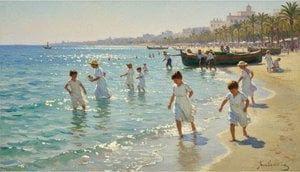
Ignacio Pinazo Camarlench: Elämä ja perintö
Varhaiset vuodet ja selviytymistaistelu
- Syntynyt: Valencia, Espanja, 1849, vaatimattomaan perheeseen.
- Pinazo kohtasi varhain elämän haasteita, joutuen osallistumaan perheen toimeentuloon jo nuorena.
- Ennen virallista taidekoulutustaan hän työskenteli hopeaseppänä, laattamaalarina ja viuhkojen koristelijana.
- Äidin kuolema koleraan sekä isän poismeno johtivat siihen, että hän muutti isovanhempiensa luokse.
- Vuonna 1864 hän aloitti opintonsa Valencian San Carlosin taideakatemiassa, samalla kun jatkoi hatuntekijän työtä elantojensa turvaamiseksi.
Taiteellinen kehitys ja vaikutteet
- Pinazon taiteellinen ura alkoi noin 21 vuoden iässä, ja hän saavutti ensimmäisen menestyksensä Barcelonassa kolme vuotta myöhemmin.
- Hänen varhaiset teoksensa keskittyivät perinteisiin historiallisiin aiheisiin, mutta tyyli muuttui dramaattisesti ratkaisevan Rooman-matkan jälkeen vuonna 1873.
- Matkojen inspiroimana hän alkoi maalata perheaiheita, alastomien hahmojen kuvauksia ja arkipäivän kohtauksia – ennustaen näin Joaquín Sorolla y Bastidan ja Francisco Domingon tyyliä.
- Toinen pitkä oleskelu Roomassa (1876–1881), jonka hän sai rahoitettuna apurahalla, hioi hänen impressionistista lähestymistapaansa entisestään.
- Hän kehitti tyylin, jolle oli ominaista tummat värit – mustat, ruskeat ja maanläheiset sävyt – yhdistettynä impressionismin välkkyvään palettiin, hyödyntäen usein nopeita siveltimenvetoja.
Suuret saavutukset ja tunnustus
- Pinazo sai tilauksia Valencian aristokratialta, muun muassa Benicarlón markiisitarilta.
- Hän voitti hopeamitalle taidenäyttelyissä vuosina 1881 ja 1885, ja myöhemmin kultamitalle vuosina 1887 ja 1899.
- Hänelle myönnettiin kuninkaallinen mitali hänen taiteellisista ansioistaan.
- Vuonna 1912 Valencia kaupunki kunnioitti häntä nimeämällä kadun hänen mukaansa.
- Merkittäviä teoksia: Las hijas del Cid, Los últimos momentos del rey Don Jaime el Conquistador, El guardavía ja Barca en la playa.
Henkilökohtainen elämä ja perhe
- Pinazo avioitui Teresa Martinez Montfortin kanssa, ja he saivat kaksi poikaa, Ignacio ja Jose, joista molemmistakin tuli myös taidemaalareita.
- Hän muutti väliaikaisesti Béteraan Valencian kolerauksen aikana vuonna 1884, asuen pankkiiri Jose Jaumandreun omistamassa ”Maria”-villassa.
Historiallinen merkitys ja perintö
- Pinazoa pidetään yhtenä 1800-luvun lopun merkittävimmistä valencialaisista taiteilijoista, joka yhdisti perinteiset tyylit nouseviin impressionistisiin tekniikoihin.
- Hänen työnsä tarjoaa arvokasta tietoa espanjalaisesta yhteiskunnasta ja arkielämästä hänen aikakaudellaan.
- Suurin kokoelma hänen maalauksiaan ja piirroksiaan on Institut Valencià d'Art Modernissa (IVAM), vaikka ne eivät ole aina pysyvästi esillä. Hänen teoksiaan löytyy myös Valencian taidemuseosta (Museu de Belles Arts de València) sekä Prado-museosta.
- Kuollut: Godella, Espanja, 1916, 67 vuoden ikäisenä, jättäen jälkeensä merkittävän taiteellisen perinnön.
Kysymykset ja vastaukset
Mihin tyylisuuntauksiin Ignacio Pinazo kuului?
Ignacio Pinazo:n teoksia voi selata tyylisuuntien mukaan artistin Kaikki suuntaukset -sivulla.
Kuinka monta Ignacio Pinazo teosta on katseltavissa?
Voit selata 178 teosta teosta taiteilijalta Ignacio Pinazo sivulla Kaikki teokset.
Mistä löytää Ignacio Pinazo -taiteilijan teokset aihepiireittäin ryhmiteltynä?
Ignacio Pinazo:n teoksia voi tutkia aiheen mukaan artistin Aiheatlas -sivulla.