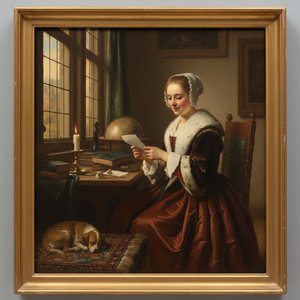
Varhaisluonnon, perheen ja koulutuksen vaikutus
Gerrit Dou syntyi 7. huhtikuuta 1613 Leidenissä, Alankomaissa. Hän kasvoi kodissa, jossa valo ja lasi olivat keskeisessä roolissa päivittäisessä elämässä, sillä hänen isänsä työskenteli lasimestarina ja lasin kaivertajana. Tämä varhainen altistuminen lasin kautta tapahtuvalle valon herkkä käsittelylle muovasi todennäköisesti hänen kehittyvää silmäänsä. Isä antoi hänelle ensimmäiset opetukset, istuttaen häneen tarkkuuden tunteen, joka määritteli hänen myöhemmät vuotensa. Vuoteen 1622 mennessä, neljätoista-vuotiaana, hän aloitti oppisopimuksen kuparikaivertaja Bartholomeus Dolendon luona. Juuri Dolendon alaisuudessa hän opiskeli myös piirtämisen perusteita, oppien kääntämään muodon pinnalle huolellisella ja harkitulla tavalla.
Hänen koulutuksensa jatkui lasitaiteen erikoistuneessa maailmassa, viettäen kaksi vuotta Pieter Couwenhornin lasimaalausverstaassa. Nämä muovaavat vuodet käytettiin materiaalin ja värin teknisyyksien hallitsemiseen ennen kuin hän siirtyi kohti laajempaa kangasta. Vuosien 1628 ja 1631 välisenä aikana hänen polkunsa kääntyi merkittävästi, kun hän astui Rembrandt-mestarin studion kynnykselle. Tämä opiskeluvuosien jakso antoi hänelle mahdollisuuden imeä itseensä mestarin menetelmiä, erityisesti valon ja varjon vuorovaikutusta, jolla luodaan syvyyttä ja tunnelmaa. Vaikka hän kehitti myöhemmin oman tyylinsä, tuossa studiolla vietetty aika loi välttämättömän pohjan hänen tekniselle kasvulleen.
Tekniikka ja taiteellinen tyyli
Gerrit Dou’n lähestymistapa maalaamiseen oli luonteeltaan hiljainen, lähes pakkomielteinen omistautuminen yksityiskohdille. Hän oli Leidenin fijnschilder-maalareiden johtohahmo, ryhmän jäseniä, jotka asettivat etusijalle hienostuneen ja äärimmäisen huolellisen tekniikan. Sen sijaan, että hän olisi työskennellyt suurilla ja leveillä kangaspinneilla, hän suosi pienikokoisia teoksia, jotka kutsuivat katsojaa tarkempaan tarkasteluun. Saavuttaakseen tämän tason tarkkuuden, hänen kerrotaan käyttäneen yhdistelmää koveria ja kuperia linssejä, hyödyntäen käytännössä suurennusta auttaakseen häntä kuvaamaan maailman hämmästyttävällä tarkkuudella. Tämä menetelmä antoi hänelle mahdollisuuden vangita pienimmätkin tekstuurit, tinaisen kiillon ja pellavan hienovaraiset rypyt, lähes valokuvamaisella selkeydellä.
Hänen menetelmäänsä, jota kutsuttiin usein nimellä verliefde schildering tai "rakastettu maalaus", leimasi lukuisien ohuen maalikerroksen levittäminen, jonka tavoitteena oli luoda emalimainen, sileä pinta. Tämä vaivalloinen prosessi antoi hänen teoksilleen kiillotetun ja samettisen laadun. Hänellä oli erityinen lahjakkuus trompe l'oeil -tyylisissä "niche"-maalauksissa, joissa hän käytti holvattuja kiviaukkoja luodakseen harhaanjohtavan syvyysvaikutelman, tehden pienistä kohtauksista kuin todellisia, asuttuja huoneita. Hänen mestarillinen hallintansa chiaroscuro-tekniikkaan näkyi selvimmin kynttilänvalon valaisemissa yökohtauksissa, joissa valon ja varjon leikki imeytti katsojan intiimeihin, arkisiin hetkiin.
Hänen keskittymisensä pysyi pääasiassa genremalauksissa, jotka vangitsivat arjen hiljaiset rytmit. Hänen merkittäviä aiheitaan ovat muun muassa:
Keskeiset teokset ja mestariteokset
Gerrit Dou’n varhaiset tuotannot kertovat taiteilijasta, joka löysi oman äänensä nopeasti. Vuonna 1628 hän loi teoksen The Night School, joka heijastaa alkua hänen elinikäiselle kiehtovuudelleen hiljaisia, sisätiloissa sijoittuvia kohtauksia kohtaan. Vuoteen 1630 mennessä hänen kykynsä kuvata tiettyjä, usein karuja inhimillisiä kokemuksia oli jo ilmeinen teoksessa The Extraction of Tooth. Nämä varhaiset vuodet vakiinnuttivat hänen kykynsä muuttaa pienet, arkiset hetket syvällisesti havainnoiduiksi ja fyysisesti läsnä oleviksi kokemuksiksi.
Uran edetessä hänestä tuli valon ja varjon vuorovaikutuksen mestari. Hän löysi erityisen rytmin kynttilänvalon valaisemissa kohtauksissa, kuten teoksessa The Astronomer by Candlelight. Hänen vuoden 1650 teoksensa The Dutch Housewife, joka sijaitsee nykyään Pariisin Louvressa, osoittaa sen kiillotetut, emalimaiset pinnat, joista hän tuli tunnetuksi. Hän jatkoi tämän tyylin hienosäätämistä vuosisadan puoliväliin saakka maalaten The Silver Ewer -teoksen vuonna 1663 ja The Moneylender -teoksen vuonna 1664; molemmat korostavat hänen omistautumistaan tekstuurille ja sille tavalle, jolla valo lankeaa pinnalle.
Monet hänen merkittävimmistä saavutuksistaan löytyvät tavasta, jolla hän käsitteli ihmisen haavoittuvuutta ja hiljaisuutta. Amsterdamin Rijksmuseumissa sijaitseva The Evening School on edelleen ensisijainen esimerkki hänen taidostaan hallita valoa. Ehkä hänen kuuluisin saavutuksensa on vuonna 1663 maalattu The Dropsical Woman, jota monet pitävät hänen mestariteoksenaan sen intensiivisen yksityiskohtaisuuden ja psykologisen syvyyden vuoksi.
- The Night School (1628)
- The Extraction of Tooth (1630)
- The Dutch Housewife (1650)
- The Evening School (päiväys puuttuu)
- The Silver Ewer (1663)
- The Dropsical Woman (1663)
Tilaajat ja komission työt
Gerrit Dou’n kyky vangita kodinomaisen elämän pienimmätkin yksityiskohdat toi hänelle merkittävää taloudellista menestystä ja jatkuvan virran arvostettuja asiakkaita. Hänen teoksistaan oli valtava kysyntä hollantilaisessa kauppiasluokassa, joka arvosti näitä hiljaisia ja huoliteltuja arjen hetkiä. Yksi hänen merkittävimmistä sopimuksistaan oli yhteistyö Pieter Spieringin kanssa, joka maksoi 500 gulssia vuosittain pelkästä etuoikeudesta saada ostaa Dou’n uusimmat maalaukset ennen muita. Tämä varmisti, että Spiering saattoi hankkia taiteilijan tuoreimmat luomukset ennen kuin kenelläkään muulla oli mahdollisuutta tarjouskilpailuun.
Hollannin tasavallan paikallisten kauppiaiden lisäksi Dou’n maine ulottui Euroopan aateliston korkeimpiin piireihin. Ruotsin kuningatar Kristina oli yksi hänen teostensa merkittävistä keräilijöistä, ja hän omisti lopulta yksitoista Dou’n maalausta. Taiteilijan ateljee herätti myös kansainvälistä kiinnostusta; Cosimo III de' Medici vieraili hänen kodissaan, ja uskotaan, että hän saattoi ostaa vähintään yhden teoksen vierailunsa aikana. Vaikka hänen laajat genremalauksensa toivat huomattavia summia, hän harjoitti myös säännöllistä muotokuvamaalausta. Näistä henkilökohtaisista tilauksista hän veloitti 6 gulssia tunnilta.
Ystävät, kilpailijat ja oppilaat
Gerrit Dou’n taiteellinen polku sai syvän muotonsa ajasta, jonka hän vietti Rembrandtin ateljeessa. Hän opiskeli mestarin alaisuudessa noin kolme vuotta, imien itseensä sitä, kuinka valo ja varjo voivat määritellä koko kohtauksen tunnelman. Vaikka hän omaksui Rembrandtin mestarillisen chiaroscuro-tekniikan, Dou siirtyi myöhemmin pois opettajansa laajemmasta ja tekstuuripitoisemmasta tyylistä. Hän tavoitteli erilaista tarkkuutta, keskittyen pienikokoisiin teoksiin, jotka vaativat vakaata kättä ja lähes pakonomaista huomiota yksityiskohtiin. Tämä tyylillinen muutos auttoi häntä nousemaan hollantilaisen fijnschilderij-koulukunnan perustajaksi, taiteilijoiden ryhmäksi, joka omistautui tälle äärimmäisen hienostuneelle ja kiillotetulle tyylille.
Hänen vaikutuksensa levisi laajalle niiden lukuisien taiteilijoiden kautta, jotka pyrkivät oppimaan hänen huolelliset menetelmänsä. Hän toimi opettajana useille merkittäville hahmoille, jotka tulivat myöhemmin jättämään omat jälkensä hollantilaisessa taiteessa. Hänen tunnetuimpien oppilaidensa joukossa olivat muun muassa Frans van Mieris the Elder ja Gabriël Metsu. Hänen ateljee-ympäristönsä toimi myös koulutuspaikkana muun muassa Godfried Schalckenille, Carel de Moorille ja Matthijs Naiveulle. Nämä oppilaat kantavat eteenpäin hienovaraisen maalaamisen perinnettä, varmistaen, että se tekninen täsmällisyys, jota Dou puolusti, säilyi merkittävänä osana taiteellista maisemaa.
Perintö ja vaikutus
Gerrit Dou jätti jälkensä Hollannin kultakauteen tavalla, joka ulottui kauas hänen omasta ateljeestaan Leideniin. Hollantilaisen fijnschilderij-tyylin, eli hienomaalauksen, perustajana hän loi standardin tarkkuudelle, joka määritteli kokonaisen aikakauden. Hänen vaikutuksensa virtasi suoraan hänen oppilaidensa teoksiin, joista merkittävimpiä olivat Frans van Mieris the Elder ja Gabriël Metsu. Nämä taiteilijat kantavat edelleen hänen omistautumistaan äärimmäiselle yksityiskohtaisuudelle ja arjen hiljaiselle havainnoinnille, varmistaen, että hänen tekninen lähestymistapansa säilyi osana taiteellista keskustelua vuosikymmenten ajan.
Hänen työnsä ulottuvuus tuntuu vielä tänäkin päivänä suurten instituutioiden saleissa. Hänen maalauksiaan säilytetään useissa kokoelmissa, mukaan lukien Haagissa sijaitsevassa Museum Huis ten Bosch -museossa, jossa hänen kykynsä kuvata valoa ja tekstuuria on edelleen esillä. Hänen teoksensa jatkavat taiteen ystävien ja taiteilijoiden huomion vangitsemista; monet löytävät inspiraatiota siitä, miten hän onnistui vangitsemaan kohtauksen pienimmätkin vivahteet. Olipa kyseessä kynttilänvalon valaisema sisätila tai huolellisesti sommiteltu "niche"-maalaus, hänen kätensä on edelleen nähtävissä Hollannin taidehistoriassa.
Missä teoksia voi nähdä tänään
Gerrit Dou'n kädenjäljen jälkien etsiminen vaatii matkan läpi Euroopan merkittävimpien taidehallien. Hänen läsnäolonsa tuntuu voimakkaimmin Pariisissa, missä Louvre-museo kätkee sisäänsä kolmetoista hänen maalaustaan. Näissä hiljaisissa huoneissa voi tarkkailla, kuinka hän hallitsi valon leikin kohtauksissa kuten The Dropsical Woman (1663). Amsterdam tarjoaa myös syvällisen katsauksen hänen elämäänsä Rijksmuseumin kokoelmien kautta, jotka säilyttävät kaksitoista hänen teostaan, mukaan lukien yksityiskohtaisen The Evening School -maalauksen.
Alankomaiden rajojen ulkopuolelle hänen vaikutuksensa levisi kauas. New Yorkissa sijaitseva The Leiden Collection säilyttää kuusi hänen maalaustaan, mikä mahdollistaa hänen huolellisen tekniikkansa tarkastelun Atlantin takaa käsin. Euroopassa Residenzgalerie Salzburgissa kotiuttaa neljä teosta, kun taas Münchenin Alte Pinakothek säilyttää kolme. Nämä kokoelmat antavat meille mahdollisuuden nähdä hänen tyylinsä kehityksen, opettajansa varhaisista vaikutteista aina niihin erittäin kiillotettuihin pintoihin, joista hän tuli tunnetuksi.
- The Night School (noin 1628)
- The Dutch Housewife (1650)
- The Moneylender (1664)
Kysymykset ja vastaukset
Miten Gerard Doun taide kehittyi ajan myötä?
Gerard Dou'n ura avautuu vaihe vaiheelta artistin Ura kronikka -sivulla: vaakasuuntainen aikajana teoksista, ryhmiteltynä uravaiheiden mukaisiin lukuihin.
Missä kaupungissa ja maassa Gerard Dou on syntynyt?
Gerard Dou on syntynyt Leiden, Alankomaat.
Mistä voin nähdä Gerard Dou's teokset 3D-galleriassa?
Gerard Dou-taiteilijan 3D-galleria esittelee taiteilijan teoksia virtuaalisessa kolmiulotteisessa galleriassa.