Franz Bischoffin valoisa perintö
Franz Albert Bischoff seisoo hiljaisena mutta vaikutusvaltaisena hahmona amerikkalaisen taidehistorian sivuilla, maalarina, jonka sivellin vangitsi valon katoavan olemuksen ja Kalifornian maiseman tyynen sielun. Vuonna 1864 Itävallan Steinschönau am Innissä syntynyt Bischoff koki varhaisvuotensa Itävalta-Unkarin keisarikunnan rikkaiden koristeluperinteiden syleilyssä. Soveltavan muotoilun, vesivärimaalauksen ja keramiikan koristelun perusteellinen koulutus opetti hänelle äärimmäistä tarkkuutta yksityiskohdassa sekä syvää kunnioitusta värien harmoniaa kohtaan. Kun hän muutti Yhdysvaltoihin vain viisitoista vuotta vanhana, hän kantoi mukanaan Vanhan maailman herkkyyttä, joka sulautui lopulta Amerikan lännen kasvavaan optimismiin luoden tyylin, joka oli teknisesti täsmällinen ja emotionaalisesti vavahduttava.
Uran edetessä New Yorkin, Ohion ja Michiganin teollisuusmaisemien halki, Bischoff saavutti ensin suurta tunnustusta hienostuneen posliinimaalauksen kautta. Tämä taidemuoto vaati poikkeuksellista hallintaa värien sekoittamisessa ja hienoissa yksityiskohdissa – taidot, jotka muodostuivat myöhemmin hänen maisemamaalaustensa tavaramerkiksi. Kyky hallita hienovaraisia lasitteita ja ohennettuja värikerroksia antoi hänelle mahdollisuuden puhaltaa eloon posliiniin, mikä toimi esinäytönä myöhempien öljyväriteostensa eteerisille laaduille. Juuri tämä koristelutaitoisen tarkkuuden ja ilmakehän herkkyyden ainutlaatuinen risteyskohta määritteli hänen taiteellisen identiteettinsä siirtyessään keramiikan huolellisuudesta Amerikan rajaseutujen avoimiin näkymiin.
Impressionismi ja Kalifornian valo
Bischoffin taiteellinen metamorfoosi tapahtui hänen saapuessaan Kaliforniaan, missä dramaattinen topografia ja ainutlaatuiset sääolosuhteet tarjosivat uuden museen. Omaksuen impressionismin periaatteet hän pyrki vangitsemaan ne ohimenevät valon hetket, jotka määrittelevät koko alueen. Hänen tekniikastaan tuli hienostunut vuoropuhelu herkkien vesivärikerrosten ja hienovaraisten öljylasitteiden välillä, mikä loi kankaita, jotka tuntuvat hehkuvan sisältäpäin. Hänellä oli harvinainen kyky tiivistää monimutkainen visuaalinen informaatio harmonisiksi kokonaisuuksiksi, olipa kyseessä sitten vuoristojen karu majesteettisuus tai Tyynenmeren pehmeät rannikkosumut.
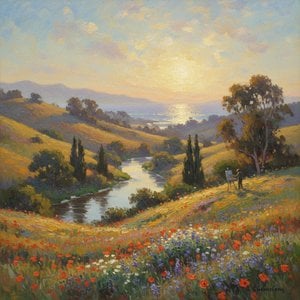
Hänen tuotantonsa toimii elävänä tallenteena luonnon maailmasta Amerikan historian murrosvaiheessa. Hänen silmillään koemme seuraavat teokset:
- Cloud Shadows: Vuoden 1912 mestariteos, jossa dramaattiset vuoret ja elinvoimaiset puut heräävät henkiin impressionistisen linssin läpi, tarjoten seesteisen kurkistuksen luonnon voimaan.
- Pasadena Foothills: Upea vuoden 1917 öljymaalaus, joka vangitsee Amerikan maiseman olennaisen kauneuden ja osoittaa hänen kykynsä kuvata valoa kumpuavassa maastossa.
- Mist-Veiled Days, Monterey: Vaikuttava tutkimusmatka rannikon ilmakehään, jossa sumun ja meren vuorovaikutus osoittaa hänen hallintansa sävyjen hienovaraisuudessa.
Pysyvä jälki taidehistoriaan
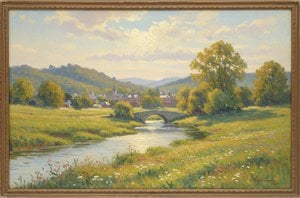
Pelkän maisemoinnin ulkopuolella Bischoffin työ ilmentää nostalgiaa ja kunnioitusta koskematonta luonnon kauneutta kohtaan. Hänen maalauksensa, kuten mestarillinen Landscape at Saint Valery-sur-Somme, osoittavat kykyä yhdistää eurooppalaiset juurensa amerikkalaisiin kokemuksiinsa, sulauttaen koulutuksensa rakenteellisen eleganssin Kalifornian rannikon villiin ja spontaaniin energiaan. Hän ei ainoastaan maalannut sitä, mitä näki; hän maalasi sen, miltä valo tuntui, antaen aiheilleen rauhan ja pysyvyyden tunteen.
Franz Bischoffin historiallinen merkitys piilee hänen roolissaan siltana koristetaiteen ja hienotaiteellisen maisemamaalauksen välillä. Tuomalla posliinimaalauksen tarkkuuden impressionististen öljymaalausten suuriin mittakaavoihin, hän loi itselleen ainutlaatuisen paikan taidehistoriassa. Nykyään hänen teoksensa ovat arvostettuja niiden kyvystä kuljettaa katsoja löytöretkien ja luonnon loiston menneeseen aikakauteen, muistuttaen meitä herkän kosketuksen ja valoisan vision kestävästä voimasta.
Kysymykset ja vastaukset
Mistä voin löytää tilastoja Franz Bischoff teoksista?
Franz Bischoff'n Tilastot -sivu esittää tilastoja, jotka on laskettu tämä sivusto-sivustolla listattujen taiteilijan teosten perusteella.
Onko Franz Bischoff esitelty aikajärjestyksessä?
Franz Bischoff-taiteilijan Ura kronikka on vieritettävä aikajana, joka esittää taiteilijan teokset kronologisessa järjestyksessä jaettuna uravaiheita vastaaviin lukuihin.
Miten löydän tietyn teeman mukaisia Franz Bischoff teoksia?
Löytääksesi tiettyyn teemaan liittyviä Franz Bischoff teoksia, käytä taiteilijan Avainsanojen mukaan -sivua, joka ryhmittelee teokset avainsanojen mukaan.