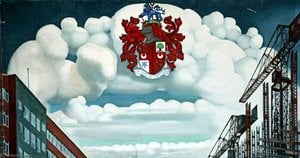
Eric Kennington muotokuva

Eric Kenningtonn kuuluisimmat maalaukset: Kaikki 13 teosta, järjestettynä

Päivitetty marraskuu 2026 · järjestetty suosituimmuuspisteiden mukaan (jokaisen teoksen haut, vierailut ja tilaukset) · 13 teosta taiteilijalta Eric Kennington luettelossamme

Lyhyesti

Teos Mrs George Struthers (1856–1946) (1910) on se Eric Kennington maalaus, jonka useimmat ihmiset tuntevat. Heti niiden jälkeen seuraavat The Conquerors (1920) ja Flying Officer R.C. Dafforn, DFC - Eric Kennington (1941). Eric Kenningtonin 13 teoksesta meidän valikoimassamme nämä 13 ovat tunnetuimpia. Jokaisesta on ilmoitettu vuosi, museo sekä lyhyt kuvaus siitä, mikä tekee teoksesta erityisen.

1888 – 1960, Chelsea Eniten teoksia: Canadian War Museum

Eric Kennington -taiteilijan top 10: teokset, jotka kaikki tuntevat

1
Mrs George Struthers (1856–1946) (1910) tekijä: Vincent van Gogh Eric Kennington

Mrs George Struthers (1856–1946)

1910 · Oil On Canvas

A seated woman occupies the center of this oil on canvas portrait. She is positioned in an armchair, her body facing forward while her gaze remains steady. The subject wears dark, heavy clothing that gathers in thick folds around her lap and arms. To her side, a small table supports a vase filled with white lilies. The lighting is diffused, casting soft shadows across the contours of her face and…

2
The Conquerors (1920) tekijä: Vincent van Gogh Eric Kennington

The Conquerors

1920 · Oil · Canadian War Museum, Ottawa

The Conquerors is an oil painting by Eric Kennington, executed about 1920. The work emerged from the artist's experiences during the early twentieth century, a period that shaped his technical approach and thematic focus.

3
Flying Officer R.C. Dafforn, DFC - Eric Kennington (1941) tekijä: Vincent van Gogh Eric Kennington

Flying Officer R.C. Dafforn, DFC - Eric Kennington

1941 · Oil On Canvas

The artwork titled Flying Officer R.C. Dafforn, DFC - Eric Kennington is a portrait created by the artist Eric Kennington. This work was executed about 1941. The subject of the painting is a man who is likely a military officer, identified by the title as Flying Officer R.C. Dafforn, DFC.

4
Fusilier Perrin (1941) tekijä: Vincent van Gogh Eric Kennington

Fusilier Perrin

1941 · Charcoal

In this charcoal drawing, titled Fusilier Perrin, Eric Kennington captures a quiet, heavy stillness. Created about 1941, the work presents two soldiers caught in a contemplative moment. They sit together at a table, their presence filling the space with a sense of shared experience. One figure leans forward, perhaps lost in thought or a private sorrow, while the other observes him in silence. There is a profound sense of fatigue…

Jatka Eric Kennington:n tutkimista: 11 – 13

Mitä Eric Kennington maalasi eniten

Nämä teokset käsittelevät neljää yleisintä aihetta, joista jokaisesta on esitetty tunnetuin esimerkki.

Mistä löydät Eric Kennington's maalaukset

Tämän sivun teoksista eniten sisältävät 4 museota.

Museo Kaupunki Eric Kennington teokset Tämän listan maalaukset
Canadian War Museum, OttawaCanadian War Museum Ottawa 1 The Conquerors
Royal Society of Medicine, LontooRoyal Society of Medicine Lontoo 1 Sir John Young Walker MacAlister (1856–1925)
The University of Reading, ReadingThe University of Reading Reading 1 Dr William Macbride Childs (1869–1939), MA
Imperial War Museums, LontooImperial War Museums Lontoo 1 The Kensingtons at Laventie

Yksi kuuluisa Eric Kennington -teos joka vuosikymmeneltä

Teokset vuosikymmenittäin

Valitse vuosikymmen nähdäksesi sen merkittävimmän teoksen.

Eric Kennington -maalaukset: mitä ihmiset haluavat tietää

Mistä maalauksesta Eric Kennington tunnetaan parhaiten?Katso vastaus

Listan kärjessä on Mrs George Struthers (1856–1946) (1910). Heti sen perässä: The Conquerors (1920) ja Flying Officer R.C. Dafforn, DFC - Eric Kennington (1941).

Kuinka vanha Eric Kennington oli teoksen Mrs George Struthers (1856–1946) aikaan?Katso vastaus

22 vuotta. Eric Kennington syntyi vuonna 1888, ja teos Mrs George Struthers (1856–1946) on peräisin vuodelta 1910.

Mitkä ovat Eric Kennington 10 kuuluisinta maalausta?Katso vastaus

Mrs George Struthers (1856–1946), The Conquerors, Flying Officer R.C. Dafforn, DFC - Eric Kennington, Fusilier Perrin, Dr William Cunningham (1849–1919), Fellow, Clergyman and Economic Historian, William Cunningham, Sir John Young Walker MacAlister (1856–1925), Gassed and Wounded, Dr William Macbride Childs (1869–1939), MA ja Able Seaman Povey of HMS 'Hardy'. Löydät kunkin teoksen vuosiluvun ja museon yllä olevasta luettelosta.

Kuinka monta Eric Kennington teosta on olemassa?Katso vastaus

Luettelossamme on 13 teosta taiteilijalta Eric Kennington, aikaväliltä 1908–1955.

Missä museoissa on Eric Kennington'n tunnetuimmat maalaukset?Katso vastaus

Löydät useimmat niistä Canadian War Museum (Ottawa), Royal Society of Medicine (Lontoo) ja The University of Reading (Reading). Yllä oleva museolista sisältää täydellisen erittelyn.

Milloin Eric Kennington'n kuuluisimmat teokset on maalattu?Katso vastaus

Ajanjaksona 1910s on merkittävämpi kuin mikään muu: 4 sivun 13 teoksesta on peräisin tuolta ajalta, joista Mrs George Struthers (1856–1946) on Mrs George Struthers (1856–1946).

Mitkä ovat Eric Kennington vanhimmat ja uusimmat kuuluisat maalaukset?Katso vastaus

Vanhin teos täällä on William Cunningham (1908); uusin on Birkenhead Technical College Decoration (triptych, top panel) (1955).

Mitä Eric Kennington yleensä käytti maalaamiseen?Katso vastaus

Oil On Canvas, käytetty 2 kappaleessa sivun 13 teoksista.

Tapaa Eric Kennington

A Life Etched in Stone and Canvas: The World of Eric Henri Kennington

Eric Henri Kennington, born in Chelsea, London, in 1888, was an artist whose life mirrored the tumultuous currents of the early 20th century. He wasn’t merely a recorder of his time; he was deeply embedded within it, experiencing its hardships and triumphs firsthand. The son of Thomas Benjamin Kennington, a respected genre and portrait painter and founding member of the New English Art Club, Eric inherited an artistic lineage that fostered both technical skill and a keen observation of human character. His early education at St Paul’s School and the Lambeth School of Art laid the foundation for a career that would span painting, sculpture, and illustration, all marked by a profound sense of realism and empathy. Even in his youth, Kennington demonstrated an ability to capture the essence of everyday life, finding beauty and dignity in ordinary subjects – a trait that would become central to his artistic vision. His initial success with paintings of costermongers in 1914 allowed him to establish a studio, signaling the beginning of a promising career just as Europe teetered on the brink of war.

Bearing Witness: Kennington and the Great War

The outbreak of World War I irrevocably altered Kennington’s path. He enlisted in the 13th (Kensington) Battalion London Regiment in August 1914, eager to contribute to the national effort. However, his experience on the Western Front was far from romanticized. Wounded in January 1915 during a mishap with a jammed rifle – an incident that nearly cost him his foot – Kennington returned to England and spent months recovering. It was during this convalescence that he began work on what would become one of his most iconic paintings, The Kensingtons at Laventie. This remarkable piece, painted in reverse on glass, depicts a group of exhausted soldiers from his platoon, their faces etched with weariness and resilience. The painting wasn’t a glorification of war; it was an unflinching portrayal of its human cost, capturing the quiet heroism and enduring spirit of ordinary men facing extraordinary circumstances. Its exhibition in 1916 caused a sensation, praised for its technical brilliance and honest depiction of wartime reality. Kennington's commitment to portraying the truth of the conflict led to his appointment as an official war artist in 1917, allowing him extended periods on the front lines. He worked alongside artists like William Rothenstein, often under shellfire, documenting the lives of soldiers and producing a series of lithographs for the Ministry of Information aimed at bolstering public support for the war effort. However, his experience wasn’t without frustration; he felt hampered by censorship and lacked the privileges afforded to other official war artists such as William Orpen and Muirhead Bone.

Between the Wars: Portraits, Illustrations, and a Literary Collaboration

The interwar years saw Kennington diversify his artistic output. While continuing to accept portrait commissions – capturing the likenesses of prominent figures of the day – he also found success as an illustrator. His most significant collaboration during this period was with T.E. Lawrence, the legendary “Lawrence of Arabia.” Kennington accompanied Lawrence on a journey to the Middle East and created a series of drawings that served as the basis for illustrations in Lawrence’s monumental work, Seven Pillars of Wisdom. These illustrations weren't merely decorative; they were integral to conveying the atmosphere and character of the Arab Revolt. This project showcased Kennington’s versatility and his ability to translate complex narratives into compelling visual imagery. Simultaneously, he began to explore sculpture more seriously, inspired by ancient Egyptian art encountered during his travels with Lawrence. He quickly established himself as a gifted sculptor, creating works that possessed both power and sensitivity.

Memorials and Legacy: A Lasting Impression

Kennington’s talent for capturing human emotion and form found its most enduring expression in his sculptural memorials. His 24th East Surrey Division War Memorial in Battersea Park stands as a poignant tribute to the fallen, featuring powerfully sculpted figures that convey grief, loss, and remembrance. He also contributed significantly to the Shakespeare Memorial Theatre in Stratford-upon-Avon and created the tomb effigy of T.E. Lawrence at Wareham in Dorset – a fitting final homage to his friend and collaborator. Kennington continued to serve as a war artist during World War II, again focusing on depictions of everyday life for soldiers and airmen. He died in 1960, leaving behind a body of work that is both historically significant and deeply moving. His art remains a powerful testament to the human spirit’s capacity for endurance, resilience, and compassion, offering a glimpse into the realities of war and the enduring power of artistic expression. His legacy lies not only in his technical skill but also in his unwavering commitment to portraying the truth, even when it was uncomfortable or challenging.