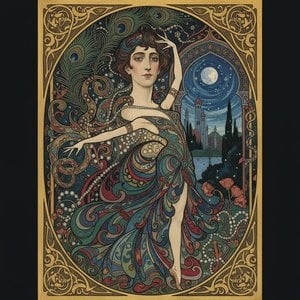
Carmen Florea Voicu: Embroidered Threads of Romanian Tradition
Carmen Florea Voicu, born in Jerez de la Frontera, Spain, represents a remarkable convergence of artistic vision and cultural preservation—specifically within the captivating realm of Romanian costume design and medieval history. While her birthplace might seem geographically distant from Romania’s vibrant heritage, Voicu's unwavering dedication to translating its essence into visual art has secured her position as a celebrated figure in contemporary Romanian culture. Her artistic journey commenced with an irresistible fascination for Romanian folklore and artisanal craftsmanship. This passion ignited a transformative creative process that culminated in the conception of “Aievea,” a breathtaking textile artwork—a tribute to the Muntenia traditional shirt. Recognized by UNESCO’s intangible cultural heritage program, this emblem embodies the soul of Romanian peasant culture. The design itself draws inspiration from an artefact housed within the National Museum of the Romanian Peasant, meticulously recreating intricate embroidery patterns that resonate with centuries of storytelling and tradition. Voicu's masterful execution leverages cotton as her medium—a deliberate choice reflecting Romania’s artistic heritage—resulting in a piece that eloquently communicates its profound cultural significance. Beyond her internationally acclaimed shirt design, Voicu possesses an astute understanding of Romanian history, particularly the medieval cult of saints in Transylvania. This scholarly pursuit serves as the bedrock for her teaching role at Babeș-Bolyai University, where she passionately disseminates knowledge and nurtures appreciation for this pivotal period in Romanian civilization’s narrative. Her research delves into the symbolic layers embedded within religious iconography and architectural spaces—elements that contribute substantially to a deeper comprehension of Transylvanian society during the Middle Ages. Voicu's meticulous analysis illuminates how artistic expression mirrored spiritual beliefs, shaping the cultural landscape of Romania centuries ago. Furthermore, Voicu’s artistic sensibilities extend beyond academic boundaries; she is recognized for her “AIDOMA Collection,” which showcases a portrait blouse—a testament to Romanian cultural heritage. The careful attention to detail—the leather skirt and studio lighting—underscores the importance of preserving traditional techniques and capturing the spirit of bygone eras. This collection exemplifies Voicu’s commitment to honoring Romania’s artistic past while simultaneously engaging with contemporary aesthetics, demonstrating her ability to synthesize historical knowledge with artistic innovation. Carmen Florea Voicu stands as a beacon of Romanian art – an artist who seamlessly blends scholarly rigor with creative brilliance. Her work embodies not merely technical proficiency but also a deep reverence for Romania's cultural identity—a legacy that continues to inspire and enrich the artistic landscape of Romania today, ensuring that the embroidered threads of tradition endure for generations to come.Kysymykset ja vastaukset
Voinko tutkia Carmen Florea Voicu teoksia värispektrin mukaan?
Carmen Florea Voicu:n teoksia voi tutkia värin perusteella artistin Väriindeksi -sivulla.
Voinko selata Carmen Florea Voicu teoksia väripaletin mukaan?
Väripalettien mukaan-sivulla Carmen Florea Voicu:n teokset on ryhmitelty niiden väripalettien mukaan.
Onko Carmen Florea Voicu teoksista saatavilla täydellinen lista?
Jokaisen tämä verkkosivusto-sivustolla olevan Carmen Florea Voicu teoksen voi selata artistin Kaikki teokset -sivulta.