


Kuva noudattaa valintojasi: , .
Keräilykohteen kuvaus
William Holman Hunt’s intense self-portrait captures the Pre-Raphaelite Brotherhood's realism and moral focus. This 1845 painting showcases youthful dedication with meticulous detail, reflecting Victorian artistic ideals – discover this iconic artwork.
 Lue lisää
Taiteilijan elämäkerta
William Holman Hunt (1827-1910) oli pre-rafaelilainen taidemaalari, tunnettu syvällisistä uskonnollisista ja luonnonaiheista maalauksistaan, kuten "Valo maailmaan". Hänen tyylinsä on realistinen ja symbolinen.
Käsinmaalattu öljyvärinen jäljennös
Käsinmaalattu öljyväri kankaalle haluamassasi koossa ja kehyksissä, taiteilijoidemme valmistamana tilauksesta. ( Vaihda tulosteeseen Siirry digitaaliseen kuvaan)
Lisää tästä teoksesta
 Esikatselu
 Jaa teos
 Jaa
Jaa
 Tiedot
 Opas
Opas

 Lataa kuva
 Samanlaisia kohteita
 Röntgenkuvaus
 Diaesitys
 Kysymykset ja vastaukset
 Tilastot
Tilaa maalauksesi neljässä helpossa vaiheessa
Älä kiirehdi. Voit muuttaa mitä tahansa vastausta; tilauksesi loppusumma päivittyy jokaisen valinnan myötä.
1 Ensimmäinen vaihe neljästä
Minkä kokoisen haluaisit?
Nämä koot säilyttävät alkuperäisen maalauksen mittasuhteet. Piirros näyttää valitsemasi koon seinällä, kahden metrin pitkän sohvan yläpuolella.
Tai anna omat mitat
Valitse valmiista mitoistamme sellaiset, jotka vastaavat teoksen alkuperäisiä mittasuhteita.

Kirjoita tarvitsemasi leveys ja korkeus, jotta teos sopii kehyksiisi tai seinällesi. Koska kyseessä on käsinmaalattu teos, taiteilija voi maalata hieman enemmän kuvan ympärille tai rajata sitä hieman, jos haluat eri muotoisen koon — valinta on sinun. Lähetämme sinulle digitaalisen mallikuvan hyväksyttäväksi ennen kuin maalaus alkaa. Tällä sivulla näkyvä kuva ei vastaa lopullista tulosta — vain mallikuva näyttää sen.
2 Toinen vaihe neljästä
Miten teoksen tulisi olla valmiina: rullattuna, kangasjännitteenä vai kehystettynä?
Alla olevat hinnat koskevat ensimmäisessä vaiheessa valitsemaasi kokoa.
Valitse kangaspinnan reunat
Valitse kehys

Valkoinen reuna €1

pehmennetty reuna €1

Jatkuva reuna €1

P118B €10

P118H €10

P118W €10

P438Z €10

P508JH €12

P508YH €12

P805H €10

P805Z €10

P919BZ €10

P919G €10

P919XJ €10

P959ZH €10

P968JZ €12

W106C €8

W218G €10

W218JH €8

W218Y €10

W307PJ €10

W316G €10

W316PJ €8

W316Y €10

W398PJ €8

W4111J €10

W500HY €15

W500JH €15

W692G €12

W849H €8

W940BG €15

W953PJ €8

H24-GOLD €30

H24-SILVER €30

H36-GOLD €45

H36-SILVER €45
Kehystetty
Kehystys: . Kokonaismitat kehyksen kanssa: .
3 Kolmas vaihe neljästä
Haluaisitko tehdä maalaukseen jonkin muutoksen?
Useimmat vastaavat kieltävästi. Koska jokainen maalaus on käsintehty, taiteilijamme voi myös muokata sitä sinua varten.
Tilauksen jälkeen ArtsDot.com -tiimi lähettää asiakkaalle sähköpostia ohjeita varten ja toimittaa luonnoksen esikatselun
4 Neljäs vaihe neljästä
Muutamia viimeistelyvaihtoehtoja
Kaikki ovat valinnaisia. Jo valitut vastaukset eivät aiheuta lisäkustannuksia.
Kuka sen maalaa?
Maailmanlaajuinen toimitus () 3–4 viikossa tavallisen 5 viikon sijaan. (13 marraskuu). Laadusta ei tingitä.
Nimikyltti, kuten museossa?
Kaiverretun pronssilaatan tiedot
This elegant plaque features the artist's name and the title of the artwork, finely engraved for a timeless presentation.
It is made from bronze with a refined, elegant finish. The text is precisely laser-engraved for a sharp and permanent result. Measuring 9x2 cm, the plaque is compact yet easy to read. It's built to be durable and scratch-resistant, offering a professional, museum-quality look. Mounting is simple thanks to the included adhesive backing.
Läpinäkyvän akryylilaatan tiedot
The plaque includes essential engraved details such as the artist's name, the title of the artwork, the date it was created, the type of media used-like oil on canvas or watercolor-a brief description of the piece, and a QR code that links to the complete artwork information.
It is crafted from clear acrylic, offering a sleek, modern appearance. The text is UV-engraved in black to ensure strong visual contrast. With a size of 10x15 cm, it ensures optimal readability. It comes equipped with two metal hooks for secure wall mounting. The plaque is designed to be weather-resistant, making it suitable for various environments, and it includes interactive features that work seamlessly with smartphone scanning.
Mustan akryylilaatan tiedot
This elegant plaque includes engraved information such as the artist's name, the title of the artwork, the date it was created, the type of media used (like oil on canvas or watercolor), a short description of the artwork, and a QR code for quick access to more information.
The plaque itself is made from refined black acrylic with a premium finish. The text is laser-engraved in white for high contrast and readability. Its size is 10x15 cm, designed to be easy to read. It comes with two metal hooks for professional mounting. The design is sleek and fits any interior style. It is also weather-resistant and durable, with built-in digital integration for mobile compatibility.
Suojaava lakka?
Milloin tarvitset sen?
✓ Tarkista ja tilaa
Maalauksesi juuri niin kuin tilasit

Self Portrait
Reproduktiotekniikka
Replikaatin koko
-

Kokenut huipputaiteilija
Lisää yksityiskohtia, hienostuneisuutta ja enemmän aikaa tuotantoon
-

Reproduktion kehystysvaihtoehdot
-
-
Teoksille tai reproduktioille, joiden mikä tahansa sivu on suurempi kuin 105 cm (noin 41 tuumaa), kehys toimitetaan osina purettuna sarjana. Tämä menetelmä varmistaa turvallisen toimituksen ja ehkäisee vaurioita kuljetuksen aikana.
Vaatii ammattimaista kokoamista – kyseessä ei ole tee-se-itse-tuote.
Sarja on koottava ja kangas kiristettävä kokeneen kehystysammattilaisen toimesta käyttäen puuliimaa (ei sisälly pakkaukseen), kangaspinnetteitä ja puristimia, jotta kehyksen kulmat pysyvät suorina liiman kuivuessa. Virheellinen kokoaminen tai epätasainen kankaan kiristys voi vaurioittaa teosta pysyvästi, eikä tällaiset vauriot ala takuun piiriin.
 Teoksille tai reproduktioille, joiden mikä tahansa sivu on suurempi kuin 105 cm (noin 41 tuumaa), kehys toimitetaan osina purettuna sarjana. Tämä menetelmä varmistaa turvallisen toimituksen ja ehkäisee vaurioita kuljetuksen aikana.
Kaikki massiivipuupalat sisältyvät, tarkasti mittojen mukaan leikattuina.
Kootaan mukana tulevilla ruuveilla sekä kulmaliitoksia varten tarvittavalla puuliimalla, jota ei toimiteta, joten se on hankittava kehystäjältä.
Vaatii ammattilaisvälineitä, jotka eivät sisälly pakkaukseen: kankaan venytyspihdit (kiristin) ja puristimet, joilla pidetään kehyksen puut suorassa liiman kuivuessa.
Tärkeää:
Kulmaliitoksissa tarvitaan puuliimaa, kehyksien osat on pidettävä puristimilla, kunnes liima on täysin kuivunut, ja koottuun kehykseen jännitettävän kankaan kiristämiseen tarvitaan kangaspenssipihti. Mikään näistä ei sisälly pakkaukseen. Suosittelemme varmistamaan kokeneen kehystäjän saatavuuden ennen tämän kokoisen kehyksen tilaamista.

Nimilaatta
-
-

Suojalakkaus
Kiiltävä lakka (syventää värejä, suojaa valolta ja kosteudelta)
-

Mukauta taideteokseni
Esimerkkejä muokattavista asioista: Vaihda kasvot asiakkaan omaan valokuvaan; Lisää lemmikki (esim. vaihda kissa koiraan); Lisää taustalle piilotettu viesti; Muuta taustan maisemaa tai elementtejä.
-

Pikatoimitus
Maailmanlaajuinen toimitus () 3–4 viikossa tavallisen 5 viikon sijaan. (13 marraskuu). Laadusta ei tingitä.
-
Pikatoimitus
Maailmanlaajuinen toimitus () 5 viikon kuluessa. (20 marraskuu).
Sisältyy hintaan
Kokonaishinta
€ 235
Lasivaihtoehto on saatavilla vain alle 110 cm kokoisille teoksille
Sisältyy jokaiseen tilaukseen
- Ilmainen pikatoimitus ympäri maailman
- Korkealaatuinen pellavakangas
- Kattava kuljetusvakuutus
- Tulliveron palautustakuu
- Takuu täydellisestä värien vastaavuudesta
- 100 päivän palautusoikeus (vain valmistusvirheet)
- 100% rahat takaisin -takuu
- Määräalennus tarjolla


William Holman Hunt's 'Self Portrait': A Window into Victorian Vision
The year is 1845. William Holman Hunt, a young artist wrestling with the burgeoning realities of Victorian England, presents us with a remarkably intimate and profoundly significant work – his self-portrait. More than just a likeness, this painting embodies the spirit of a movement: the Pre-Raphaelite Brotherhood’s audacious challenge to artistic convention and their fervent belief in the power of art to convey moral truth. Housed within the Birmingham Museum and Art Gallery, it remains a potent symbol of Hunt's dedication and a crucial document illuminating the era’s artistic anxieties and aspirations.
- Subject & Composition: The portrait depicts Hunt himself in his youth, meticulously rendered with a formal suit and tie. His direct gaze, unwavering and intense, immediately establishes a connection with the viewer – an unprecedented level of engagement for the time. The simple brown background serves not as a distraction but to amplify the subject’s presence, drawing all attention to his thoughtful expression.
- Pre-Raphaelite Influence: Hunt's adherence to Pre-Raphaelite principles is immediately apparent. The meticulous detail, the almost photographic realism, and the deliberate avoidance of idealized beauty are hallmarks of this revolutionary style. This was a reaction against the perceived artificiality of academic art, a yearning for sincerity and a return to the clarity and emotional depth found in the works of artists before Raphael.
A Study in Detail: Technique and Materials
Hunt’s technique is characterized by an extraordinary level of observation and painstaking execution. He employed oil paints with a remarkable sensitivity, layering thin glazes to achieve subtle gradations of tone and texture. The rendering of his clothing – the fabric's folds, the sheen of the silk, the precise stitching – demonstrates a dedication to realism rarely seen in contemporary portraiture. The use of brown pigments, carefully chosen for their depth and richness, contributes significantly to the painting’s somber yet dignified atmosphere. It is evident that Hunt spent considerable time studying his own features, striving not merely to capture a likeness but to convey something deeper – his intellectual curiosity and artistic commitment.
- Color Palette: The restrained color palette—primarily browns, blacks, and subtle variations of grey—reflects the Pre-Raphaelites’ preference for naturalism and their rejection of bright, artificial colors.
- Brushwork: Hunt's brushwork is remarkably smooth and controlled, contributing to the painting's polished appearance.
Symbolism and Context – A Victorian Soul
Beyond its technical merits, ‘Self Portrait’ offers a fascinating glimpse into the intellectual and spiritual climate of Victorian England. The Pre-Raphaelites were deeply concerned with moral questions and sought to use art as a vehicle for social commentary. Hunt's serious demeanor and direct gaze suggest a man grappling with profound ideas – perhaps reflecting his involvement in religious contemplation or his engagement with contemporary philosophical debates. The painting’s creation coincided with the rise of industrialization, a period marked by both immense progress and significant social upheaval. Hunt’s work can be seen as a quiet resistance to this rapid transformation, a reaffirmation of traditional values and a plea for beauty amidst the encroaching darkness.
- Historical Context: Created during Queen Victoria's reign (1837–1901), the painting reflects the Victorian era’s fascination with morality, spirituality, and detailed observation.
- Symbolic Elements: While seemingly straightforward, the portrait can be interpreted as a meditation on identity, purpose, and the artist’s role in society.
Legacy and Resonance – An Enduring Masterpiece
William Holman Hunt's ‘Self Portrait’ is more than just a historical artifact; it remains a powerful testament to the enduring human desire for beauty, truth, and meaning. Its influence extended far beyond the Pre-Raphaelite Brotherhood, shaping the course of British art and inspiring generations of artists. Today, this remarkable painting continues to captivate viewers with its technical brilliance, emotional depth, and profound reflection on the human condition. A hand-painted reproduction offers a unique opportunity to experience the full impact of Hunt’s vision – a window into a pivotal moment in artistic history.
Kysymykset ja vastaukset
Käyttääkö teos William Holman Hunt:n "Self Portrait" voimakkaita kontrasteja vai pehmeitä harmonioita?
Teoksessa "Self Portrait" Balanced kontrasti ja Unified Palette harmonia kohtaavat.
Mihin huoneeseen William Holman Hunt:n "Self Portrait" suositellaan sijoitettavaksi sen värien perusteella?
William Holman Hunt:n "Self Portrait"-teoksen Earthy värit soveltuvat erinomaisesti sen suositeltuun tilaan: Living Room.
Millaista tunnelmaa "Self Portrait" toisi tilaan?
Calm-tunnelmansa ansiosta "Self Portrait" sopii erinomaisesti tilaan Living Room.
Samankaltaisia teoksia


William Holman Hunt
1827 - 1910, Yhdistynyt kuningaskunta
Taiteilijan elämäkerta
A Life Devoted to Vision
William Holman Hunt, born in Cheapside, London on April 2, 1827, was more than simply a painter; he was a philosophical and spiritual seeker who translated his deepest convictions onto canvas. His early life, though rooted in the bustling commercial world of his father’s warehouse business, held within it an artistic inclination that would ultimately defy expectations. Initially destined for a career mirroring his father's, Hunt found solace and purpose in art, beginning with surreptitious sketching and later, after some struggle, formal training at the Royal Academy Schools. This period of apprenticeship, however, proved restrictive. He yearned for an artistic expression that transcended prevailing academic conventions—a desire that would soon propel him toward revolutionary change. He felt stifled by what he perceived as the artificiality of contemporary art and sought a return to the sincerity and detail found in pre-Renaissance masters, a sentiment central to the formation of the Pre-Raphaelite Brotherhood. Hunt’s journey wasn't merely about aesthetics; it was a quest for truth, morality, and spiritual resonance within the realm of visual representation.The Genesis of a Revolutionary Brotherhood
In 1848, alongside Dante Gabriel Rossetti and John Everett Millais, Hunt established the Pre-Raphaelite Brotherhood (PRB). This collective wasn’t just an artistic movement; it was a rebellion against what they saw as the decline of art since Raphael. The PRB advocated for a return to meticulous detail, vibrant colors, and sincere subject matter characteristic of early Italian painting—before the perceived artificiality of High Renaissance ideals took hold. Hunt's commitment to this philosophy remained unwavering throughout his career. Early works like *The Hireling Shepherd*, painted in 1851, exemplify this dedication. The painting’s painstaking realism – from the texture of the sheep’s wool to each individual blade of grass – was revolutionary for its time. It wasn’t merely a depiction of rural life; it was an attempt to convey moral and symbolic meaning through precise observation of nature. *The Awakening Conscience*, also from this period, further solidified Hunt’s reputation for intensely naturalistic scenes imbued with psychological depth and moral weight. These paintings weren't just visually striking; they were statements about the artist's belief in art as a vehicle for truth and spiritual awakening. The Brotherhood sought to challenge the established norms of artistic production, rejecting what they perceived as formulaic academic painting in favor of a more direct and honest engagement with the world around them.A Pilgrimage of Faith and Symbolic Depth
Hunt’s artistic journey took an extraordinary turn with his travels to the Holy Land in the 1850s and 60s. Driven by a desire for historical and topographical accuracy, he embarked on a pilgrimage to Palestine and Syria, meticulously documenting landscapes, costumes, and customs. This dedication to authenticity profoundly influenced his later works, imbuing them with an unparalleled sense of realism and spiritual resonance. *The Shadow of Death*, painted during this period, stands as a powerful example. The painting depicts the scene of Christ’s sacrifice in a way that was both visually arresting and deeply symbolic, reflecting Hunt's profound religious convictions. He sought to capture not just the physical reality but also the emotional weight and spiritual significance of biblical events. His meticulous research into ancient texts and archaeological findings ensured that his depictions were as accurate as possible, adding layers of historical depth to his paintings. *The Light of the World*, begun in 1851 and completed in 1853, encapsulates this synthesis of faith and artistic skill. The image of Christ knocking at a door, offering salvation to those who open their hearts, became immensely popular and remains one of the most recognizable religious paintings of the Victorian era. Hunt’s commitment extended beyond mere representation; he sought to imbue his works with layers of symbolic meaning, drawing upon biblical texts, medieval allegory, and contemporary social commentary. He believed that art had a moral purpose—to uplift, inspire, and guide viewers toward spiritual enlightenment.Key Influences & Themes
- Influences: John Ruskin’s writings on art and morality; Early Italian Renaissance painting (pre-Raphael); Biblical texts and medieval allegory.
- Major Themes: Religious faith, moral awakening, the beauty of nature, social commentary, symbolism. Hunt consistently explored themes of redemption, sacrifice, and the search for spiritual truth in his work.
- Key Dates: April 2, 1827: Born in Cheapside, London; 1851-1853: Painted *The Light of the World*; September 7, 1910: Passed away and buried in St Paul’s Cathedral, London.
Enduring Legacy
William Holman Hunt's legacy extends far beyond the beauty of his paintings. He revolutionized Victorian art by championing realism, symbolism, and spiritual depth, leaving an indelible mark on generations of artists and viewers alike. His works continue to inspire awe and contemplation, reminding us of the power of art to illuminate the human condition and explore the mysteries of faith. His meticulous attention to detail, combined with his profound understanding of religious and moral themes, established him as one of the most significant figures in Pre-Raphaelite art. Hunt’s influence can be seen in the works of subsequent artists who sought to create paintings that were both visually stunning and intellectually stimulating. His commitment to truth, beauty, and spiritual exploration continues to resonate with audiences today, solidifying his place as a true visionary artist.

Aiheeseen liittyvät artikkelit
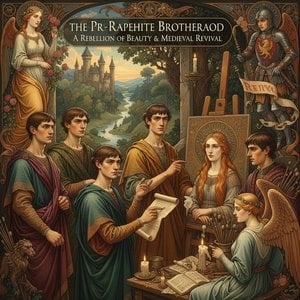
The Pre-Raphaelite Brotherhood: A Rebellion of Beauty & Medieval Revival
Explore the captivating world of the Pre-Raphaelite Brotherhood! Discover their rebellion against academic art, iconic masterpieces, and lasting influence on Victorian aesthetics. Learn about Rossetti, Burne-Jones & more.

The Nuance of Flesh: A Technical Study of Skin Tones in the Portrait Tradition
Master the technical secrets of skin tones from Rubens to Odutola. Explore the evolution of portraiture expertise now.

James Abbott McNeill Whistlerin 25 mestariteosta: Taidetta ja sisustusta ArtsDot.comissa
Tutustu James Abbott McNeill Whistlerin 25 vaikuttavinta mestariteosta! Uppoudu amerikkalaisen impressionismin maailmaan, tunnelmallisiin nocturneihin ja upeisiin muotokuviin. Löydä inspiraatiota sisustukseen ArtsDot.comista – taidekopiot museolaadulla. Explore the full collection online!