


 Esikatselu
 Jaa
Jaa Jaa
Jaa
 Tarkemmat tiedot

 Lataa
Lataa
 Samanlaisia
 Röntgenkuva
 Diaesitys
Pavilionin julkisivu näkymä


 Näytä lisää
Käsinmaalattu öljykopio
Käsinmaalattu öljyväri kankaalle haluamassasi koossa ja kehyksissä, taiteilijoidemme valmistamana tilauksesta. ( Osta printti Osta kuva)




P118B $10

P118H $10

P118W $10

P438Z $10

P508JH $12

P508YH $12

P805H $10

P805Z $10

P919BZ $10

P919G $10

P919XJ $10

P959ZH $10

P968JZ $12

W106C $8

W218G $10

W218JH $8

W218Y $10

W307PJ $10

W316G $10

W316PJ $8

W316Y $10

W398PJ $8

W4111J $10

W500HY $15

W500JH $15

W692G $12

W849H $8

W940BG $15

W953PJ $8




Valitse valmiista mitoistamme sellaiset, jotka vastaavat teoksen alkuperäisiä mittasuhteita.

Voit syöttää omat mitat sopimaan tiettyyn kehykseen tai tilaan. Jos valitsemasi koko ei vastaa alkuperäisen kuvan mittasuhteita, rajaamme taideteoksen tai jatkamme maalausta käsin maalatuilla elementeillä. Digitaalinen esikatselu lähetetään hyväksyttäväksi ennen tuotannon aloittamista.
Huomioithan, että näytöllä oleva esikatselu ei vastaa todellista rajausta tai jatkamista. Vain digitaalinen mallikuva näyttää lopullisen sommittelun tarkasti.
Vaikka mittatilaustyöt ovat mahdollisia, suosittelemme valitsemaan mitan ennalta määritetystä listasta alkuperäisten mittasuhteiden säilyttämiseksi.
Tilauksen jälkeen ArtsDot.com -tiimi lähettää asiakkaalle ohjeet ja esikatselukuvan.
Maailmanlaajuinen toimitus () 3–4 viikossa tavallisen 5 viikon sijaan. (18 elokuu). Laadusta ei tingitä.

Ilmainen pikatoimitus ympäri maailman

Korkealaatuinen pellavakangas

Kattava kuljetusvakuutus

Tulliveron palautustakuu

Täydellinen värien vastaavuustakuu

60 päivän palautusoikeus (vain valmistusvirheet)

100% rahat takaisin -takuu

Määräalennus tarjous
 Lasivaihtoehto on saatavilla vain alle 110 cm kokoisina teoksina

Pavilionin julkisivu näkymä
Reproduktiotekniikka
Replikaatin koko
-


Kokonaishinta
$ 263
Teoksen kuvaus
Johann Bernhard Fischer von Erlachin ja hänen näkymänsä huvilan julkisivuun
Johann Bernhard Fischer von Erlach (1656–1723) oli keskeinen austrialaista barokkiajan arkkitehti ja kuvanveistäjä. Hän tunnetaan erityisesti Schönbrunnin linnasta, Karlskirchestä sekä uraauurtavasta rakennushistoriakirjastaan ”Rakennuksen suunnitelma kansallisesta ja historiallisesta arkkitehtuurista”, jonka hän kirjoitti yli kahdenkymmenen vuoden työpanoksella. Hän muutti rakennustyyliä merkittävästi, tuoden mukanaan tarkkuutta ja yksityiskohtaisuutta sekä keskittyen erityisesti klassisen kauneuden ja harmonian saavuttamiseen. Erlachin vaikutus kattaa laajasti Öljylinnaan liittyviä projekteja ja hän oli yksi aikansa suurimmista arkkitehteista, jonka työ jatkuu tänä päivänä. Hänen työnsä voidaan katsoa olevan keskeinen osa Habsburgien dynastian kulttuuriperintöä ja vaikutusta eurooppalaiseen arkkitehtuuriin.- Tyyli: Erlachin tyyli oli vahvasti barokki, mutta hän omaksui myös renessanssin vaikutuksia erityisesti yksityiskohtien tarkkuudessa ja perspektiivissä. Hän pyrki luomaan monumentaalisen näkymän sekä korostamaan rakennuksen juhlavuutta ja eleganssia.
- Tekniikka: Erlachin työ toteutettiin pääosin tarkkaan linjaksi piirustukseksi, jossa käytettiin häivytystä ja ristikkäiskuviointia luomaan sävyjä sekä tunnetta tilavuudesta. Tämä tekniikka oli yleinen aikansa arkkitehtuuriin ja kuvasi Erlachin kykyä vangita rakennuksen ulkonäkö realistisesti.
- Historia: Fischer von Erlach työskenteli Schönbrunnin linnan rakennuttamiseksi vuosina 1692–1713, mikä oli merkittävä projekti Habsburgien dynastialle ja koko Itä-Euroopalle. Hän kehitti linnaa laajasti sekä täytti sen yksityiskohtaisesti koristeellisilla elementeillä, jotka heijastavat ajan kulttuuria ja estetiikkaa.
- Symbolismi: Näkymä huvilan julkisivuun kuvastaa Erlachin pyrkimystä luoda rakennus, joka ei ainoastaan ole toimiva mutta myös kaunis sekä täynnä merkitystä. Rakennuksen yksityiskohtainen koristelu ja symmetria korostavat Habsburgien dynastian voimaa sekä kulttuurista tietoisuutta.
Samankaltaisia teoksia


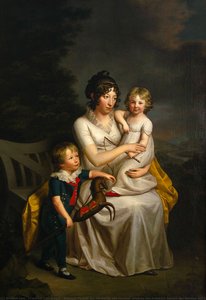

Taiteilijan elämäkerta
Nicolas de Largillière: The Master of Subtle Grace
Born in Paris in 1656 and passing away in the same city in 1746, Nicolas de Largillière stands as a pivotal figure in the history of French portraiture. While often overshadowed by his more flamboyant contemporaries like Rigaud, Largillière cultivated a unique style characterized by an exquisite sensitivity to light, texture, and the quiet dignity of his subjects. His career spanned nearly fifty years, during which he established himself as one of the leading portraitists of his time, particularly renowned for capturing the refined elegance of the French middle class – a demographic largely overlooked by the grander commissions favored by the aristocracy.
Largillière’s early artistic development unfolded in Antwerp and London. He began his training with Antoine Goubeau in Antwerp, absorbing the Flemish tradition of meticulous detail and realistic representation. A subsequent period working for Lely in England exposed him to the burgeoning influence of Caravaggio's dramatic use of light and shadow, a technique that would profoundly shape his own artistic approach. This early exposure to both Flemish realism and Italian drama provided a rich foundation upon which he built his distinctive style.
A Portraitist for the Rising Middle Class
Returning to Paris in 1679, Largillière swiftly established himself as a sought-after portraitist. Unlike many of his contemporaries who primarily catered to royal and aristocratic clientele, Largillière focused on depicting members of the wealthy merchant class – individuals whose fortunes were rising alongside the prosperity of Louis XIV’s France. This shift in focus offered him a steady stream of commissions and allowed him to develop a nuanced understanding of his subjects' personalities and social standing. His portraits weren’t merely representations of appearance; they aimed to convey character, refinement, and a sense of inner composure.
His success was remarkable, particularly considering the competitive landscape of Parisian art at the time. Largillière’s ability to capture subtle expressions – a fleeting smile, a thoughtful gaze – set him apart. He employed a technique of *sfumato*, softening outlines and blending colors to create an atmosphere of hazy beauty and intimacy. This approach, combined with his masterful use of light, resulted in portraits that possess a remarkable sense of realism and psychological depth.
Technique and Artistic Influences
Largillière’s technical skill was honed through years of diligent observation and practice. He meticulously studied the anatomy of the human form, paying particular attention to the play of light on skin and fabric. His brushwork is characterized by a delicate layering of colors, creating a sense of texture and volume that brings his subjects to life. The influence of Caravaggio is undeniable in Largillière’s use of chiaroscuro – the dramatic contrast between light and shadow – which he employed not for theatrical effect but to heighten the emotional impact of his portraits.
Furthermore, Largillière drew inspiration from Flemish masters like Anthony van Dyck, whose elegant compositions and refined portraiture served as a model for many French artists. However, Largillière’s style evolved beyond mere imitation; he synthesized these influences into a uniquely personal vision, characterized by an understated elegance and a profound sensitivity to human emotion.
Legacy and Historical Significance
Throughout his long career, Largillière produced an astonishing number of portraits – contemporary sources estimate around 1,500. While he also engaged in religious works, still lifes, and landscapes, it is his portraiture that remains his most enduring legacy. He was appointed director of the Académie Royale in his eighties (1734–5 and 1738–42), a testament to his continued influence and respect within the artistic community.
Largillière’s portraits offer a valuable glimpse into the social and cultural landscape of 18th-century France. They reveal the aspirations, values, and anxieties of the rising middle class – a group that played an increasingly important role in shaping the nation's destiny. His work continues to be admired for its exquisite beauty, technical mastery, and profound understanding of human nature. He is often considered the French equivalent of Van Dyck, a title he certainly deserved.

johann bernhard fischer von erlach
1656 - 1723 , Austria
Pikatiedot
- Artistic Movement Or Style: Portraiture
- Artists Or Movements Influenced By This Artist: ['Van Dyck']
- Artists Who Influenced This Artist:
- Lely
- Verrio
- Date Of Birth: 1656
- Date Of Death: 1746
- Full Name: Nicolas de Largillière
- Nationality: French
- Notable Artworks:
- The Apotheosis of Homer
- Portrait of a Young Man
- Portrait of a Woman
- Place Of Birth: Paris, France
Liittyvät artikkelit
Decoding Baroque Grandeur: A Guide to the Drama and Emotion of 17th-Century Art
Explore the breathtaking drama of 17th-century Baroque art. Our expert guide decodes the use of chiaroscuro, emotional intensity, and historical grandeur to help you appreciate and curate timeless masterpieces for your collection.

Barokin mestariteokset: Taidetta ja loistoa kotiisi – ArtsDot.com
Uppoudu barokin loistokkuuteen! Tutustu Caravaggion, Rembrandtin ja Vermeerin kaltaisten mestareiden tunnetuimpiin teoksiin. Taidehistoriaa kotiisi – löydä upeat taidetulosteet ja canvas-taulut ArtsDot.comista.

Baroque Classicism: Reconciling Drama & Order in 17th-Century Art
Explore the captivating world of Baroque Classicism! Discover its history, key artists like Caravaggio & Rubens, and defining characteristics. Expert insights & high-quality reproductions at ArtsDot.

The Dramatic Flourish: Exploring the Baroque Movement's Enduring Legacy in Art History
Explore the dramatic world of Baroque art! Discover iconic artists like Caravaggio & Rubens, defining techniques, and its lasting impact on art history. Expert insights for collectors & enthusiasts at ArtsDot.

Barokin loisto: Kuinka tuoda ylellisyyttä ja tunnetta nykyaikaiseen sisustukseen
Tutustu barokki sisustuksen loistoon! Opi luomaan ylellistä ja tunnelmallista kotia historiallisen tyylin inspiroimana. Vinkkejä, esimerkkejä ja in apua.


