


 Esikatselu
 Jaa
Jaa Jaa
Jaa
 Tarkemmat tiedot

 Lataa
Lataa
 Samanlaisia
 Röntgenkuva
 Diaesitys
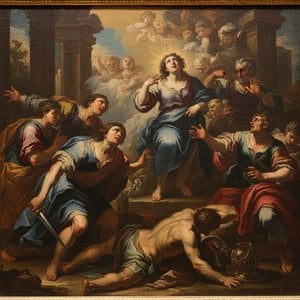
Sophonisba vastaanottaa maljan
 Akryyli kankaalle
- Seinätaide
- Baroque Dramatic Emotion
 1670
1670 198.0 x 174.0 cm
 Musée des Beaux-Arts de Lyon
 Näytä lisää
Käsinmaalattu öljykopio
Käsinmaalattu öljyväri kankaalle haluamassasi koossa ja kehyksissä, taiteilijoidemme valmistamana tilauksesta. ( Osta printti Osta kuva)




P118B $10

P118H $10

P118W $10

P438Z $10

P508JH $12

P508YH $12

P805H $10

P805Z $10

P919BZ $10

P919G $10

P919XJ $10

P959ZH $10

P968JZ $12

W106C $8

W218G $10

W218JH $8

W218Y $10

W307PJ $10

W316G $10

W316PJ $8

W316Y $10

W398PJ $8

W4111J $10

W500HY $15

W500JH $15

W692G $12

W849H $8

W940BG $15

W953PJ $8




Valitse valmiista mitoistamme sellaiset, jotka vastaavat teoksen alkuperäisiä mittasuhteita.

Voit syöttää omat mitat sopimaan tiettyyn kehykseen tai tilaan. Jos valitsemasi koko ei vastaa alkuperäisen kuvan mittasuhteita, rajaamme taideteoksen tai jatkamme maalausta käsin maalatuilla elementeillä. Digitaalinen esikatselu lähetetään hyväksyttäväksi ennen tuotannon aloittamista.
Huomioithan, että näytöllä oleva esikatselu ei vastaa todellista rajausta tai jatkamista. Vain digitaalinen mallikuva näyttää lopullisen sommittelun tarkasti.
Vaikka mittatilaustyöt ovat mahdollisia, suosittelemme valitsemaan mitan ennalta määritetystä listasta alkuperäisten mittasuhteiden säilyttämiseksi.
Tilauksen jälkeen ArtsDot.com -tiimi lähettää asiakkaalle ohjeet ja esikatselukuvan.
Maailmanlaajuinen toimitus () 3–4 viikossa tavallisen 5 viikon sijaan. (18 elokuu). Laadusta ei tingitä.

Ilmainen pikatoimitus ympäri maailman

Korkealaatuinen pellavakangas

Kattava kuljetusvakuutus

Tulliveron palautustakuu

Täydellinen värien vastaavuustakuu

60 päivän palautusoikeus (vain valmistusvirheet)

100% rahat takaisin -takuu

Määräalennus tarjous
 Lasivaihtoehto on saatavilla vain alle 110 cm kokoisina teoksina

Sophonisba vastaanottaa maljan
Reproduktiotekniikka
Replikaatin koko
-


Kokonaishinta
$ 263
Teoksen kuvaus
Sophonisba Receiving the Goblet – Een Dramatische Gebrokenheid van Stilte
Sophonisba Receiving the Goblet door PRETI, Mattia is een kunstwerk dat een prachtige combinatie biedt van dramatische compositie en technische meesterschap. Het schilderij, geschreven in 1670 door de Italiaanse Barok kunstenaar Mattia Preti, vangt een emotionele scène vast waarin Sophonisba, dochter van Carthago en vrouw van Numidia’s prins Masinissa, een kop ontvangt die haar leven zou redden. Maar het is niet alleen een verhaal over hoop; het schilderij verkondigt ook een diepe pijn en een gevoel voor verloren kansen dat resoneren tot op de dag van vandaag.- Stijl: Het werk behoort tot de stijl van Caravaggisme, gekenmerkt door een intense gebruik van licht en schaduw – chiaroscuro – waardoor een gevoel van dramatische spanning wordt gecreëerd. Preti’s manier om het onderwerp weer te geven is bijzonder realistisch, waarbij hij aandacht besteedt aan details zoals de tekstuur van het stof op Sophonisba’s jurk en de expressieve ogen van de vrouw zelf.
- Techniek: De kunstenaar gebruikte olie op doek, een populaire techniek voor Barok schilderkunst die staat bekend om zijn kleurintensiteit en duurzaamheid. Een zorgvuldige laag aanbrenging zorgt ervoor dat het licht op een manier wordt weergegeven die zowel natuurlijk als emotioneel aangrijpend is.
Een Historische Context van Macht en Verloren Hoop
Het schilderij werd geschreven tijdens de Tweede Punische Oorlog, een periode van intense politieke strijd tussen Rome en Carthago. Sophonisba’s situatie vertegenwoordigt een belangrijk thema binnen de kunstgeschiedenis: het dilemma tussen persoonlijke loyaliteit en nationale verantwoordelijkheid. De scène wordt afgespeeld tegen een achtergrond van diplomatieke onderhandelingen en militaire manoeuvres, waardoor een gevoel voor historische urgentie wordt opgewekt. Masinissa’s liefde voor Sophonisba werd een belangrijke factor bij het besluit om haar aan Scipio Africanus over te dragen, een gebeurtenis die het einde betekende van hun hoop op een succesvolle toekomst samen.- Het schilderij illustreert de complexe emoties die gepaard gaan met oorlog en politiek, waarbij zowel macht als kwetsbaarheid worden weergegeven.
Symbolisme en Emotionele Impact
De kop die Sophonisba ontvangt dient als symbool van hoop en redding, maar ook van een verloren kans om haar huwelijk te behouden met Masinissa. De manier waarop Sophonisba kijkt naar de kop – een blik vol angst en zelfreflectie – draagt bij aan het emotionele gewicht van het schilderij. Het gebruik van licht en schaduw versterkt het gevoel voor dramatische spanning en creëert een prachtige balans tussen schoonheid en pijn. De engel rechts en boven Sophonisba’s hoofd zijn bedoeld om een gevoel van bescherming en goddelijke interventie uit te drukken, terwijl de eenvoudige stoel onder haar voeten een element van nederigheid en kwetsbaarheid benadrukt.Een Inspirerende Gebrokenheid voor Een Kunstgeschiedenis
Sophonisba Receiving the Goblet blijft een tijdloze klassieker die kunstenaars en liefhebbers over de hele wereld inspireert. Het schilderij biedt een prachtige illustratie van het Barok kunstenaarschap, waarbij technische innovatie wordt gecombineerd met emotionele expressie. Een hoogwaardige reproductie kan een prachtige aanvulling vormen op elke ruimte en een blijvende herinnering zijn aan de schoonheid en kracht van kunstgeschiedenis.Samankaltaisia teoksia


Taiteilijan elämäkerta
Mattia Preti (1613 – 1699): The Calabrian Knight of the Baroque
Mattia Preti, known as *Il Cavalier Calabrese* – the Calabrian Knight – stands as a monumental figure in 17th-century Italian Baroque painting. Born in Taverna, Calabria, on February 24, 1613, his artistic journey was one of remarkable transformation and evolution, absorbing diverse influences and culminating in a uniquely expressive style that profoundly impacted the art world, particularly in Malta where he spent much of his later life. Preti’s early training began under Giovanni Battista Caracciolo, a painter deeply rooted in the Caravaggist movement – a lineage that would forever shape his artistic vision. This foundational exposure instilled within him an acute understanding of dramatic *chiaroscuro* – the intense interplay of light and shadow – and a commitment to realistic depiction that remained central to his work throughout his career.
Before 1630, he joined his brother Gregorio in Rome, immersing himself completely in the vibrant artistic atmosphere of the city. Here, he studied under the masters who defined the era: Caravaggio, Guercino, Rubens, Guido Reni, and Giovanni Lanfranco. This period wasn’t merely about imitation; it was a crucial process of synthesis, where Preti absorbed the techniques and philosophies of these giants, gradually forging his own distinctive voice.
Forging a Dynamic Style: Beyond Caravaggism
Preti's artistic development wasn't simply a mimicry of his predecessors; it was a masterful integration of diverse influences into a style uniquely his own. While initially deeply influenced by Caravaggism, he skillfully moved beyond its strict confines, embracing the dynamism and emotional intensity that characterized the High Baroque. His time in Naples further refined this evolution, exposing him to the vibrant work of Luca Giordano – a painter known for his exuberant color palettes and dramatic compositions.
This period saw Preti’s canvases swell with energetic movement, complex compositions, and a heightened sense of drama. He masterfully employed dramatic contrasts of light and shadow, inherited from Caravaggio, not simply as a technical device but as a means of intensifying emotional impact and guiding the viewer's eye. His figures are imbued with palpable emotion – piety, anguish, ecstasy – conveyed through expressive faces and dynamic body language. This ability to evoke powerful feelings became a defining characteristic of his oeuvre. He wasn’t content merely to depict scenes; he sought to *animate* them, breathing life into biblical narratives and religious iconography.
Major Commissions and Artistic Achievements
Mattia Preti's exceptional talent quickly garnered recognition, leading to a series of significant commissions throughout Italy. Early in his career, he created impressive fresco cycles for Roman churches like Sant’Andrea della Valle and San Carlo ai Catinari, demonstrating an aptitude for large-scale decorative painting. His work at the church of San Biagio in Modena showcased his ability to adapt his style to different architectural settings.
However, some of his most ambitious – though sadly lost – works were the frescoes he painted on seven city gates in Naples depicting the Virgin or saints delivering people from the plague. Though only sketches remain today, they testify to the scale and impact of these monumental creations. These commissions weren’t simply about fulfilling a patron's request; they were opportunities for Preti to engage with the religious and cultural life of the communities he served, imbuing his art with meaning and purpose.
The Maltese Zenith: St. John’s Co-Cathedral
It was in Malta, however, that Mattia Preti reached the pinnacle of his artistic achievement. Appointed a Knight of the Order of Saint John in 1660, he embarked on a transformative project: the complete redecoration of the interior of St. John’s Co-Cathedral in Valletta. This undertaking – arguably his most significant legacy – involved an astonishing series of paintings depicting the life and martyrdom of Saint John the Baptist.
The sheer scale of the project is breathtaking; Preti essentially created a visual narrative that enveloped the viewer, immersing them in the story of the saint. The opulent Baroque setting provided the perfect canvas for his dramatic style, and the resulting artwork cemented his reputation as one of Europe’s leading painters. His work at St. John's wasn’t merely decorative; it was an act of devotion, a testament to his faith, and a powerful expression of the Order’s religious identity.
A Lasting Legacy
Mattia Preti continued to receive commissions from across Europe following his success in Malta, solidifying his position as a leading figure in Italian Baroque art. He died in 1699, leaving behind a rich artistic legacy that continues to inspire and captivate audiences today. His masterful use of light and shadow, dynamic compositions, and ability to convey intense emotion remain hallmarks of his style. His contributions are preserved in museums such as the Capodimonte Museum in Naples, and through reproductions made available by platforms like ArtsDot.com, ensuring that his art continues to reach new generations. The enduring impact of Preti’s work is perhaps most vividly felt within the walls of St. John's Co-Cathedral, a breathtaking testament to his artistic genius and unwavering dedication to the Baroque aesthetic.

Mattia Preti
1613 - 1699 , Italia
Pikatiedot
- Artistic Movement Or Style: Barokki
- Artists Or Movements Influenced By This Artist: ['Stringa']
- Artists Who Influenced This Artist:
- Caravaggio
- Guercino
- Date Of Birth: 24 feb 1613
- Date Of Death: 3 jan 1699
- Full Name: Mattia Preti
- Nationality: Italian
- Notable Artworks:
- Absalomin juhla
- Jael tappaa Sisara
- Place Of Birth: Taverna, Italia
Liittyvät artikkelit

The Dramatic Flourish: Exploring the Baroque Movement's Enduring Legacy in Art History
Explore the dramatic world of Baroque art! Discover iconic artists like Caravaggio & Rubens, defining techniques, and its lasting impact on art history. Expert insights for collectors & enthusiasts at ArtsDot.

The Visceral Stage: Exploring Dramatic Narratives & Emotional Intensity in Baroque Art
Explore the dramatic world of Baroque art! Discover iconic masters like Caravaggio & Rembrandt, their techniques, and the movement's lasting impact. Expert insights for collectors & enthusiasts at ArtsDot.

Barokin mestariteokset: Taidetta ja loistoa kotiisi – ArtsDot.com
Uppoudu barokin loistokkuuteen! Tutustu Caravaggion, Rembrandtin ja Vermeerin kaltaisten mestareiden tunnetuimpiin teoksiin. Taidehistoriaa kotiisi – löydä upeat taidetulosteet ja canvas-taulut ArtsDot.comista.
The Dramatic Flourish: Exploring Baroque Painting's Emotional Intensity & Artistic Innovations
Explore the dramatic world of Baroque painting! Discover its history, defining characteristics, iconic artists like Caravaggio & Rubens, and lasting influence on Western art. Expert insights for collectors.

Barokin mestariteokset: Taidetta ja loistoa kotiisi – ArtsDot.com
Uppoudu barokin loistokkuuteen! Tutustu Caravaggion, Rembrandtin ja Rubensin kaltaisten mestareiden ikonisiin maalauksiin. Taidehistoriaa kotiisi – löydä upeat öljyvärimaalaukset ja taideprintit ArtsDot.com:sta. Explore the full collection online!



