


 Esikatselu
 Jaa
Jaa Jaa
Jaa
 Tarkemmat tiedot

 Lataa
Lataa
 Samanlaisia
 Röntgenkuva
 Diaesitys
Rakastava Puutarha
 Akryyli kankaalle
- Seinätaide
- Baroque Painting
 1631
1631 456.0 x 590.0 cm
 Art Institute of Chicago
 Näytä lisää
Käsinmaalattu öljykopio
Käsinmaalattu öljyväri kankaalle haluamassasi koossa ja kehyksissä, taiteilijoidemme valmistamana tilauksesta. ( Siirry tulosteeseen Vaihda kuvaksi)




P118B $10

P118H $10

P118W $10

P438Z $10

P508JH $12

P508YH $12

P805H $10

P805Z $10

P919BZ $10

P919G $10

P919XJ $10

P959ZH $10

P968JZ $12

W106C $8

W218G $10

W218JH $8

W218Y $10

W307PJ $10

W316G $10

W316PJ $8

W316Y $10

W398PJ $8

W4111J $10

W500HY $15

W500JH $15

W692G $12

W849H $8

W940BG $15

W953PJ $8




Valitse valmiista mitoistamme sellaiset, jotka vastaavat teoksen alkuperäisiä mittasuhteita.

Voit syöttää omat mitat sopimaan tiettyyn kehykseen tai tilaan. Jos valitsemasi koko ei vastaa alkuperäisen kuvan mittasuhteita, rajaamme taideteoksen tai jatkamme maalausta käsin maalatuilla elementeillä. Digitaalinen esikatselu lähetetään hyväksyttäväksi ennen tuotannon aloittamista.
Huomioithan, että näytöllä oleva esikatselu ei vastaa todellista rajausta tai jatkamista. Vain digitaalinen mallikuva näyttää lopullisen sommittelun tarkasti.
Vaikka mittatilaustyöt ovat mahdollisia, suosittelemme valitsemaan mitan ennalta määritetystä listasta alkuperäisten mittasuhteiden säilyttämiseksi.
Tilauksen jälkeen ArtsDot.com -tiimi lähettää asiakkaalle ohjeet ja esikatselukuvan.
Maailmanlaajuinen toimitus () 3–4 viikossa tavallisen 5 viikon sijaan. (8 elokuu). Laadusta ei tingitä.

Ilmainen pikatoimitus ympäri maailman

Korkealaatuinen pellavakangas

Kattava kuljetusvakuutus

Tulliveron palautustakuu

Täydellinen värien vastaavuustakuu

60 päivän palautusoikeus (vain valmistusvirheet)

100% rahat takaisin -takuu

Määräalennus tarjous
 Lasivaihtoehto on saatavilla vain alle 110 cm kokoisina teoksina

Rakastava Puutarha
Reproduktiotekniikka
Replikaatin koko
-


Kokonaishinta
$ 263
Teoksen kuvaus
Christoffel Jegherin Kauneuden Puutarha – Barokin Dramaattinen Näkömyssy
Christoffel Jegher (1596–1652) oli merkittävä nimi flaamilaiseen barokki taiteeseen, jonka työstä ei ole vielä täysin selvitetty. Hän oli Jacob Jeherin isä, joka jatkoi oman isänsä taiteellisia pyrkimyksiä. Jegherin ura keskittyi erityisesti yhteistyöhön Peter Paul Rubensin kanssa, mikä toi hänelle huomion sekä vaikutuksen suureen määrään katsojia.
”Kauneuden Puutarha” eli Tuuskaan Puutarha on vaikuttava öljyvärimaalaus vuodelta 1631, jonka valmistaja oli Jegher. Tämä kaksiosainen printti kuuluu Art Instituutin Chicagon kokoelmiin ja tuo esiin Rubensin vaikutuksen täydellisenä kuvauksena.
Maalauksen keskiössä istuu henkilö puutarhan keskellä, ympäröitynä muilla ihmisillä jotka ovat aktiivisia ympäristössään. Vaatteet kertovat aikakaudesta – tämä oli 1600-luvun alkupuolen Antwerpissa vallitseva tyyli. Puutarhassa näkyvät yksityiskohtaiset yksityiskohdat, kuten puut ja kukat sekä oikealla puolella näkyvä pieni lähde. Taustalla on klassinen pylväskäytävä, joka tuo maalaukseen aristokraattisen tunnelman.
Yläpuolella henkilöiden päällä ovat kaksi enkelinä toimivaa olentoa, jotka pitävät kädessään kruunun tai yhteenottoon liittyviä symboleja. Jegherin mestariteoksen erityinen vahvuus piilee sen dramaattisessa kuvauksessa ja Rubensin vaikutuksesta syntyvässä tunnelmassa. Hän oli tunnettu siitä että hän osasi käyttää valoa ja varjoa luodakseen syvyyttä maalaukseen.
Jegherin työ on erityisen huomioitavaa sen yksityiskohtaisen realistisen tyylin ansiosta, jossa hän tarkkaan jäljittelee klassista piirustusta ja käyttää barokin tunnusomaista tekniikkaa. Tämä mahdollistaa korkealaatuisen värimäärän käyttämisen sekä henkilöiden ilmaisujen tarkkuuden. Maalauksen vaikutus katsojaan on syvä – se tuo esiin sosiaalisen kohtaamisen ja täydellisen ympäristön, joka yhdistää klassisen mytologian ja arkielämän.
Jos etsit inspiraatiota tai harkitset korkealaatuisen värimäärän ostamista, ”Kauneuden Puutarha” on ehdoton valinta. Tämä maalauksen yksityiskohtainen toteutus tuo barokin dramaattisen tunnelman ja Rubensin vaikutuksen täydellisesti katsojan eteensä.
Samankaltaisia teoksia


Taiteilijan elämäkerta
The Master of the Woodcut: The Life and Legacy of Christoffel Jegher
In the heart of the 17th-century Flemish Baroque, amidst the bustling artistic fervor of Antwerp, the name Christoffel Jegher resonates with the profound impact of a true visionary. Born around 1596, Jegher emerged from an era defined by dramatic movement and emotional intensity. While history often remembers the grand canvases of painters, Jegher carved his legacy into the very grain of wood, serving as one of the most significant engravers and woodcut artists of his time. His life was inextricably linked to the golden age of Antwerp, a period where the boundaries between fine art and printmaking were blurred by the sheer brilliance of technical mastery.
Jegher’s journey was not merely that of a solitary craftsman but one deeply embedded in the prestigious circles of the Guild of St. Luke, where he achieved master status in 1628. His career was marked by an extraordinary professional intimacy with the giants of his age, most notably Peter Paul Rubens. It is whispered in art historical circles that Jegher was perhaps the only woodcutter of his era to work so closely within Rubens’ own studio. This collaboration was more than mere employment; it was a symbiotic exchange of genius. While Rubens provided the sweeping, muscular compositions and divine inspiration, Jegher possessed the surgical precision required to translate those fluid brushstrokes into the rugged, high-contrast medium of woodcut. In some instances, the master himself may have drawn directly onto the blocks, leaving Jegher to breathe life into the lines through meticulous cutting.
A Symphony of Light and Shadow
To observe a work by Jegher is to witness a dramatic theatricality that defines the Baroque spirit. His technique was a masterful manipulation of chiaroscuro, using the stark contrast between deep, velvety blacks and brilliant white spaces to evoke a sense of divine presence or mythological grandeur. This ability to command light allowed him to transform simple book illustrations into epic narratives. His work for the renowned Antwerp publishing house, Plantin-Moretus, ensured that his artistic vision reached far beyond the elite collectors, permeating the religious and scholarly texts of Europe.
His repertoire was as diverse as it was profound, ranging from the sacred to the profane. Jegher’s hands brought to life scenes of intense psychological depth, such as:
- Biblical Narratives: Where he captured the tender vulnerability of figures like Jesus and St. John the Baptist in their Childhood, utilizing anatomical precision to ground spiritual truths in human emotion.
- Mythological Epics: Such as his breathtaking execution of Hercules Fighting Fury and Discord, a work that mirrors the monumental scale and muscular energy of Rubens’ own paintings.
- Luminous Landscapes: In works like The Garden of Love, where he demonstrated an unexpected sensitivity to texture and light, creating idyllic scenes that seem to glow from within the paper itself.
An Enduring Artistic Lineage
The influence of Christoffel Jegher extended far beyond his own lifetime, flowing through a lineage of artists that helped shape the visual language of the 17th century. His mastery was not a solitary flame but a torch passed to the next generation; he was the father of the engraver Jan Christoffel Jegher, who continued to navigate the intricate world of religious prints and book illustrations, even contributing to the early precursors of what we might today recognize as the modern comic strip through sequential narrative prints.
Jegher’s historical significance lies in his role as a bridge between the high art of the painterly tradition and the widespread accessibility of print culture. He elevated the woodcut from a secondary reproductive medium to a primary vehicle for artistic expression. Through his hands, the monumental energy of the Flemish Baroque was democratized, allowing the triumphs of Rubens and the spiritual fervor of the Counter-Reformation to be felt by the hands of many. Even today, as we gaze upon the intricate lines of his prints in museums like the British Museum or the Saint Louis Art Museum, we are reminded of a man who could find infinite depth within the narrow confines of a wooden block.

christoffel jegher
1596 - 1652 , Belgium
Pikatiedot
- Artistic Movement Or Style: Baroque
- Artists Who Influenced This Artist:
- Peter Paul Rubens
- Anthony van Dyck
- Date Of Birth: 1596 Antwerp Belgium
- Date Of Death: 1652 Antwerp Belgium
- Full Name: Christoffel Jegher
- Nationality: Flemish
- Notable Artworks:
- The Garden of Love
- Jesus and St John the Baptist in their Childhood
- Place Of Birth: Antwerp Belgium
Liittyvät artikkelit

Barokin mestariteokset: Taidetta ja loistoa kotiisi – ArtsDot.com
Uppoudu barokin loistokkuuteen! Tutustu Caravaggion, Rembrandtin ja Vermeerin kaltaisten mestareiden tunnetuimpiin teoksiin. Taidehistoriaa kotiisi – löydä upeat taidetulosteet ja canvas-taulut ArtsDot.comista.

1600-luvun mestariteoksia: Taidetta ja historiaa kotiisi – ArtsDot.com
Uppoudu 1600-luvun taiteen maailmaan! Tutustu Rembrandtin, Vermeerin ja Caravaggion mestariteoksiin. Barokki, renessanssi & klassiset maalaukset kotiisi – ArtsDot.com:sta löydät korkealaatuiset toistot ja inspiraatiota sisustukseen. Explore the full collection online!
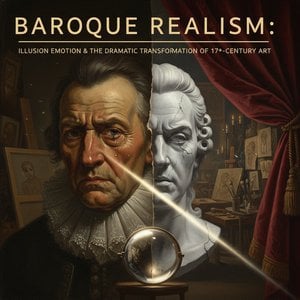
Baroque Realism: Illusion, Emotion & the Dramatic Transformation of 17th-Century Art
Explore the dramatic world of Baroque Realism! Discover iconic artists like Caravaggio & Rubens, their techniques, and the movement's lasting impact on art history. Expert insights for collectors & enthusiasts.

Baroque Classicism: Reconciling Drama & Order in 17th-Century Art
Explore the captivating world of Baroque Classicism! Discover its history, key artists like Caravaggio & Rubens, and defining characteristics. Expert insights & high-quality reproductions at ArtsDot.

Peter Paul Rubens: A Baroque Master's Life, Legacy & Enduring Influence
Discover the life & art of Peter Paul Rubens, the most influential artist of the Flemish Baroque tradition. Explore his masterpieces, legacy, and impact on art history with ArtsDot.


