


 Katso seinällä
 Lähetä
 Jaa
Jaa
 Tarkemmat tiedot
 Opas
Opas

 Lataa kuva
 Samanlaisia kohteita
 Röntgenkuvaus
 Diaesitys
 Tilastot
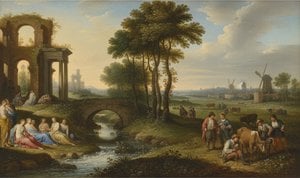
Italian Landscape with Roman Warriors
 Oil On Canvas
- WallArt
- Baroque Landscape
 1650
1650 154.0 x 174.0 cm
 Ermitažin museo
 Lue lisää
Käsinmaalattu öljyvärinen jäljennös
Käsinmaalattu öljyväri kankaalle haluamassasi koossa ja kehyksissä, taiteilijoidemme valmistamana tilauksesta. ( Vaihda tulosteeseen Siirry digitaaliseen kuvaan)




P118B €10

P118H €10

P118W €10

P438Z €10

P508JH €12

P508YH €12

P805H €10

P805Z €10

P919BZ €10

P919G €10

P919XJ €10

P959ZH €10

P968JZ €12

W106C €8

W218G €10

W218JH €8

W218Y €10

W307PJ €10

W316G €10

W316PJ €8

W316Y €10

W398PJ €8

W4111J €10

W500HY €15

W500JH €15

W692G €12

W849H €8

W940BG €15

W953PJ €8




Valitse valmiista mitoistamme sellaiset, jotka vastaavat teoksen alkuperäisiä mittasuhteita.

Kirjoita tarvitsemasi leveys ja korkeus, jotta teos sopii kehyskehyksiisi tai seinällesi. Koska kyseessä on käsinmaalattu teos, taiteilija voi maalata hieman enemmän kuvan ympärille tai rajata sitä hieman, jos haluat eri muotoisen koon — valinta on sinun. Lähetämme sinulle digitaalisen mallikuvan hyväksyttäväksi ennen kuin maalaus alkaa. Tällä sivulla näkyvä kuva ei vastaa lopullista tulosta — vain mallikuva näyttää sen.
Tilauksen jälkeen ArtsDot.com -tiimi lähettää asiakkaalle sähköpostitse ohjeet ja esikatselukuvan.
Maailmanlaajuinen toimitus () 3–4 viikossa tavallisen 5 viikon sijaan. (24 lokakuu). Laadusta ei tingitä.

Ilmainen pikatoimitus ympäri maailman

Korkealaatuinen pellavakangas

Kattava kuljetusvakuutus

Tulliveron palautustakuu

Takuu täydellisestä värien vastaavuudesta

100 päivän palautusoikeus valmistusvirhetapauksissa

100% rahat takaisin -takuu

Määräalennus saatavilla
 Lasivaihtoehto on saatavilla vain alle 110 cm kokoisille teoksille

Italian Landscape with Roman Warriors
Reproduktiotapa
Replikaatin koko
-


Kokonaishinta
€ 231
The Vision of Jan Both: A Mediterranean Masterpiece
Jan Dirksz Both’s “Italian Landscape with Roman Warriors,” painted around 1650, isn't merely a depiction of a picturesque Italian vista; it’s an immersive experience. Born in Utrecht and trained within the traditions of Flemish painting, Both embarked on a transformative journey to Rome, a pivotal moment that fundamentally altered his artistic trajectory. This work stands as a testament to that shift – a vibrant synthesis of Northern realism and Southern light, capturing not just a scene but a mood, an atmosphere steeped in the grandeur and drama of the Italian Renaissance.
The painting immediately draws the eye with its expansive composition. A sweeping river dominates the foreground, reflecting the azure sky above, while rolling hills cascade into the distance, culminating in hazy mountains that seem to bleed into the horizon. Yet, it’s not simply a topographical rendering; Both masterfully employs atmospheric perspective – a technique borrowed from Claude Lorrain and other Italian landscape masters – to create an illusion of depth and vastness. The colors become softer, cooler, and less saturated as they recede, drawing the viewer's eye into the heart of the scene.
The Language of Light: A Baroque Revelation
Both’s signature style is characterized by a luminous quality that elevates the landscape beyond mere representation. He was deeply influenced by the Baroque tradition, particularly its emphasis on dramatic lighting and theatrical effects. Notice how the sunlight, seemingly originating from an unseen source, bathes the scene in a golden glow, highlighting specific elements – the shimmering water, the textured foliage, and the confident postures of the Roman warriors. This isn’t a flat, even illumination; it's a dynamic interplay of light and shadow that imbues the painting with a sense of vitality and movement.
The use of color is equally deliberate. Rich ochres, deep greens, and vibrant blues are juxtaposed to create visual interest and depth. The earthy tones of the landscape contrast sharply with the gleaming armor of the soldiers, further emphasizing their power and authority. The subtle variations in hue – a hint of purple in the distant mountains, a touch of pink in the clouds – contribute to the overall sense of realism and atmospheric detail.
Symbolism and Power: The Roman Presence
Beyond its purely aesthetic qualities, “Italian Landscape with Roman Warriors” is laden with symbolic meaning. The presence of the Roman soldiers, clad in their imposing armor and wielding spears, speaks to themes of power, conquest, and military might. They are not simply figures within a landscape; they are active participants, shaping the scene and asserting dominance over it. The bandits leading prisoners further reinforces this narrative, suggesting a world of conflict and political intrigue.
However, the painting isn’t solely focused on warfare. The inclusion of a river, trees, and a sense of leisure hints at a more complex vision – one that acknowledges both the beauty and the brutality of the Italian landscape. The figures are engaged in activities that suggest a harmonious coexistence between humanity and nature, albeit within a framework of power and control.
A Legacy of Light: Both’s Enduring Influence
Jan Dirksz Both's “Italian Landscape with Roman Warriors” represents a pivotal moment in the development of Dutch landscape painting. It showcases his mastery of technique, his deep understanding of color and light, and his ability to synthesize diverse artistic influences. His work continues to captivate viewers today, offering a glimpse into a world of beauty, drama, and timeless symbolism. Reproductions of this stunning artwork capture the essence of Both’s vision, allowing us to experience its luminous quality and evocative power firsthand.
Kysymykset ja vastaukset
Missä "Italian Landscape with Roman Warriors" suositellaan sijoitettavan, kun otetaan huomioon sen väripaletti?
Earthy väripalettinsa ansiosta Jan Both:n "Italian Landscape with Roman Warriors" on suositeltava Living Room-tilaan. Värit ovat yksi tämän suosituksen perusteista.
Mitä "Italian Landscape with Roman Warriors" jakaa muun Jan Both'n tuotannon kanssa?
Jan Both'n tuotannossa "Italian Landscape with Roman Warriors" edustaa Baroque Landscape-tyyliä ja kytkeytyy mediterranean light, roman ideals, classical landscape, heroic figures, religious allegory, moral themes, baroque drama, emotional depth teemoihin.
Minkälaisia värejä teoksessa "Italian Landscape with Roman Warriors" käytetään?
Teoksen "Italian Landscape with Roman Warriors" värit muodostavat Earthy-väripaletin. Tämä luokitus kuvaa hallitsevia väriperheitä.
Samankaltaisia teoksia


Taiteilijan elämäkerta
Jan Both (1610-1652): Välimeren valon mestari
Jan Dirksz Both oli hollantilainen maalaaja, luonnostelija ja etsari, josta tuli yksi merkittävimmistä hahmoista kukoistavan ”italialaistyylisen” maisemamaalauksen liikkeessä hollantilaisen kultakauden aikana. Utrechtissa noin vuosina 1615–1618 syntynyt taiteilija oli Andries Bothin nuorempi veli, ja heidän isänsä Dirck Both, lasimaalaaja, opetti pojilleen varhaisen arvostuksen taiteellista käsityötaitoa kohtaan. Vaikka elämäkerralliset tiedot ovat paikoin niukkoja, tutkimukset viittaavat siihen, että Janin koulutus sisälsi opetusta Abraham Bloemaertilta ja Gerrit van Honthorstilta, mikä nosti hänet aikansa vaikutusvaltaisimpien taiteilijoiden joukkoon.- Varhaiset vuodet ja koulutus: Bothin muovaavat vuodet vietettiin Utrechtissa, jossa hän hioi taitojaan veljensä Andriesin rinnalla omaksien tekniikoita isänsä lasimaalaustyöstä – ammatista, joka oli syvällä juurtunut flaamilaiseen perinteeseen.
- Rooman vaikutus: Noin vuonna 1638 Jan ja Andries lähtivät muutosvoimaiseen matkaan Roomaan Ranskan kautta, uppoutuen paavillisen hovin taiteelliseen intohimoon ja kohdaten mestareita kuten Bloemaert ja Gerrit van Honthorst. Tämä kohtaaminen muovasi syvästi heidän tyylillistä herkkyyttään.
Italialaisvaikutteinen tyyli ja yhteistyö Lorrainin kanssa
Roomasta osoittautui Bothin taiteellisen kehityksen sulatusuuni. Siinä missä Andries keskittyi genrekuviin Pieter van Laerin tapaan, Jan omistautui ensisijaisesti maisemamaalaukselle – tyylille, joka oli vahvasti velkaa Claude Lorrainille. Hän tallensi Välimeren alueen eteeristä kauneutta vertaansa vailla olevalla valon ja värin hallinnalla. Erityisen huomionarvoista on hänen läheinen yhteistyönsä Herman van Swaneveltin kanssa monumentaalisessa projektissa Madridin Buen Retiro -palatsiin, mikä osoitti hänen kunnianhimonsa ja taiteellisen kykynsä Euroopan korkeimpien suojelijoiden piirissä. Tämä kumppanuus vakiinnutti Bothin maineen maisemamaalauksen johtavana uudistajana.Merkittävät teokset ja taiteelliset ominaispiirteet
Bothin tuotetta leimaavat laajat, mielikuvitukselliset maisemat, jotka kylpevät hehkuvassa kultaisessa valossa – mikä on Lorrainin tyylin tunnusmerkki ja kertoo laajemmista Euroopassa liikkuneista taiteellisista virroista. Hänen mestariteoksensa, ”Maisema banditit vankeja johdattamassa” (Museum of Fine Arts, Boston), ilmentää tätä esteettistä loistoa. Vinottain kulkeva tie ohjaa katseen syvälle kohtaukseen, asettaen realistiset hahmot idyllisen näkymän eteen, jota täplittää huolellisesti kuvattu kasvillisuus. Toistuvina motiiveina ovat uskonnolliset tai mytologiset hahmot – kuten ”Pariisin tuomio” -teoksessa (Lontoo, National Gallery) – jotka on usein toteuttanut myös hänen Utrechtin kollegansa, kuten Cornelis van Poelenburch, korostaen Bothin sitoutumista humanistisiin ihanteisiin ja taiteellisiin konventioihin.Perintö ja vaikutus
Jan Bothin veli Andries menehtyi traagisesti sairauteen Venetsiassa heidän paluumatkallaan Roomasta. Elämänsä lyhyydestä huolimatta Andries vakiinnutti asemansa arvostettuna taiteilijana, joka erikoistui talonpoikaisaiheisiin – genreen, joka heijasti aikakauden sosiaalisia todellisuuksia. Jan Bothin taiteellinen perintö ulottuu pidemmälle kuin yksittäiset maalaukset; hän toimi opettajana lahjakkaille oppilaille, kuten Barend Bispinckille ja Willem de Heuschille, varmistaen, että hänen tyylilliset innovaationsa jatkaisivat inspiroimista sukupolvien ajan. Hänen työnsä on edelleen ylistetty sen tunnelmallisuuden, mestarillisen tekniikan ja panoksen vuoksi hollantilaisen maisemamaalauksen kehitykselle – todiste Bothin pysyvästä vaikutuksesta Euroopan taidehistoriaan.Kokoelmat
- Fitzwilliam Museum, Cambridge
- Eremitaasi, Pietari
- Kunsthistorisches Museum, Wien
- Louvre, Pariisi
- Mauritshuis Royal Picture Gallery

Jan Both
1610 - 1652 , Alankomaat
Tietoa taiteilijasta
- Artistic Movement Or Style: Italialaistyylinen maisemamaalaus
- Artists Or Movements Influenced By This Artist: ['Claude Lorrain']
- Artists Who Influenced This Artist:
- Abraham Bloemaert
- Gerrit van Honthorst
- Date Of Birth: Utrecht, Alankomaat (1610)
- Date Of Death: 9. elokuuta 1652
- Full Name: Jan Dirksz Both
- Nationality: Hollantilainen
- Notable Artworks:
- Pyhä Anna Neitsyen ja lapsen kanssa
- Maisema banditit vankeja johtamassa
- Pariisin tuomio
- Place Of Birth: Utrecht
Aiheeseen liittyvät artikkelit
Cornelis van Poelenburch: Bridging Mannerism & the Dutch Baroque Landscape
Discover Cornelis van Poelenburch, a pivotal Dutch Baroque landscape painter bridging Mannerism & Italianate styles. Explore his life, key works, and lasting influence on 17th-century art with ArtsDot.

Romanttisen maisemamaalauksen mestariteokset: Taidetta ja inspiraatiota kotiin
Uppoudu romanttisen maisemamaalauksen maailmaan! Tutustu Caspar David Friedrichin, Turnerin ja muiden mestareiden ikonisiin teoksiin. Löydä inspiraatiota kotiisi taiteen avulla ArtsDot.comista – laadukkaat taideprintit ja sisustusideoita.

Evocations of Place: A Historical Journey Through Landscape Art
Explore the rich history of landscape art with ArtsDot. Discover renowned artists, movements like Impressionism & Romanticism, and expert guidance for collecting timeless pieces. Find your perfect serene escape today!

Jan Brueghel the Elder: A Master of Flemish Landscape & Allegory – Exploring Innovation & Influence
Explore the captivating world of Jan Brueghel the Elder, a Flemish Baroque master renowned for his stunning landscapes & allegorical paintings. Discover his collaborations with Rubens and lasting artistic legacy.

Claude Lorrain: Master of Light & Landscape in the Golden Age
Explore the luminous landscapes of Claude Lorrain, a Baroque master renowned for his masterful use of light & atmosphere. Discover his life, techniques, key works & enduring influence on art history.
