Portrait of John Everett Millais

Meet the 100 Most Famous Paintings by John Everett Millais

Updated oktoober 2026 · ranked by our popularity score (searches, visits and orders for each work) · 422 works by John Everett Millais in our catalogue

In short

If you know one John Everett Millais painting, it's probably Ophelia (1851), which hangs in the Tate Britain, London. Christ in the House of His Parents (`The Carpenter (1849) and The Blind Girl (1856) round out the three pieces people recognise right away. Our catalogue has 422 works by John Everett Millais. Below are the 100 people know best, each with its year, where to find it and what makes it special.

1829 – 1896, Southampton Pre-raphaelite brotherhood Most works: Birmingham Museum and Art Gallery

Start here: the top 10 John Everett Millais paintings

1
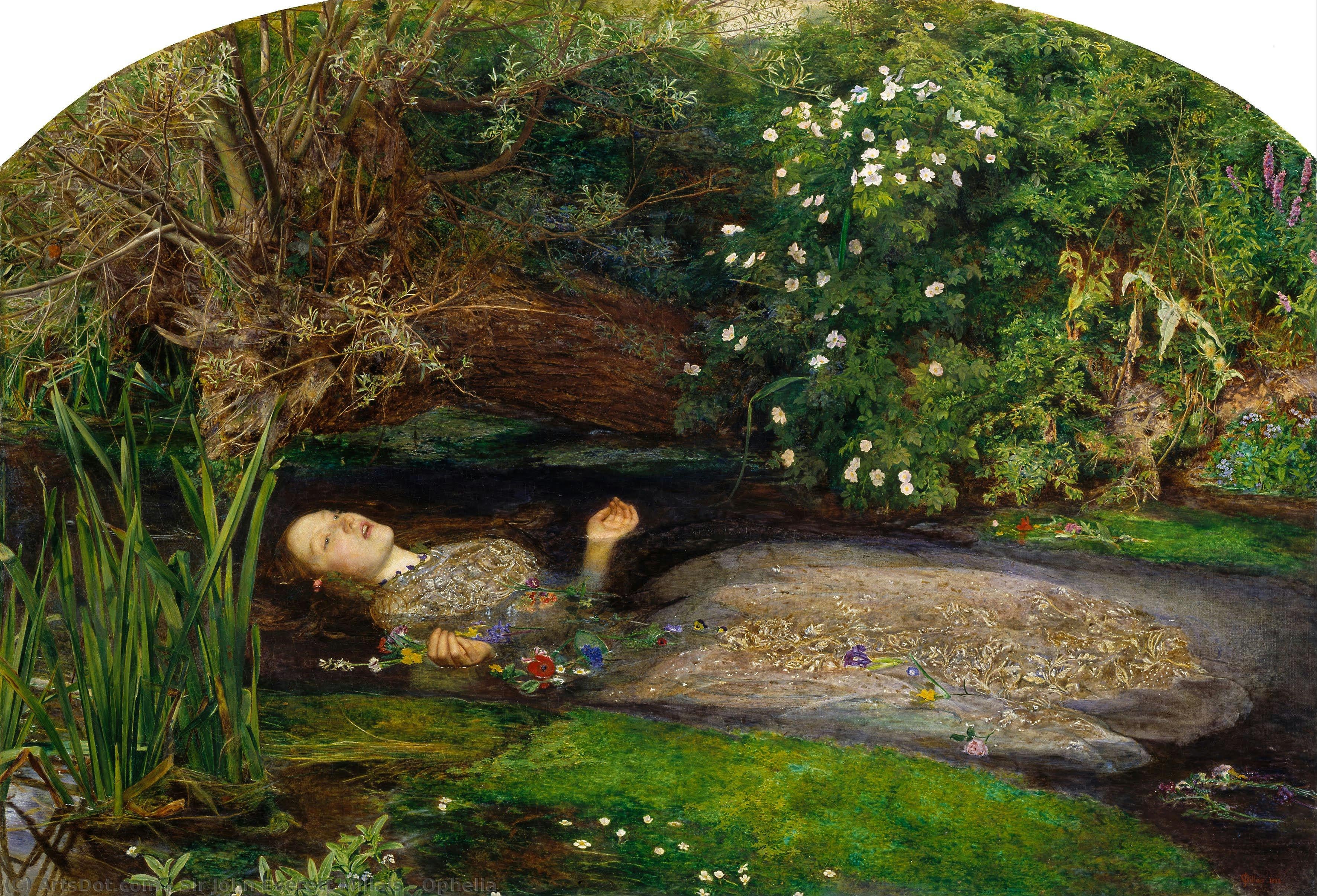
Ophelia (1851) by John Everett Millais

Ophelia

1851 · Õlimaal kangaruumil · Tate Britain, London

Sir John Everett Millais's "Ophelia," painted in 1851–52, isn’t merely a depiction of a tragic Shakespearean scene; it’s an immersive experience—a meticulously crafted tableau of sorrow and beauty that continues to captivate viewers over a century and a half later. This iconic Pre-Raphaelite masterpiece transcends its literary source, becoming a profound meditation on loss, innocence, and the poignant surrender to nature's embrace. The painting immediately draws the eye with its…

2
Christ in the House of His Parents (`The Carpenter (1849) by John Everett Millais

Christ in the House of His Parents (`The Carpenter

1849 · Oil On Canvas · Tate Britain, London

John Everett Millais’ “Speak! Speak!” (Apparition) captivates with its eerie beauty and symbolic depth, marking a pivotal moment in British art history. Created in 1849–50 during the height of the Pre-Raphaelite Brotherhood’s artistic fervor—a movement dedicated to rejecting academic conventions and embracing a return to medieval artistic ideals—this monumental oil painting remains an enduring emblem of Victorian Romanticism.

3
The Blind Girl (1856) by John Everett Millais

The Blind Girl

1856 · Oil On Canvas · Birmingham Museum and Art Gallery, Birmingham

Sir John Everett Millais’s “The Blind Girl,” completed in 1856, is more than just a painting; it's an immersion into the heart of Romanticism. This evocative scene, measuring 62 x 82 cm, captures a moment of quiet intimacy and profound connection between two women nestled within a meticulously rendered natural world. The work immediately draws the viewer in with its soft color palette – dominated by greens, browns, and subtle…

4
A Huguenot, on St. Bartholomew's Day Refusing to Shield Himself from Danger by Wearing the Roman Catholic Badge (1852) by John Everett Millais

A Huguenot, on St. Bartholomew's Day Refusing to Shield Himself from Danger by Wearing the Roman Catholic Badge

1852 · Oil

In the hauntingly beautiful masterpiece A Huguenot, on St. Bartholomew's Day Refusing to Shield Himself from Danger by Wearing the Roman Catholic Badge, Sir John Everett Millais captures a scene of profound spiritual conviction and tragic romanticism. The painting presents an intimate, heart-wrenching embrace between two lovers caught in the violent crosswinds of religious upheaval. As they hold one another, there is a palpable sense of a final goodbye; the…

5
Isabella (1849) by John Everett Millais

Isabella

1849 · Oil On Canvas · Walker Art Gallery, Liverpool

In the annals of the Pre-Raphaelite Brotherhood, few works capture the raw, unshielded ache of human grief as profoundly as Sir John Everett Millais’ Isabella. Completed in 1849, this masterpiece serves as a haunting window into a moment of profound devastation, where the boundaries between life and death, love and loss, become perilously thin. The painting does not merely depict a scene; it breathes with the heavy atmosphere of a…

6
The Black Brunswicker (1860) by John Everett Millais

The Black Brunswicker

1860 · Oil On Canvas · Lady Lever Art Gallery, Liverpool

The Black Brunswicker is an oil on canvas work by John Everett Millais, dating to 1860. This piece presents a historical scene involving a young lady being embraced by a soldier. The man is depicted as a member of the Black Brunswickers, a specialized troop of highly-trained German soldiers from 1809. There is a quiet tension in their meeting, a moment captured between the domestic sphere and the impending necessity…

7
Mariana (1851) by John Everett Millais

Mariana

1851 · Oil On Canvas · Tate Britain, London

John Everett Millais’s “Mariana,” painted in 1851, isn't merely a portrait; it’s an exquisitely rendered distillation of Victorian melancholy and the quiet desperation of a woman caught between longing and resignation. The painting immediately draws the viewer into a small, intimate chamber, dominated by a figure draped in a luminous blue gown – a color that simultaneously suggests both serenity and profound sadness. This isn't a scene of dramatic action…

8
Bubbles (1886) by John Everett Millais

Bubbles

1886 · Oil On Canvas · Lady Lever Art Gallery, Liverpool

Bubbles is an 1886 oil on canvas by Sir John Everett Millais. Originally exhibited at the Grosvenor Gallery in London under the title A Child's World, the work features the artist's grandson, William Milbourne James, as its subject. The painting captures the boy in a moment of quiet fascination, looking upward at a floating bubble.

9
The Knight Errant (1870) by John Everett Millais

The Knight Errant

1870 · Oil On Canvas

The Knight Errant is an oil on canvas by John Everett Millais. The work arrived at the Royal Academy in 1870. It was exhibited there during that same year. The paint holds the weight of a heavy, metallic sheen against the soft textures of the surrounding landscape.

10
Ophelia (1852) by John Everett Millais

Ophelia

1852 · Õlimaal kangaruumil

Sir John Everett Millais' "Ophelia (Cropped)" on vapustav tõlgendus ühest viktoriaanliku kunsti ikoonilisemast teosest. See peen fineertatud maal tabab originaali olemust, pakkudes samal ajal unikaalset ja intiimset vaadet. See on ideaalne valik kunstihuvilistele ja kogujatele, kes soovivad lisada oma sisekujundusele ajatut elegantsi.

More John Everett Millais favourites, 11 to 100

11Õnnepäevade puud (1856) by John Everett MillaisÕnnepäevade puud1856 · Manchester Art Gallery 12Joan of Arc by John Everett MillaisJoan of Arc 13The Boyhood of Raleigh (1870) by John Everett MillaisThe Boyhood of Raleigh1870 14The Eve of Saint Agnes (1863) by John Everett MillaisThe Eve of Saint Agnes1863 15The Vale of Rest (1858) by John Everett MillaisThe Vale of Rest1858 · Tate Britain 16Speak! Speak! (also known as Apparition) (1895) by John Everett MillaisSpeak! Speak! (also known as Apparition)1895 · Tate Gallery 17Effie Millais, née Gray (1828–1897) (1873) by John Everett MillaisEffie Millais, née Gray (1828–1897)1873 18Ophelia (1851) by John Everett MillaisOphelia1851 · Tate Gallery 19Mariana in the Moated Grange (1851) by John Everett MillaisMariana in the Moated Grange1851 20Christ in the House of His Parents (1849) by John Everett MillaisChrist in the House of His Parents1849 21Untitled (AS84ZV) (1860) by John Everett MillaisUntitled (AS84ZV)1860 · Getty Center 22My Beautiful Lady (also known as Lovers by a Rosebush) (1848) by John Everett MillaisMy Beautiful Lady (also known as Lovers by a Rosebush)1848 · Birmingham Museum and Art Gallery 23The North-West Passage (1874) by John Everett MillaisThe North-West Passage1874 · Tate Britain 24Infancy (1847) by John Everett MillaisInfancy1847 · Leeds Art Gallery 25Little Red Riding Hood (1864) by John Everett MillaisLittle Red Riding Hood1864 26The Martyr of the Solway (1871) by John Everett MillaisThe Martyr of the Solway1871 · Walker Art Gallery 27Portrait of Wilkie Collins (1850) by John Everett MillaisPortrait of Wilkie Collins1850 · National Portrait Gallery 28Original Historical Painting (1846) by John Everett MillaisOriginal Historical Painting1846 · Royal Society of Arts 29A flood (1870) by John Everett MillaisA flood1870 30Christ in the House of His Parents (1849) by John Everett MillaisChrist in the House of His Parents1849 · Tate Gallery 31Mrs Bischoffsheim (1873) by John Everett MillaisMrs Bischoffsheim1873 · Tate Gallery 32The Souvenir of Velázquez (1868) by John Everett MillaisThe Souvenir of Velázquez1868 33The Black Brunswicker by John Everett MillaisThe Black BrunswickerRoyal Scottish Academy of Art - Architecture 34Little Speedwell's Darling Blue (1892) by John Everett MillaisLittle Speedwell's Darling Blue1892 35Twins (Grace and Kate Hoare) (1876) by John Everett MillaisTwins (Grace and Kate Hoare)1876 36Elgiva Seized by Order of Archbishop Odo (1846) by John Everett MillaisElgiva Seized by Order of Archbishop Odo1846 · Birmingham Museums And Art Gallery 37Othello and Desdemona (1843) by John Everett MillaisOthello and Desdemona1843 · National Trust 38Princess Elizabeth in Prison at St James’s (1879) by John Everett MillaisPrincess Elizabeth in Prison at St James’s1879 · Royal Holloway 39The Order of Release (1853) by John Everett MillaisThe Order of Release1853 40The Yeoman of the Guard (1876) by John Everett MillaisThe Yeoman of the Guard1876 · Tate Britain 41Mariana in the Moated Grange (1851) by John Everett MillaisMariana in the Moated Grange1851 · Tate Gallery 42Jephthah (1867) by John Everett MillaisJephthah1867 · National Museum Cardiff 43The Sound of Many Waters (1876) by John Everett MillaisThe Sound of Many Waters1876 · The National Trust For Scotland 44Trust Me (1862) by John Everett MillaisTrust Me1862 45Day Dreams (1874) by John Everett MillaisDay Dreams1874 · The Dick Institute 46Portrait of Mrs William Evamy, The Artists Aunt by John Everett MillaisPortrait of Mrs William Evamy, The Artists Aunt 47Portrait of Lord Alfred Tennyson by John Everett MillaisPortrait of Lord Alfred Tennyson 48The Crown of Love (1875) by John Everett MillaisThe Crown of Love1875 49Principal John Caird (1820–1898) (1880) by John Everett MillaisPrincipal John Caird (1820–1898)1880 · The Hunterian Museum and Art Gallery 50My First Sermon (1862) by John Everett MillaisMy First Sermon1862 51Otsed (1868) by John Everett MillaisOtsed1868 52Mrs James Wyatt Jr and her Daughter Sarah (1850) by John Everett MillaisMrs James Wyatt Jr and her Daughter Sarah1850 · Tate Britain 53St. Bartholemew's Day by John Everett MillaisSt. Bartholemew's Day 54The Piper by John Everett MillaisThe Piper 55The Enemy Sowing Tares (1865) by John Everett MillaisThe Enemy Sowing Tares1865 · Birmingham Museums And Art Gallery 56Victory O Lord (1871) by John Everett MillaisVictory O Lord1871 57Portia (Kate Dolan) (1886) by John Everett MillaisPortia (Kate Dolan)1886 58The Crown of Love (1875) by John Everett MillaisThe Crown of Love1875 59Saint Martin's Summer (1878) by John Everett MillaisSaint Martin's Summer1878 · Montreali Kunstimuuseum 60Little Speedwell's Darling Blue (1892) by John Everett MillaisLittle Speedwell's Darling Blue1892 61Emily Patmore (1851) by John Everett MillaisEmily Patmore1851 62Apple Blossoms (1859) by John Everett MillaisApple Blossoms1859 63Diana Vernon (1880) by John Everett MillaisDiana Vernon1880 · National Gallery of Victoria 64William Ewart Gladstone (1809–1898) (1885) by John Everett MillaisWilliam Ewart Gladstone (1809–1898)1885 65A Jersey Lily, Portrait of Lillie Langtry (1878) by John Everett MillaisA Jersey Lily, Portrait of Lillie Langtry1878 66John Henry, Cardinal Newman (1881) by John Everett MillaisJohn Henry, Cardinal Newman1881 67The Pet Bird (1800) by John Everett MillaisThe Pet Bird1800 68Hurdy Gurdy Boy (1843) by John Everett MillaisHurdy Gurdy Boy1843 69My Second Sermon (1864) by John Everett MillaisMy Second Sermon1864 · Birmingham Museum and Art Gallery 70Swallow, Swallow (1864) by John Everett MillaisSwallow, Swallow1864 71Cimon and Iphigenia (1847) by John Everett MillaisCimon and Iphigenia1847 · Fitzwilliam Museum 72Poetry (1847) by John Everett MillaisPoetry1847 · Temple Newsam House 73Youth (1847) by John Everett MillaisYouth1847 · Temple Newsam House 74Untitled (AS84Z5) (1845) by John Everett MillaisUntitled (AS84Z5)1845 75Untitled (AS84ZH) (1845) by John Everett MillaisUntitled (AS84ZH)1845 76Manhood (1847) by John Everett MillaisManhood1847 77The Death of Romeo and Juliet (1848) by John Everett MillaisThe Death of Romeo and Juliet1848 78The Artist Attending the Mourning of a Young Girl (1847) by John Everett MillaisThe Artist Attending the Mourning of a Young Girl1847 79Studies of a Grasshopper - Body, Head and Leg Verso: A Sketch Of A Figure And Head In Sepia Ink. (1853) by John Everett MillaisStudies of a Grasshopper - Body, Head and Leg Verso: A Sketch Of A Figure And Head In Sepia Ink.1853 · Birmingham Museum and Art Gallery 80Effie Gray (1853) by John Everett MillaisEffie Gray1853 81Ophelia (study - Elizabeth Siddall) (1852) by John Everett MillaisOphelia (study - Elizabeth Siddall)1852 82Frederic George Stephens (1853) by John Everett MillaisFrederic George Stephens1853 83Study for Ophelia (1852) by John Everett MillaisStudy for Ophelia1852 84The Disentombment of Queen Matilda (1849) by John Everett MillaisThe Disentombment of Queen Matilda1849 85Ferdinand Lured by Ariel (1849) by John Everett MillaisFerdinand Lured by Ariel1849 86Untitled (AS84ZX) (1854) by John Everett MillaisUntitled (AS84ZX)1854 87Mrs Joseph Chamberlain (1891) by John Everett MillaisMrs Joseph Chamberlain1891 · Birmingham Museums And Art Gallery 88Mariana (1851) by John Everett MillaisMariana1851 89Mariana (1851) by John Everett MillaisMariana1851 90Lorenzo and Isabella (1849) by John Everett MillaisLorenzo and Isabella1849 91James Wyatt and His Grandaughter Mary (1849) by John Everett MillaisJames Wyatt and His Grandaughter Mary1849 92A Maid Offering a Basket of Fruit to a Cavalier (1849) by John Everett MillaisA Maid Offering a Basket of Fruit to a Cavalier1849 93The Anglers of the Dove by Harriet Martineau - Farmer Chell's Kitchen (1862) by John Everett MillaisThe Anglers of the Dove by Harriet Martineau - Farmer Chell's Kitchen1862 · Birmingham Museum and Art Gallery 94Stewart Harrison's The Iceberg - The Seamstress (1860) by John Everett MillaisStewart Harrison's The Iceberg - The Seamstress1860 · Birmingham Museum and Art Gallery 95Sister Anna's Probation (1862) by John Everett MillaisSister Anna's Probation1862 · Birmingham Museum and Art Gallery 96Untitled (AS84ZD) (1857) by John Everett MillaisUntitled (AS84ZD)1857 97Untitled (AS84Z9) (1858) by John Everett MillaisUntitled (AS84Z9)1858 98Español La huida de una hereje, 1559 (1857) by John Everett MillaisEspañol La huida de una hereje, 15591857 99The Eve of St Agnes (1863) by John Everett MillaisThe Eve of St Agnes1863 100The Minuet (1866) by John Everett MillaisThe Minuet1866

John Everett Millais's paintings, period by period

What John Everett Millais painted most

The four subjects that come up most often in these pieces, each with its best-known example.

Where you can see John Everett Millais's paintings

The 8 museums that hold the most of the paintings on this page.

Museum City Works by John Everett Millais Paintings from this list
Birmingham Museum and Art Gallery, BirminghamBirmingham Museum and Art Gallery Birmingham 15 The Blind Girl, My Beautiful Lady (also known as Lovers by a Rosebush), My Second Sermon
Tate Britain, LondonTate Britain London 13 Ophelia, Christ in the House of His Parents (`The Carpenter, Mariana
Tate Gallery, LondonTate Gallery London 6 Speak! Speak! (also known as Apparition), Ophelia, Christ in the House of His Parents
Birmingham Museums And Art Gallery, BirminghamBirmingham Museums And Art Gallery Birmingham 5 Elgiva Seized by Order of Archbishop Odo, The Enemy Sowing Tares, Mrs Joseph Chamberlain
Walker Art Gallery, LiverpoolWalker Art Gallery Liverpool 4 Isabella, The Martyr of the Solway
Lady Lever Art Gallery, LiverpoolLady Lever Art Gallery Liverpool 4 The Black Brunswicker, Bubbles
Temple Newsam House, LeedsTemple Newsam House Leeds 2 Poetry, Youth
National Portrait Gallery, LondonNational Portrait Gallery London 9 Portrait of Wilkie Collins

John Everett Millais decade by decade: one standout piece each

Works per decade

Pick a decade to see its standout piece.

Your questions about John Everett Millais's paintings

Which John Everett Millais painting is the most famous?See the answer

Top of the list is Ophelia (1851), Tate Britain, London. Right behind it: Christ in the House of His Parents (`The Carpenter (1849) and The Blind Girl (1856).

How old was John Everett Millais when Ophelia was made?See the answer

22 years old. John Everett Millais was born in 1829, and Ophelia dates from 1851.

What are the 10 best-known John Everett Millais paintings?See the answer

Ophelia, Christ in the House of His Parents (`The Carpenter, The Blind Girl, A Huguenot, on St. Bartholomew's Day Refusing to Shield Himself from Danger by Wearing the Roman Catholic Badge, Isabella, The Black Brunswicker, Mariana, Bubbles, The Knight Errant and Ophelia. You'll find the year and the museum of each in the list above.

How many paintings did John Everett Millais create?See the answer

We have 422 works by John Everett Millais in our catalogue, dated 1843 to 1895.

Where can you see John Everett Millais's famous paintings?See the answer

You'll find most of them in Birmingham Museum and Art Gallery (Birmingham), Tate Britain (London) and Tate Gallery (London). The museum list above has the full breakdown.

When did John Everett Millais paint the best-known pieces?See the answer

In 1850s, more than any other time: 26 of the 100 pieces on this page date from then, Ophelia among them.

Which famous John Everett Millais paintings came first and last?See the answer

The earliest piece here is Othello and Desdemona (1843); the most recent is Speak! Speak! (also known as Apparition) (1895).

What subjects show up most in John Everett Millais's paintings?See the answer

Victorian era (27), Portrait (15) and Woman (11), out of the 100 pieces on this page.

What materials did John Everett Millais paint with most?See the answer

Oil On Canvas, used in 48 of the 100 pieces on this page.

What art movement was John Everett Millais part of?See the answer

Pre-raphaelite brotherhood, as you can see in the pieces on this page.

Which John Everett Millais pieces can you see at the Birmingham Museum and Art Gallery?See the answer

You can see 7 of the pieces on this page at the Birmingham Museum and Art Gallery, Birmingham, including The Blind Girl, My Beautiful Lady (also known as Lovers by a Rosebush) and My Second Sermon.

Can I get a reproduction of a John Everett Millais painting?See the answer

Yes. Every painting on this page is available as a hand-painted oil reproduction or a print, in the size that suits you. Just open the painting's page to order.

Getting to know John Everett Millais

A Prodigy of the Pre-Raphaelites: The Life and Art of Sir John Everett Millais

Born in Southampton 1829. aastal, astus John Everett Millais Royal Academy Schools’i juba üllataval eleveni vanuses – noorim õpilane, kes kunagi kooli vastu võetud oli. See varajane andekuse ilmutus ennustas karjääri, mis mitte ainult ei defineerinud kunstiliikumist, vaid ka köitis viktoriaanlikku kujutlusvõimet oma hingatavale realismiga ja emotsionaalse sügavusega. Juba varasest east omandas Millais tähelepanuväärse vaatlustalendi, kvaliteedi, mis sai tema kunstiliste stiili nurgakiviks. Ta ei maalinud lihtsalt seda, mida ta nägi; ta rekonstrueeris seda hoolikalt, imbudes iga pintslikäiguga peaaegu fotograafilise täpsusega. See pühendumine tõele esitusel eraldas teda ja viis lõpuks väljakutsega Briti kunsti kehtivatele konventsioonidele.

The Birth of a Brotherhood and Artistic Rebellion

Millais’ kunstiline trajektuur võttis 1848. aastal pöördelise suuna, kui ta Dante Gabriel Rossetti ja William Holman Huntiga asutas Pre-Raphaelite Brotherhoodi. See ei olnud lihtsalt esteetiline valik; see oli teadlik mässu akadeemilise kunsti vastu – kunsti, mis oli liialt kaugel loodusest ja varase renessansi meistrite siirusest, need töötasid *enne* Raphaeli. Pre-Raphaelites otsisid taaselustada Jan van Eycki ja Fra Angelico kunstnike selgust, detaile ja elavaid värvipalette. Nende manifest oli tõele loodusele, idealiseeritud vormide tagasilükkamine ja embrasse teemad kirjandusest, müütoloogist ja igapäevaelust. Millais’ varased tööd, näiteks Isabella, demonstreerisid koheselt seda uut lähenemisviisi – tähelepanuväärset detailidele tähelepanu koos narratiivse intensiivsusega, mis köitis ja sageli provotseeris publikut. Tema kõige vastuolulisem töö sel perioodil, Christ in the House of His Parents (1849-50), kujutas Püha perekonda mitte eeterlike olenditena, vaid tavaliste töölisklassi inimestena, mis tekitas kriitikute seas viha, kes leidsid selle realismi häirivaks ja isegi blasphemous.

Evolving Styles and Victorian Sensibilities

1850ndate keskpaik tähistas Millais’ jaoks olulist muutust nii isiklikult kui ka kunstiliselt. Tema abiellumine Effie Grayga, pärast tema abielu John Ruskiniga tühistati, mõjutas sügavalt tema tööd. Ta liikus intensiivselt detailse, sümbolilise stiili juurest oma varase Pre-Raphaelite maalide juurest laiemasse, atmosfääri realistlikku suunas. See muutus ei olnud lihtsalt stilistiline eelistus; see kajastas kasvavat seotust kaasaegse eluga ja soovi tabada looduse lühiajalist ilu. Maalid nagu Autumn Leaves näitavad seda uut suunda – rahuliku kujutise noortest naistest, kes loovad lehti jões, täis melanhooliat ja nostalgiat. Ta saavutas ka märkimisväärset edu portreekunstnikuna, tabades viktoriaanlikke figuure, sealhulgas John Gladstone’i ja Benjamin Disraeli sarnasusi. See periood nägi Millais’ laialdast populaarsust ja rahalist kindlust, kuid see tõi ka kriitikat neilt, kes tundsid, et ta oli kompromiteerinud oma kunstilisi põhimõtteid.

Legacy and Lasting Influence

Kriitikast hoolimata on Sir John Everett Millais endiselt üks 19. sajandi Briti kunsti olulisemaid figuure. Tema mõju ulatub kaugele Pre-Raphaelite Brotherhoodist; ta aitas määratleda realismi ja narratiivse maali standardeid, inspireerides põlvkondi kunstnikke. Tema ikoonilised pildid – Ophelia, oma kummitava ilu ja sümbolilise rikkusega, A Huguenot, kujutades hetke poeetilist draamat, ja lugematu teine – jätkavad tänapäeval publikut resoneerima. Millais’ võime ühendada hoolikas vaatlus emotsionaalse sügavusega, tema värvi ja kompositsiooni meisterlikkus ning tema valmisolek kunstilisi konventsioone väljakutsuda kinnistasid ta tõeliseks innovaatoriks. 1896. aastal valiti ta Royal Academy presidendiks, mis on tunnistus tema püsivast pärandist – kuigi kahjuks ta suri vaid mõned kuud hiljem. Tema tööd jätkavad tähistamist muuseumides ja kollektsioonides üle maailma, tagades, et tema kunsti ilu ja jõud kestavad põlvkondade jooksul.

Major Works & Collections

  • Christ in the House of His Parents (1849-1850): Tate Britain, London – Vastukäiv meistriteos, mis näitab varase Pre-Raphaelite realismi.
  • Ophelia (1851-1852): Tate Britain, London – Võib-olla tema kuulsaim töö, tuntud oma kummitava ilu ja sümbolilise sügavuse poolest.
  • A Huguenot (1851-1852): Private Collection – Dramaatiline kujutus usulistest konfliktidest ja keelatud armastusest.
  • Mariana (1850-1851): Manchester Art Gallery – Inspireeritud Shakespeare’ist ja Tennysonist, mis näitab Millais’ oskust meeleolu ja atmosfääri tabada.
  • Autumn Leaves (1855-1856): City of Manchester Art Galleries – Rahulik ja elav maali, mis kajastab tema arenevat stiili.

All 422 works by John Everett Millais →