Portrait of Annibale Carracci

Annibale Carracci's Most Famous Paintings: All 100, Ranked

Updated oktoober 2026 · ranked by our popularity score (searches, visits and orders for each work) · 282 works by Annibale Carracci in our catalogue

In short

The Annibale Carracci painting most people know is The beaneater Sun, and you can see it at the Palazzo Colonna, Rome. Right after it come The Choice of Heracles and Heraaklesi valik (1596). Out of 282 works by Annibale Carracci in our catalogue, these 100 are the best known. Each one comes with its year, its museum and a short note on what makes it stand out.

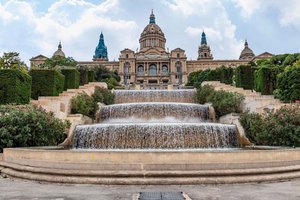
1560 – 1609, Bologna Baroque art Most works: Museu Nacional d'Art de Catalunya

Annibale Carracci's top 10: the pieces everyone knows

1
The beaneater Sun by Annibale Carracci

The beaneater Sun

Oil On Canvas · Palazzo Colonna, Rome

The Beaneater unfolds in a quiet, dimly lit room where the air feels heavy with the scent of simple food. A man sits at a wooden table, his focus entirely consumed by the meal before him. He wears a straw hat that casts a soft shadow over his brow, and his hands move with a practiced, rhythmic grace. One hand grips a spoon, lifting a portion of beans toward his…

2
The Choice of Heracles by Annibale Carracci

The Choice of Heracles

Oil On Canvas · Museo di Capodimonte, Neapel

The Choice of Heracles emerges from the brush of Annibale Carracci as a profound mythological allegory. Created in 1596, this oil on canvas captures a moment of heavy deliberation. The hero finds himself caught in a spiritual crossroads, forced to weigh the heavy burden of virtue against the seductive, easy pull of vice. It is a scene where the weight of a single decision hangs in the air, suspended between…

3
Heraaklesi valik (1596) by Annibale Carracci

Heraaklesi valik

1596 · Õlimaal kangaruumil · Museo di Capodimonte, Neapel

Annibale Carracci "Heraklese valik" on hingestatud barokkkunstiteos, mis sündis 1596. aastal ning kehastab oma dramaatilisusega ja emotsionaalse sügavusega sajandi kunstilisi voolusid. See maal ei ole pelgalt müüdilise narratiivi kujutamine; see on peegel inimhinge igavesele dilemmale – valiku vahel virtuoosi teekonna ja naudingute varjupaiga vahel. Carracci, Bologna kunstnikuühistu *Accademia degli Incamminati* asutaja, lõi siin teose, mis ühendab klassikalise mütopoeesi suurejoonelisusega baroki dünaamilise väljendusrikkuse.

4
Jõe maastik (1589) by Annibale Carracci

Jõe maastik

1589 · Õlimaal kangaruumil · National Gallery of Art, Washington

Annibale Carracci’s ‘River Landscape’: A Window into Baroque Harmony Annibale Carracci’s “River Landscape,” painted in 1589, isn't merely a depiction of a picturesque scene; it’s a profound statement about the burgeoning appreciation for nature’s beauty during the late Renaissance and early Baroque periods. This remarkable work, now housed within the heart of Bolognese artistic tradition, offers a captivating glimpse into a world where classical precision intertwines with an emerging sensitivity…

5
Mocking of Christ (1596) by Annibale Carracci

Mocking of Christ

1596 · Oil On Canvas · Pinacoteca Nazionale, Bologna

Annibale Carracci's "Mocking of Christ," painted around 1596, isn’t merely a depiction of a biblical scene; it’s a visceral exploration of suffering, betrayal, and the agonizing weight of divine sacrifice. Created during a pivotal moment in the artist’s career – a period where he was actively reshaping the trajectory of Italian painting towards the burgeoning Baroque style – this oil on canvas transcends its religious subject matter to become a…

6
Pieta (1599) by Annibale Carracci

Pieta

1599 · Õlimaal kangaruumil · Museo di Capodimonte, Neapel

Annibale Carracci's "Pietà," painted in 1599, onandas muutub põhjalikult Itaalia maalikunsti. Bologna oli sel ajal elav intellektuaalse ja kunstilise kihiseva keskpunktina, kuid tundis end veidi kaugena Rooma ja Veneetsia domineerivatest vooludest. See provintsilikkuse tunne õhutas noorte ku

7
The Galleria Farnese (1597) by Annibale Carracci

The Galleria Farnese

1597 · Fresco · Palazzo Farnese, Rooma

To step into the Galleria Farnese within Rome’s Palazzo Farnese is to leave the terrestrial world behind and ascend into a realm of divine drama. Painted by the master Annibale Carracci between 1597 and 1602, this monumental ceiling fresco represents one of the most profound achievements of the Baroque era. It is not merely a decorative surface but an immersive architectural experience that blurs the line between the physical room…

8
Venus, Adonis, and Cupid (1595) by Annibale Carracci

Venus, Adonis, and Cupid

1595 · Oil On Canvas · Museo del Prado, Madrid

In the grand tapestry of the late sixteenth century, few works capture the burgeoning drama of the Baroque era as intimately as Annibale Carracci’s Venus, Adonis, and Cupid. Painted around 1595, this oil on canvas masterpiece serves as a breathtaking window into the mythological realms of Ovid, where the boundaries between the divine and the mortal blur amidst lush, atmospheric detail. The painting is not merely a depiction of ancient…

9
Assumption of Mary (1587) by Annibale Carracci

Assumption of Mary

1587 · Oil · Staatliche Kunstsammlungen Dresden, Dresden

The Assumption of Mary by the Italian Baroque artist Annibale Carracci captures a moment of celestial movement. Completed about 1587, the work centers on the religious and triumphal ascent of the Virgin. She rises through the air, leaving the heavy, terrestrial realm behind to enter a space of divine light. The subject matter focuses on this transition from the earthly to the heavenly.

10
Venus with Two Frolicking Cupids (1584) by Annibale Carracci

Venus with Two Frolicking Cupids

1584 · Oil On Canvas · Bavaria riiklikud maalidema kogumikud, München

In Annibale Carracci’s Venus with Two Frolicking Cupids, the arrangement of figures follows an asymmetrical logic. Venus sits on the left, her body turned toward the two Cupids who occupy the right side of the frame. This weight of presence on one side creates a quiet tension against the movement of the smaller figures. The eye moves from the goddess to the playful, naked forms of the Cupids through a…

Keep exploring Annibale Carracci: 11 to 100

11Venus, Adonis, and Cupid (1590) by Annibale CarracciVenus, Adonis, and Cupid1590 · Kunsthistorisches Museum 12Saint Sebastian (1583) by Annibale CarracciSaint Sebastian1583 · Staatliche Kunstsammlungen Dresden 13Pietà with St Francis and Mary Magdalene (1607) by Annibale CarracciPietà with St Francis and Mary Magdalene1607 · Louvre'i muuseum 14Lamentation of Christ (1606) by Annibale CarracciLamentation of Christ1606 · National Gallery 15Hercules at the Crossroads (1596) by Annibale CarracciHercules at the Crossroads1596 · Museo di Capodimonte 16Portrait of a Musician (1587) by Annibale CarracciPortrait of a Musician1587 · Museo di Capodimonte 17The Penitent Magdalen in a Landscape (1598) by Annibale CarracciThe Penitent Magdalen in a Landscape1598 · Fitzwilliam College 18Lord, whither goest thou. (1602) by Annibale CarracciLord, whither goest thou.1602 19Polyphemus Attacking Acis and Galatea (1605) by Annibale CarracciPolyphemus Attacking Acis and Galatea1605 20Hunting (1585) by Annibale CarracciHunting1585 · Louvre'i muuseum 21Man with Monkey (1591) by Annibale CarracciMan with Monkey1591 22Pietà (1610) by Annibale CarracciPietà1610 · Reading Public Museum 23Christ in Glory (1597) by Annibale CarracciChrist in Glory1597 24Pietà by Annibale CarracciPietàDulwichi Pildigalerii 25Saint John the Baptist Bearing Witness (1600) by Annibale CarracciSaint John the Baptist Bearing Witness1600 · Metropolitan Museum of Art 26The Cyclops Polyphemus (1595) by Annibale CarracciThe Cyclops Polyphemus1595 · Palazzo Farnese 27Triumph of Bacchus and Ariadne (1597) by Annibale CarracciTriumph of Bacchus and Ariadne1597 · Palazzo Farnese 28The Flight into Egypt (1603) by Annibale CarracciThe Flight into Egypt1603 · Galleria Doria Pamphilj 29Christ and the Woman of Samaria (1609) by Annibale CarracciChrist and the Woman of Samaria1609 · Metropolitan Museum of Art 30Night Bearing Sleep and Death (1602) by Annibale CarracciNight Bearing Sleep and Death1602 · Musée Condé 31The Baptism of Christ (1603) by Annibale CarracciThe Baptism of Christ1603 · Kunsthaus Zürich 32Study of a Man's Head (1580) by Annibale CarracciStudy of a Man's Head1580 · Slovak National Gallery 33The Incredulity of St Thomas (1592) by Annibale CarracciThe Incredulity of St Thomas1592 · Statens Museum For Kunst 34Il trionfo di Bacco e Arianna. .Galleria Farnese (1598) by Annibale CarracciIl trionfo di Bacco e Arianna. .Galleria Farnese1598 35The martyre of St Steven Sun (1603) by Annibale CarracciThe martyre of St Steven Sun1603 36Martyrdom of Saint Andrew (1584) by Annibale CarracciMartyrdom of Saint Andrew1584 · Bavaria riiklikud maalidema kogumikud 37The Mystical Marriage of St. Catherine (1585) by Annibale CarracciThe Mystical Marriage of St. Catherine1585 · Museo di Capodimonte 38Mary Magdalene in the Desert by Annibale CarracciMary Magdalene in the Desert 39Young Bacchante (1584) by Annibale CarracciYoung Bacchante1584 · Bavaria riiklikud maalidema kogumikud 40The Baptism of Christ (1592) by Annibale CarracciThe Baptism of Christ1592 · Statens Museum For Kunst 41Male Portrait (1584) by Annibale CarracciMale Portrait1584 · Bavaria riiklikud maalidema kogumikud 42Omförd till NM 7172. Pietà (1750) by Annibale CarracciOmförd till NM 7172. Pietà1750 · Nationalmuseum 43Everlasting Father (1604) by Annibale CarracciEverlasting Father1604 · Museu Nacional d'Art de Catalunya 44The Angel Gabriel in a glory of musician angels and cherubim (1594) by Annibale CarracciThe Angel Gabriel in a glory of musician angels and cherubim1594 · Musée Condé 45Vision of Saint Francis (1598) by Annibale CarracciVision of Saint Francis1598 · Detroit Institute of Arts 46Christ Before the Flagellation (1584) by Annibale CarracciChrist Before the Flagellation1584 · Bavaria riiklikud maalidema kogumikud 47Study for an ignudo (1599) by Annibale CarracciStudy for an ignudo1599 · National Gallery of Victoria 48The Scholar Agucchi (1584) by Annibale CarracciThe Scholar Agucchi1584 · Bavaria riiklikud maalidema kogumikud 49Venus with a Satyr and Cupids (1588) by Annibale CarracciVenus with a Satyr and Cupids1588 · Galleria degli Uffizi 50The Virgin and Child with the Infant Saint John the Baptist (1599) by Annibale CarracciThe Virgin and Child with the Infant Saint John the Baptist1599 · Museo del Prado 51Love Scattering Flowers (1603) by Annibale CarracciLove Scattering Flowers1603 · Musée Condé 52Leto (1585) by Annibale CarracciLeto1585 · Slovak National Gallery 53Domine quo vadis by Annibale CarracciDomine quo vadis 54Jupiter and Juno by Annibale CarracciJupiter and Juno 55Landscape with Bathers (1590) by Annibale CarracciLandscape with Bathers1590 · Bavaria riiklikud maalidema kogumikud 56The Deluge (1584) by Annibale CarracciThe Deluge1584 · Bavaria riiklikud maalidema kogumikud 57Annunciation (1590) by Annibale CarracciAnnunciation1590 58Boy Drinking (1582) by Annibale CarracciBoy Drinking1582 · Cleveland Museum of Art 59Saint Didacus of Alcalá receiving the franciscan habit (1604) by Annibale CarracciSaint Didacus of Alcalá receiving the franciscan habit1604 · Museo del Prado 60The Holy Family with Saint Francis (1584) by Annibale CarracciThe Holy Family with Saint Francis1584 61Head of an old woman (1590) by Annibale CarracciHead of an old woman1590 · Fitzwilliam Museum 62Christ Head (1589) by Annibale CarracciChrist Head1589 · Staatliche Kunstsammlungen Dresden 63Head of a Man in Profile (1591) by Annibale CarracciHead of a Man in Profile1591 · Royal Collection 64The Deposition (1592) by Annibale CarracciThe Deposition1592 · Statens Museum For Kunst 65Madonna with Cherries (1593) by Annibale CarracciMadonna with Cherries1593 66St. Magdalene in the Desert (1591) by Annibale CarracciSt. Magdalene in the Desert1591 67Dawn Scattering Flowers and Holding a Torch (1602) by Annibale CarracciDawn Scattering Flowers and Holding a Torch1602 · Musée Condé 68Portrait of a Young Man with a Goatee (Self-portrait?) (1600) by Annibale CarracciPortrait of a Young Man with a Goatee (Self-portrait?)1600 · Bavaria riiklikud maalidema kogumikud 69Saint Didacus of Alcalá receiving alms (1604) by Annibale CarracciSaint Didacus of Alcalá receiving alms1604 · Museo del Prado 70The Vision of St. Francis (1597) by Annibale CarracciThe Vision of St. Francis1597 · Kanada Rahvusgalerii 71Tobit heals his father's eyes (1600) by Annibale CarracciTobit heals his father's eyes1600 · Gemäldegalerie Alte Meister im Schloss Wilhelmshöhe 72Christ and the Samaritan Woman (1595) by Annibale CarracciChrist and the Samaritan Woman1595 · Szépművészeti Múzeum 73The Agony in the Garden (1596) by Annibale CarracciThe Agony in the Garden1596 · Royal Collection 74Saint Peter (1604) by Annibale CarracciSaint Peter1604 · Museu Nacional d'Art de Catalunya 75Mural paintings from the Herrera Chapel (1604) by Annibale CarracciMural paintings from the Herrera Chapel1604 · Museu Nacional d'Art de Catalunya 76Apostles around the Empty Sepulchre (1605) by Annibale CarracciApostles around the Empty Sepulchre1605 · Museu Nacional d'Art de Catalunya 77Apparition of Saint Didacus above his sepulchre (1605) by Annibale CarracciApparition of Saint Didacus above his sepulchre1605 · Museu Nacional d'Art de Catalunya 78Saint Paul (1604) by Annibale CarracciSaint Paul1604 · Museu Nacional d'Art de Catalunya 79Saint Didacus Preaching (1605) by Annibale CarracciSaint Didacus Preaching1605 · Museu Nacional d'Art de Catalunya 80Miracle of the Roses (1605) by Annibale CarracciMiracle of the Roses1605 · Museu Nacional d'Art de Catalunya 81Assumption of the Virgin Mary (1604) by Annibale CarracciAssumption of the Virgin Mary1604 · Museu Nacional d'Art de Catalunya 82Apostles around the Sepulchre of the Virgin Mary (1604) by Annibale CarracciApostles around the Sepulchre of the Virgin Mary1604 · Museu Nacional d'Art de Catalunya 83Nativity (1600) by Annibale CarracciNativity1600 84Infant Hercules Strangling the Serpents (1599) by Annibale CarracciInfant Hercules Strangling the Serpents1599 85Venus and Anchises (1600) by Annibale CarracciVenus and Anchises1600 86Römische Landschaft (1600) by Annibale CarracciRömische Landschaft1600 87Hercules at the Crossroads (1595) by Annibale CarracciHercules at the Crossroads1595 88The Flight into Egypt (1603) by Annibale CarracciThe Flight into Egypt1603 · Galleria Doria Pamphilj 89San Diego saves the boy asleep in the oven (1604) by Annibale CarracciSan Diego saves the boy asleep in the oven1604 · Museo del Prado 90St John the Baptist (1592) by Annibale CarracciSt John the Baptist1592 · Statens Museum For Kunst 91The Crucifixion (1587) by Annibale CarracciThe Crucifixion1587 · Yale University Art Gallery 92Venus and Adonis (1595) by Annibale CarracciVenus and Adonis1595 · Kunsthistorisches Museum 93Christ and the Woman of Samaria (1605) by Annibale CarracciChrist and the Woman of Samaria1605 · Kunsthistorisches Museum 94Venus, Adonis and Cupid (1591) by Annibale CarracciVenus, Adonis and Cupid1591 · Museo del Prado 95Portrait of Giovanni Gabrieli with the lute (1600) by Annibale CarracciPortrait of Giovanni Gabrieli with the lute1600 · Staatliche Kunstsammlungen Dresden 96Self-portrait on an Easel in a Workshop (1604) by Annibale CarracciSelf-portrait on an Easel in a Workshop1604 97Sheet of caricatures (1595) by Annibale CarracciSheet of caricatures1595 · British Museum 98Translation of the Holy House (1605) by Annibale CarracciTranslation of the Holy House1605 · Sant'Onofrio 99Rinaldo and Armida (1601) by Annibale CarracciRinaldo and Armida1601 · Museo di Capodimonte 100The Dead Christ (1585) by Annibale CarracciThe Dead Christ1585

Annibale Carracci's paintings, period by period

What Annibale Carracci painted most

The four subjects that come up most often in these pieces, each with its best-known example.

Where you can see Annibale Carracci's paintings

The 8 museums that hold the most of the paintings on this page.

Museum City Works by Annibale Carracci Paintings from this list
Museu Nacional d'Art de Catalunya, BarcelonaMuseu Nacional d'Art de Catalunya Barcelona 11 Everlasting Father, Saint Peter, Mural paintings from the Herrera Chapel
Bavaria riiklikud maalidema kogumikud, MünchenBavaria riiklikud maalidema kogumikud München 10 Venus with Two Frolicking Cupids, Martyrdom of Saint Andrew, Young Bacchante
Museo di Capodimonte, NeapelMuseo di Capodimonte Neapel 15 The Choice of Heracles, Heraaklesi valik, Pieta
Museo del Prado, MadridMuseo del Prado Madrid 12 Venus, Adonis, and Cupid, The Virgin and Child with the Infant Saint John the Baptist, Saint Didacus of Alcalá receiving the franciscan habit
Staatliche Kunstsammlungen Dresden, DresdenStaatliche Kunstsammlungen Dresden Dresden 5 Assumption of Mary, Saint Sebastian, Christ Head
Musée Condé, ChantillyMusée Condé Chantilly 5 Night Bearing Sleep and Death, The Angel Gabriel in a glory of musician angels and cherubim, Love Scattering Flowers
Statens Museum For Kunst, KooberemaaStatens Museum For Kunst Kooberemaa 5 The Incredulity of St Thomas, The Baptism of Christ, The Deposition
Palazzo Farnese, RoomaPalazzo Farnese Rooma 5 The Galleria Farnese, The Cyclops Polyphemus, Triumph of Bacchus and Ariadne

One famous Annibale Carracci piece for every decade

Works per decade

Pick a decade to see its standout piece.

Annibale Carracci paintings: what people want to know

What painting is Annibale Carracci best known for?See the answer

Top of the list is The beaneater Sun, Palazzo Colonna, Rome. Right behind it: The Choice of Heracles and Heraaklesi valik (1596).

Which 10 Annibale Carracci paintings are the most famous?See the answer

The beaneater Sun, The Choice of Heracles, Heraaklesi valik, Jõe maastik, Mocking of Christ, Pieta, The Galleria Farnese, Venus, Adonis, and Cupid, Assumption of Mary and Venus with Two Frolicking Cupids. You'll find the year and the museum of each in the list above.

How many Annibale Carracci works are there?See the answer

We have 282 works by Annibale Carracci in our catalogue, dated 1580 to 1609.

Which museums have Annibale Carracci's best-known paintings?See the answer

You'll find most of them in Museu Nacional d'Art de Catalunya (Barcelona), Bavaria riiklikud maalidema kogumikud (München) and Museo di Capodimonte (Neapel). The museum list above has the full breakdown.

When were Annibale Carracci's most famous pieces painted?See the answer

In 1600s, more than any other time: 36 of the 100 pieces on this page date from then, Pietà with St Francis and Mary Magdalene among them.

What are the oldest and newest famous paintings by Annibale Carracci?See the answer

The earliest piece here is Study of a Man's Head (1580); the most recent is Christ and the Woman of Samaria (1609).

What did Annibale Carracci paint most?See the answer

Man (21), Woman (13) and Drapery (10), out of the 100 pieces on this page.

What did Annibale Carracci usually paint with?See the answer

Oil On Canvas, used in 36 of the 100 pieces on this page.

Which art movement is Annibale Carracci linked to?See the answer

Baroque art, as you can see in the pieces on this page.

What can you see by Annibale Carracci at the Museu Nacional d'Art de Catalunya?See the answer

You can see 10 of the pieces on this page at the Museu Nacional d'Art de Catalunya, Barcelona, including Everlasting Father, Saint Peter and Mural paintings from the Herrera Chapel.

Can I order a Annibale Carracci reproduction for my home?See the answer

Yes. Every painting on this page is available as a hand-painted oil reproduction or a print, in the size that suits you. Just open the painting's page to order.

Meet Annibale Carracci

Varajane Elu ja Bolognese Juured

Annibale Carracci, sündinud 3. novembril 1560. aastal Bolognas, kasvas kunstnikuperes, mis oli sügavalt juurdunud kunstitraditsioonidesse. Tema varaseim õpetus toimus tõenäoliselt perekonna ateljees, luues aluse karjäärile, mis muutis põhjalikult Itaalia maalikunsti. Bologna oli sel ajal elav intellektuaalse ja kunstilise kihiseva keskpunktina, kuid tundis end veidi kaugena Rooma ja Veneetsia domineerivatest vooludest. See provintsilikkuse tunne õhutas noorte kunstnike – Annibale’t, tema venda Agostinot ja sugulast Ludovicot – looma uue tee, mis taaselustaks Itaalia kunsti vaadates kõrge renessansi meistritele ning omaksvõttes looduslikuma lähenemisviisi.

1582. aastal realiseerus see ambitsioon *Accademia degli Incamminati* asutamisega, algselt tuntud kui Desiderosi Akadeemia. See ei olnud pelgalt ateljee; see oli kunstilise innovatsiooni tiigel, ruum range elujoonistuse jaoks, kirglike arutelude jaoks ja kollektiivse pühendumise jaoks kunstilisele tippmomendile. Akadeemia nimi ise – “Edenejad” – tähistas nende kavatsust: liikuda Mannerismi stilistilisest keerukusest ja kaardistada uus kursus maapõhjalikuma, emotsionaalselt resonantssema väljendusvormi poole. Incamminati sai Euroopa kunstiakadeemiate eeskujuks, rõhutades elust vaatlust kui kunstilise õppe nurgakivi.

Stiilide ja Mõjude Süntees

Carracci kunstiline visioon ei sündinud vaakumis; see oli hoolikalt kujundatud mineviku meistrite pärandusega sügava kaasamise kaudu. Tal oli erakordne võime sünteesida mitmekesiseid mõjusid, luues stiili, mis tundus nii sügavalt juurdunud traditsioonis kui ka hämmastavalt originaalne. Ta imetles Raphaeli ja Andrea del Sarto tööde joone selgust ja kompositsioonilist tasakaalu, otsides nende graatsiat ja harmooniat. Samas tunnistas ta Veneetsia maalikute nagu Titiani poolt propageeritud värvi ja atmosfääri jõudu, lisades oma töödele elavat valgusrikkust ja emotsionaalset sügavust.

Correggio mõju oli eriti sügav, mis ilmneb Carracci dünaamilistes kompositsioonides ja illusioonilistes tehnikates – eriti tema freskode näites. Ta ei kopeerinud lihtsalt neid meistreid; ta imas nende tugevusi ja sepistas need uueks. See eklektiline segu sai Bolognese kooli tunnusjooneks, oluline Baroki kunsti haru, mis rõhutas nii klassikalisi ideale kui ka looduslikku vaatlust. Carracci geenius peitus tema võimes leppida näiliselt erinevaid elemente, luues harmoonilise terviku, mis resoneeris nii intellektuaalse rangusega kui ka emotsionaalse jõuga.

Rooma triumf: Palazzo Farnese ja kaugemal

Kutse dekoreerida Palazzo Farnese Roomas tähistas Annibale Carracci karjääris pöördelist hetke. See monumentaalne tellimus – tohutu freskode tsükkel, mis kujutas mütoloogiastseenesid – andis talle võrreldamatu võimaluse näidata oma kunstilist osavust ja kindlustada oma mainet suurel skaalal. *Bacchuse ja Ariadne triumf*, vaieldamatult tema meistriteos, on hingekinev illusioonilise tehnika, dünaamilise kompositsiooni ja elava värvi väljapanemine. Freskod näivad lahustavat piirid maalikunsti ja reaalsuse vahel, tõmmates vaataja müütilise suurejoonelisuse maailma.

Lisaks *Triumfile* võttis Carracci ette ka Palazzo Farnese’i *Jumalate armastused*, uurides edasi mütoloogia ja armastuse teemasid klassikalise idealismi ja terava vaatluse seguga. Need tööd ei olnud pelgalt dekoratiivsed; need olid avaldused kunsti võimust tõsta inimvaimu ja tähistada loodusliku maailma ilu. Tema edu Roomas kinnistas tema positsiooni oma aja juhtiva kunstnikuna, meelitades tellimuste voogu ja mõjutades põlvkondi maalikunstnikke.

Pärand ja ajalooline tähtsus

Annibale Carracci mõju kunstiajalukku on hindamatu. Ta mängis olulist rolli kõrge renessansi ja baroki perioodi vahelise lõhe ühendamisel, liikudes Mannerismi stilistilisest keerukusest dünaamilisemasse, emotsionaalselt laetud esteetikasse. Tema rõhk naturalismile – figuuride kujutamisel anatoomilise täpsusega ja psühholoogilise sügavusega – sillutas teed kunstnikele nagu Caravaggio, kes revolutsioneeris Itaalia maalikunsti dramaatilise valguse ja varju kasutamisega.

Carracci ja tema kaasosaliste asutatud Accademia degli Incamminati teenis Euroopa kunstiakadeemiate eeskujuna, edendades vaatluspõhist ja klassikalisi põhimõtteid põhinevat kunstilist õpet. Tema freskod Palazzo Farnese’is on jätkuvalt ikoonilised baroki illusioonismi ja kunstilise suurejoonelisuse näited, mis inspireerivad imetlust sajandeid pärast nende loomist. Carracci perekonna kollektiivne pärand – Annibale, Agostino ja Ludovico – on sügav innovatsiooni ja kestva mõju pärand, kinnistades Bologna olulise kunstilise loovuse keskuseks.

Carracci töö ei seisnenud lihtsalt tehnilises oskuses; see puudutas emotsioonide väljendamist, lugude jutustamist ja inimkogemuse tähistamist. Ta otsis kunsti loomist, mis oli nii ilus kui ka mõtestatud, võimeline inspireerima imetlust ja äratama mõtteid. Tema pärand kestab mitte ainult tema suurepäraste maalidena, vaid ka kestvates põhimõtetes, mida ta propageeris: pühendumus vaatlusele, austus traditsiooni vastu ning vankumatu usk kunsti võimesse muuta maailma.

All 282 works by Annibale Carracci →