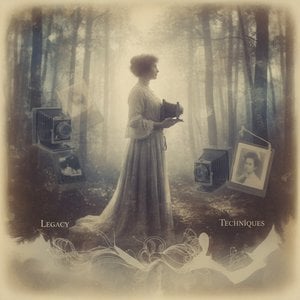
The Lens of Preservation: The Life and Vision of Michael Bodycomb
Born in the vibrant cultural landscape of Baltimore, Maryland, in 1960, Michael Bodycomb has emerged as a profound voice in the realm of museum photography. His journey is not merely one of capturing images, but of documenting the very soul of artistic institutions. Through his lens, the boundaries between the observer and the observed dissolve, allowing the viewer to step into the hallowed halls of history. Bodycomb’s work is defined by a meticulous devotion to detail, where every shadow and highlight serves to honor the masterpieces he documents, particularly during his transformative tenure associated with The Frick Collection in New York City.
Bodycomb’s professional evolution is marked by a deep integration into the technical and scholarly heart of art preservation. Serving as the Head of Photography and Digital Imaging, he mastered the delicate balance between scientific accuracy and artistic expression. This role required more than just technical proficiency; it demanded an intimate understanding of how light interacts with centuries-old pigments and how the architecture of a gallery influences the perception of a painting. His work on significant projects, such as the “Men in Armor” series at The Frist, demonstrates his unique ability to weave complex historical narratives into compelling visual sequences that resonate with both scholars and casual admirers alike.
Architectural Poetics and the Mastery of Light
Beyond the structured confines of museum walls, Bodycomb’s artistic spirit finds expression in the study of architecture. In his personal photographic pursuits, he approaches buildings not as static structures of stone and steel, but as living canvases capable of profound emotion. His architectural photography is characterized by an acute sensitivity to the interplay of form and function, often capturing moments where light transforms a mundane corner into a space of quiet contemplation. By focusing on the subtle textures and spatial relationships within a structure, he invites his audience to reconsider the environments they inhabit, finding beauty in the structural rhythm and the ephemeral dance of shadows.
The technical brilliance of Bodycomb’s oeuvre lies in his commitment to nuance. He eschews the sensational in favor of the subtle, prioritizing the precise rendering of color, texture, and depth. This approach ensures that his documentation serves a dual purpose: it acts as an unerring record for archival research while simultaneously functioning as fine art in its own right. His ability to translate the grandeur of the West Gallery at The Frick Collection or the quiet dignity of the Frick Art Reference Library entrance into evocative imagery is a testament to his mastery over the medium.
A Legacy of Visual Stewardship
The historical significance of Michael Bodycomb’s work resides in its role as a bridge between the past and the present. In an era where digital media can often feel fleeting, his photographs provide a sense of permanence and reverence for cultural heritage. He has championed a style of photography that respects the sanctity of the original artwork, ensuring that the atmosphere and intellectual richness of these spaces are preserved for future generations. His influence is felt in the way he has elevated museum photography from simple documentation to a sophisticated form of artistic dialogue.
Ultimately, Bodycomb’s contribution to the art world is defined by his belief in the emotional power of the image. Whether he is capturing the sweeping vistas of a gallery or the intricate details of an architectural facade, his work remains anchored in a profound respect for the subject. His legacy is one of quiet revolution—a movement toward a more thoughtful, detailed, and emotionally resonant way of seeing the world’s most precious cultural treasures.