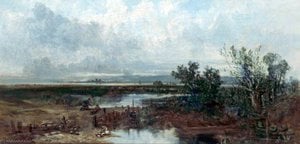
John Wright Oakes portree

Sinu juhend 25 kuulsama John Wright Oakes maali kohta

Uuendatud november 2026 · järjestatud meie populaarsusindeksi järgi (otsingud, külastused ja tellimused igale teosele) · 25 teost John Wright Oakes meie kataloogis

Lühidalt

John Wright Oakes kõige tuntum teos on Moonlight, Near Cemmaes, Anglesea (1871). Listis järgmised on A North Devon Glen, Autumn (1870) ja Slate Quarries, Llanberis (1847). Meie kataloogist leiate 25 teost kunstnikult John Wright Oakes; see juhend koondab 25 kõige tuntumat teost koos aastakuga, muuseumiga ja iga teose ajaloolise luguga.

1820 – 1887, Cheshire West and Chester Enamama teoseid: Walker Art Gallery

10 kõige olulisemat John Wright Oakes maali, mida peaks teadma

1
Moonlight, Near Cemmaes, Anglesea (1871) autor John Wright Oakes

Moonlight, Near Cemmaes, Anglesea

1871 · Oil

In Moonlight, Near Cemmaes, Anglesea, John Wright Oakes captures a moment of profound stillness as the sun begins its descent or perhaps prepares to rise, casting warm, glowing hues across the sky. A tranquil landscape unfolds, centered around a quiet body of water that mirrors the shifting colors of the heavens. Upon this liquid surface, a small boat carries a single figure, a solitary presence that provides a sense of…

Käsitööna maalatud õlireproduction alates $175 35 × 29 cm
Handmaalisena ostmine Loe lugu sellest
3
Slate Quarries, Llanberis (1847) autor John Wright Oakes

Slate Quarries, Llanberis

1847 · Oil On Canvas · Harris Museum - Art Gallery, Preston

is an oil painting by John Wright Oakes, executed in 1847. The artist, born in 1820 in Cheshire West and Chester, United Kingdom, transitioned from the precise study of still-life fruit pieces to the direct observation of the natural landscape. This work emerged during a period of significant industrial expansion and a simultaneous romantic interest in the untouched natural world.

Käsitööna maalatud õlireproduction alates $175 35 × 28 cm Originaadi suurusega $247 66 × 52 cm Telli originaalkoguses →
Tellige see teos Lisateavet selle teose kohta
4
The Mouth of the River Derwent (1848) autor John Wright Oakes

The Mouth of the River Derwent

1848 · Oil On Canvas · Nottingham Castle Museum And Art Gallery, Nottingham

The landscape captures the confluence of the River Derwent, where the water meets the horizon under a vast, shifting sky. Mountains rise in the background, their forms softened by the heavy, moisture-laden air characteristic of the British Isles. A single boat floats upon the surface, a small, solitary presence amidst the expanse of the river. Scattered figures populate the banks, their scale emphasizing the quiet magnitude of the natural environment.…

Käsitööna maalatud õlireproduction alates $175 39 × 25 cm Originaadi suurusega $490 125 × 94 cm Telli originaalkoguses →
Tellige see teos Lisateavet selle teose kohta

Numbrid 11 kuni 25: rohkem kunstniku John Wright Oakes teoseid

Mida John Wright Oakes kõige rohkem maalis

Neli kõige sagedamini esinemist vajavat teemat koos nende kõige tuntumate näidetega.

Kust näha John Wright Oakes maalid

Kümne 7 muuseumi kollektsioonid, mis sisaldavad kõige rohkem sellel lehel esitatud teoseid.

Muuseumid Linn John Wright Oakes teosid Selle nimekirja maalid
Walker Art Gallery, LiverpoolWalker Art Gallery Liverpool 3 A North Devon Glen, Autumn, Morning at Angera, Lago Maggiore, The Tivey at Newcastle Emlyn, Cardiganshire
Nottingham Castle Museum And Art Gallery, NottinghamNottingham Castle Museum And Art Gallery Nottingham 2 The Mouth of the River Derwent, A Sandy Bit of Road
Harris Museum - Art Gallery, PrestonHarris Museum - Art Gallery Preston 1 Slate Quarries, Llanberis
Ludlow Library - Museum Resource Centre, LudlowLudlow Library - Museum Resource Centre Ludlow 1 Malltreath Bay
Laing Art Gallery, Newcastle upon TyneLaing Art Gallery Newcastle upon Tyne 1 Loch Muick, Aberdeenshire
New Walk Museum - Art Gallery, LeicesterNew Walk Museum - Art Gallery Leicester 1 Picking up Wreckage on a Rocky Shore
Touchstones Rochdale, RochdaleTouchstones Rochdale Rochdale 1 Mountain Stream, Glen Derry, Aberdeenshire, 'Like time the restless waters rush along'

Aastakate kaupa: iga kümnendiga kõige tuntum John Wright Oakes teos

Teosed aastakate kaupa

Vali vuosakülg, et näha selle erimärgilisi teost.

John Wright Oakes: kiired vastused maalide kohta

Mis on John Wright Oakes kõige tuntum maaliam?Vaata vastust

Nimekirja tipis on Moonlight, Near Cemmaes, Anglesea (1871). Otse selle järel: A North Devon Glen, Autumn (1870) ja Slate Quarries, Llanberis (1847).

Kui vana John Wright Oakes oli teose Moonlight, Near Cemmaes, Anglesea loomisel?Vaata vastust

51 aastat vanus. John Wright Oakes sündis aastal 1820 ning teos Moonlight, Near Cemmaes, Anglesea pärineb aastast 1871.

Mis on John Wright Oakes top 10 teost?Vaata vastust

Moonlight, Near Cemmaes, Anglesea, A North Devon Glen, Autumn, Slate Quarries, Llanberis, The Mouth of the River Derwent, Landscape, Woman by River, Barmouth, Malltreath Bay, Loch Muick, Aberdeenshire, Morning at Angera, Lago Maggiore ja Picking up Wreckage on a Rocky Shore. Üri loetlist esmalt leida iga teose kuupäev ja muuseum.

Kui palju teie kataloogis on teoseid kunstnikult John Wright Oakes?Vaata vastust

Meie kataloogist leiate 25 teost kunstnikult John Wright Oakes, mis on pärinev ajavahemikus 1847 kuni 1887.

Mitteks muuseumides võib näha John Wright Oakes kuulsamaid teoseid?Vaata vastust

Enamik neist on leetav Walker Art Gallery (Liverpool), Nottingham Castle Museum And Art Gallery (Nottingham) ja Harris Museum - Art Gallery (Preston). Ülemal oleval muuseumite ninal on täielik ülevaade.

Millal loositas John Wright Oakes oma kuulsaimad teosed?Vaata vastust

1870s ahel on rohkem kui kunagi varem: 10 25 teoseid sellel lehel pärineb sellest ajast, მათtagu Moonlight, Near Cemmaes, Anglesea.

Mis on John Wright Oakes esimesed ja viimased kuulsad teosed?Vaata vastust

Kõige vanem teos siin on Slate Quarries, Llanberis (1847); kõige värskeim on A coastal scene with figures by beached fishing boats in the foreground (1887).

Milliseid teemasid John Wright Oakes kõige enam kirjaldas?Vaata vastust

Boat (2), Water (2) ja Rural landscape (2) 25 teoseทั้งหมด sellel lehel.

Milline tehnika esineb kõige sagedamini John Wright Oakes maalides?Vaata vastust

Oil On Canvas, mida on kasutatud 3 teoseks 25 teose kohta sellel lehel.

Millised kuulsud John Wright Oakes maalid asuvad Walker Art Gallery-is?Vaata vastust

Sellel lehel on Walker Art Gallery, Liverpool kogumikus 3 teost, sealhul ka A North Devon Glen, Autumn, Morning at Angera, Lago Maggiore ja The Tivey at Newcastle Emlyn, Cardiganshire.

Kust saan tellida John Wright Oakes reproduktsiooni?Vaata vastust

Jah. Iga maal on sellel lehel saadav kas käsitsi maalitud õlimaalina või trükkina, teile sobivas suuruses. Tellimiseks avage maali oma leht.

John Wright Oakes lugu

The Soul of the Welsh Landscape: The Life and Art of John Wright Oakes

In the heart of the Victorian era, a period defined by both industrial expansion and a profound romantic longing for the untouched natural world, the works of John Wright Oakes emerged as a poignant bridge between reality and imagination. Born in 1820 at Sproston House near Middlewich, Cheshire, Oakes was a man whose lineage and upbringing provided a stable foundation for a life dedicated to the pursuit of aesthetic truth. While his early years were rooted in the English countryside, his artistic spirit found its true home amidst the rugged, mist-shrouded peaks and dramatic coastlines of Wales. His journey from a student of fine details to a master of atmospheric grandeur represents one of the most compelling narratives of nineteenth-century British landscape painting.

Oakes’s formal training began in Liverpool, where he studied under the guidance of John Bishop at the school attached to the Liverpool Mechanics’ Institution. This early education instilled in him a meticulous discipline that would later serve as the bedrock for his more expansive works. Interestingly, his initial foray into the art world was not through the sweeping vistas for which he is now celebrated, but through the delicate and precise genre of fruit paintings. These early still lifes, exhibited at the Liverpool Academy—where he eventually served as an honorary secretary—demonstrated a profound understanding of texture, light, and form. However, around 1843, a transformative shift occurred; drawn by the raw power of nature, Oakes began painting directly from the landscape, trading the controlled environment of the studio for the unpredictable beauty of the outdoors.

A Mastery of Light and Romantic Grandeur

The transition from still life to landscape allowed Oakes to explore the tenets of Romanticism, an art movement that prioritized emotion, the sublime, and the awe-inspiring power of the natural world. Influenced by the legendary techniques of masters like Turner and Constable, Oakes developed a signature style characterized by masterful tonal modulation and atmospheric perspective. He possessed a rare ability to capture the fleeting, ephemeral qualities of light—the way a sudden sunbeam pier sculpting through heavy clouds, or the soft, melancholic glow of twilight over a mountain glen. His canvases were not merely topographical records but emotional landscapes that invited the viewer to feel the dampness of the mist and the chill of the wind.

His technical prowess was particularly evident in his treatment of diverse terrains:

  • Mountainous Vistas: In works inspired by Snowdonia, he utilized rugged textures and dramatic shadows to convey the intimidating majesty of the Welsh peaks.
  • Coastal Scenes: His depictions of places like Aberffraw Bay and Malldraeth Sands showcased a fluid command of water, capturing the turbulent energy of the sea meeting the shore.
  • Rural Serenity: In pieces such as A North Devon Glen, Autumn, he employed warm palettes and soft brushstrokes to evoke a sense of pastoral peace and seasonal transition.

Legacy and Artistic Triumph

The trajectory of Oakes’s career was marked by consistent recognition from the most prestigious institutions of his time. His debut in London at the Royal Academy in 1847, featuring On the River Greta, Keswick, signaled his arrival as a significant force in British art. Throughout his prolific life, he became a regular contributor to the Society of British Artists, the Dudley Gallery, and the Portland Gallery. His accolades were numerous, including being elected an Associate of the Royal Academy in 1876 and receiving honorary membership in the Royal Scottish Academy in 1883. Even as ill health began to impede his physical practice in his final years, his dedication to the craft remained unshaken, continuing to exhibit at the Royal Academy until the very end.

Today, the historical significance of John Wright Oakes lies in his ability to have captured the vanishing essence of the nineteenth-century landscape. His works, now held in esteemed collections such as the Walker Art Gallery and the Nottingham Castle Museum, serve as windows into a world of sublime beauty and quiet contemplation. He remains a vital figure for anyone seeking to understand the Victorian fascination with the wild, untamed corners of the British Isles, leaving behind a legacy of over 300 canvases that continue to resonate with visual splendor and psychological depth.