


 Vaata sisu
 Jaga teost
 Jaga
Jaga
 Detailid
 Õppekate juhend

 Laadi alla
 Sarnased teosed
 Röntgenuuring
 Slaidietendus
 Statistika
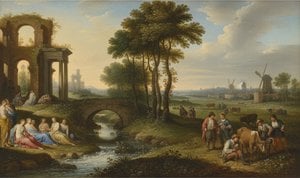
Italian Landscape with Roman Warriors
 Oil On Canvas
- WallArt
- Baroque Landscape
 1650
1650 154.0 x 174.0 cm
 Hermitage muuseum
 Loe lähemalt
Käsitsi valmistatud õlimaalireproduktsioon
Meie kunstnike poolt tellimusel valmistatud käsitsi maalitud õli-kainaste teos teie soovitud suuruses ja raamis. ( Lülita trükkitoodetele Ülemineku digitaalse pildi müügi kanalisse)




P118B €10

P118H €10

P118W €10

P438Z €10

P508JH €12

P508YH €12

P805H €10

P805Z €10

P919BZ €10

P919G €10

P919XJ €10

P959ZH €10

P968JZ €12

W106C €8

W218G €10

W218JH €8

W218Y €10

W307PJ €10

W316G €10

W316PJ €8

W316Y €10

W398PJ €8

W4111J €10

W500HY €15

W500JH €15

W692G €12

W849H €8

W940BG €15

W953PJ €8




Vali meie eelmääratud suurused, mis vastavad teose algupärastele proportsioonidele.

Sisestage vajalik laius ja kõrgus, et teos sobiks teie raamile või seinale. Kuna tegu on käsipainatud teosega, siis erineva kujuga suuruse korral võib kunstnik jätta pildi ümber veidi rohkem marginaali või lõigata osa ära — valik on teie. Enne maali alustamist saadame teile kinnitamiseks digitaalse näidisprojektsiooni. Sellel lehel näidatud pilt ei kajasta tegelikku tulemust — seda näitab ainult näidisprojekttsioon.
Pärast tellimust saadab ArtsDot.com meeskond kliendile e-posti juhised ning esitab eelvaate kavandi
Maailmline tarne 3–4 nädala jooksul tavalise 5 nädala asemel. (24 oktoober). Kvaliteedis kompromisse ei tehta.

Tasuta ekspresssaatmine üle maailma

Kõrgekvaliteediline lina-kangastest muld

Täielik transpordikindlustus

Tollimaksude tagastamise garantii

Värvitoime täpsuse garantii

100 päeva tagastusõigus (ainult defektide korral)

100% raha tagasi garantii

Hulgusoodustus
 Klaasivalik on saadaval ainult kuni 110 cm suuruses teostes

Italian Landscape with Roman Warriors
Reproduktsiooni materjal
Reproduktsiooni mõõtmed
-


Lõppsumma
€ 231
The Vision of Jan Both: A Mediterranean Masterpiece
Jan Dirksz Both’s “Italian Landscape with Roman Warriors,” painted around 1650, isn't merely a depiction of a picturesque Italian vista; it’s an immersive experience. Born in Utrecht and trained within the traditions of Flemish painting, Both embarked on a transformative journey to Rome, a pivotal moment that fundamentally altered his artistic trajectory. This work stands as a testament to that shift – a vibrant synthesis of Northern realism and Southern light, capturing not just a scene but a mood, an atmosphere steeped in the grandeur and drama of the Italian Renaissance.
The painting immediately draws the eye with its expansive composition. A sweeping river dominates the foreground, reflecting the azure sky above, while rolling hills cascade into the distance, culminating in hazy mountains that seem to bleed into the horizon. Yet, it’s not simply a topographical rendering; Both masterfully employs atmospheric perspective – a technique borrowed from Claude Lorrain and other Italian landscape masters – to create an illusion of depth and vastness. The colors become softer, cooler, and less saturated as they recede, drawing the viewer's eye into the heart of the scene.
The Language of Light: A Baroque Revelation
Both’s signature style is characterized by a luminous quality that elevates the landscape beyond mere representation. He was deeply influenced by the Baroque tradition, particularly its emphasis on dramatic lighting and theatrical effects. Notice how the sunlight, seemingly originating from an unseen source, bathes the scene in a golden glow, highlighting specific elements – the shimmering water, the textured foliage, and the confident postures of the Roman warriors. This isn’t a flat, even illumination; it's a dynamic interplay of light and shadow that imbues the painting with a sense of vitality and movement.
The use of color is equally deliberate. Rich ochres, deep greens, and vibrant blues are juxtaposed to create visual interest and depth. The earthy tones of the landscape contrast sharply with the gleaming armor of the soldiers, further emphasizing their power and authority. The subtle variations in hue – a hint of purple in the distant mountains, a touch of pink in the clouds – contribute to the overall sense of realism and atmospheric detail.
Symbolism and Power: The Roman Presence
Beyond its purely aesthetic qualities, “Italian Landscape with Roman Warriors” is laden with symbolic meaning. The presence of the Roman soldiers, clad in their imposing armor and wielding spears, speaks to themes of power, conquest, and military might. They are not simply figures within a landscape; they are active participants, shaping the scene and asserting dominance over it. The bandits leading prisoners further reinforces this narrative, suggesting a world of conflict and political intrigue.
However, the painting isn’t solely focused on warfare. The inclusion of a river, trees, and a sense of leisure hints at a more complex vision – one that acknowledges both the beauty and the brutality of the Italian landscape. The figures are engaged in activities that suggest a harmonious coexistence between humanity and nature, albeit within a framework of power and control.
A Legacy of Light: Both’s Enduring Influence
Jan Dirksz Both's “Italian Landscape with Roman Warriors” represents a pivotal moment in the development of Dutch landscape painting. It showcases his mastery of technique, his deep understanding of color and light, and his ability to synthesize diverse artistic influences. His work continues to captivate viewers today, offering a glimpse into a world of beauty, drama, and timeless symbolism. Reproductions of this stunning artwork capture the essence of Both’s vision, allowing us to experience its luminous quality and evocative power firsthand.
Küsimused ja vastused
Kus on soovituslik "Italian Landscape with Roman Warriors" näidata, arvestades selle värvilaudu?
Olles värvipalett Earthy, on teos „Italian Landscape with Roman Warriors“, autor Jan Both soovitatav ruumideks Living Room. Just needistlikud toonid on üks põhjuseid selle soovituse taga.
Kust koht sellest teosest "Italian Landscape with Roman Warriors" on Jan Both laupikus?
"Italian Landscape with Roman Warriors" kuulub Jan Both Baroque Landscape perioodi teosetele, mille tuntud teemad hõlmavad mediterranean light, roman ideals, classical landscape, heroic figures, religious allegory, moral themes, baroque drama, emotional depth.
Millist värvigamma teos "Italian Landscape with Roman Warriors" kasutab?
Teose "Italian Landscape with Roman Warriors" värvid moodustavad Earthy paleti. See klassifikatsioon kirjeldab domineerivaid värvigruppe.
Sarnased teosed


Kunstniku elulugu
Jan Both (1610-1652): Vahetu Mediterraneema Valgusmeister
Jan Dirksz Both oli hollandlane maalari, joonistaja ja etsaja, kes tõusev üks juhtiv figuraalid kasvavas "italiaanistatud" maastikumüüri liikumises Hollandi kuldajarel. Sündinud umbes aastatel 1615/161eks Utrechtis, oli ta Andries Bothi noorem vend ning nende isa Dirck Both, klaasimaalari või klaasipainaja, surendas neis varajast austust kunstilise meistrikunsti vastu. Kuigi biograafilised üksikasjad on kättesaadaval piiratud, viitab uurimistöö, et Jani õpetus hõlmas Abraham Bloemaerti ja Gerrit van Honthorsti juhiseid, kinnistades tema kohta kui oma ajastu mõjuvalikku kunstnikku.- Varajane elu ja õppimine: Bothi kujunusaastad veeti Utrechtis, kus ta täisas oma oskusi koos vennaga Andriesega, omastades tehnikuid oma isa klaasipainjate tööstusest – käsitlustest, mis olid sügavalt juurdunud flamannilistesse traditsioonidesse.
- Rooma mõju: Umbes aastal 1638 alustasid Jan ja Andries transformatiivset teekonda Rooma suunas läbi Prantsusmaa, uputudes paavialuse õpi fervorisse ning kohtades selliseid luminaare nagu Bloemaert ja Gerrit van Honthorst. See kogemus kujundas sügavalt nende stiililisi tundlikkusi.
Rooma stiil ja koostöö Lorraini kaugele jäljule
Room tõuus Bothi kunstiliseks arenguks määravaeks koiduks. Kui Andries keskendus žanriteenedele Pieter van Laeri stiilis, pühendas Jan end peamiselt maastikumaalide loomisele – stiilile, mis oli tugevalt võluna Claude Lorrainilt – tabades üritusetu Mediterraneema piirkonna ilu võrratu valguse ja värvi meisterlikkusega. Eriti märkimist väärib tema tiip koostöö Herman van Swaneveltiga monumentaalsel projektil Madridi Buen Retiro's, mis demonstreeris tema ambitsiooni ja kunstilist võimekust Euroopa kõrgetemaid patroonide seas. See partnerlus kinnitas Bothi mainet kui juhtivaima maastikuinnovatorina.Silmapaistvad teosed ja kunstilised omadused
Bothi loomingut iseloomustavad laiad, kujutlikud maastikud, mis on uputatud luminotseks kuldseks valguseks – see on Lorraini stiili tunnusmärk ja viide laiematele kunstilistele vooludele, mis Euroopas liikusid. Tema meistriteos "Maastik bandiitidega, kes viivad vange" (Museum of Fine Arts, Boston) on selle esteetilise briljantsuse suurepärane näide. Diagonaalne tee juhib silma teose sisse, ühendades realistlikud figuurid idyllise vaatega, mida täidavad hoolikalt kujutatud taimestikud. Korduvad motiivid hõlmavad religiootseid või müüdilisi isikuid – nagu nähtav teoses "Parisi otsustamine" (London, National Gallery) – mida sageli täiditasid samuti Utrechti kunstnikud nagu Cornelis van Poelenburch, rõhutades Bothi seost humanistiliste teilide ja kunstiliste konventsioonidega.Pärand ja mõju
Jan Bothi vend Andries surmas traagiliselt haigusele Venetsias nende teekundel Roomist koju. Vaatamata tema elu lühidusele, kujundas Andries end austatud kunstnikuna, kes spetsialiseerus talvimaastike ja köögimajandite stseenide loojana – žanrine, mis peegeldas selle aja sotsiaalseid reaalsust. Jan Bothi kunstiline pärand ulatub kaugemale üksikuid maale; ta teenis õpetajana andekatele õpilastele nagu Barend Bispinck ja Willem de Heusch, tagades, et tema stiililised uuendused jätkaksid inspiratsiooni andmist kunstnikute põlvkondadele. Tema töö on endiselt austatud oma kutsuva atmosfääri, meistritehnika ja panuse eest Hollandi maastikumaalide arendamisse – kui tõestus Bothi püsivale mõjule Euroopa kunstile.Kollektsioonid
- Fitzwilliam Museum, Cambridge Ülikool
- Eremitaa, St. Peterburg
- Kunsthistorisches Museum, Viin
- Louvre, Pariis
- Mauritshuis Kunsti галерея

Jan Both
1610 - 1652 , Holland
Sarnased artiklid
Cornelis van Poelenburch: Bridging Mannerism & the Dutch Baroque Landscape
Discover Cornelis van Poelenburch, a pivotal Dutch Baroque landscape painter bridging Mannerism & Italianate styles. Explore his life, key works, and lasting influence on 17th-century art with ArtsDot.

Romantilise Maastikukunsti 10 Meisterteost: Kunstiteosed Koduks ArtsDot.com'ist
Avastage 10 romantilise maastikukunsti meistriteost! Tutvuge Caspar David Friedrichi, J.M.W. Turneri ja teiste suurte kunstnike loominguga ArtsDot.com-is. Leidke täiuslik õlimaal või reproduktsioon koduks – inspireeriv kollektsioon ootab!

Evocations of Place: A Historical Journey Through Landscape Art
Explore the rich history of landscape art with ArtsDot. Discover renowned artists, movements like Impressionism & Romanticism, and expert guidance for collecting timeless pieces. Find your perfect serene escape today!

Jan Brueghel the Elder: A Master of Flemish Landscape & Allegory – Exploring Innovation & Influence
Explore the captivating world of Jan Brueghel the Elder, a Flemish Baroque master renowned for his stunning landscapes & allegorical paintings. Discover his collaborations with Rubens and lasting artistic legacy.

Claude Lorrain: Master of Light & Landscape in the Golden Age
Explore the luminous landscapes of Claude Lorrain, a Baroque master renowned for his masterful use of light & atmosphere. Discover his life, techniques, key works & enduring influence on art history.
