


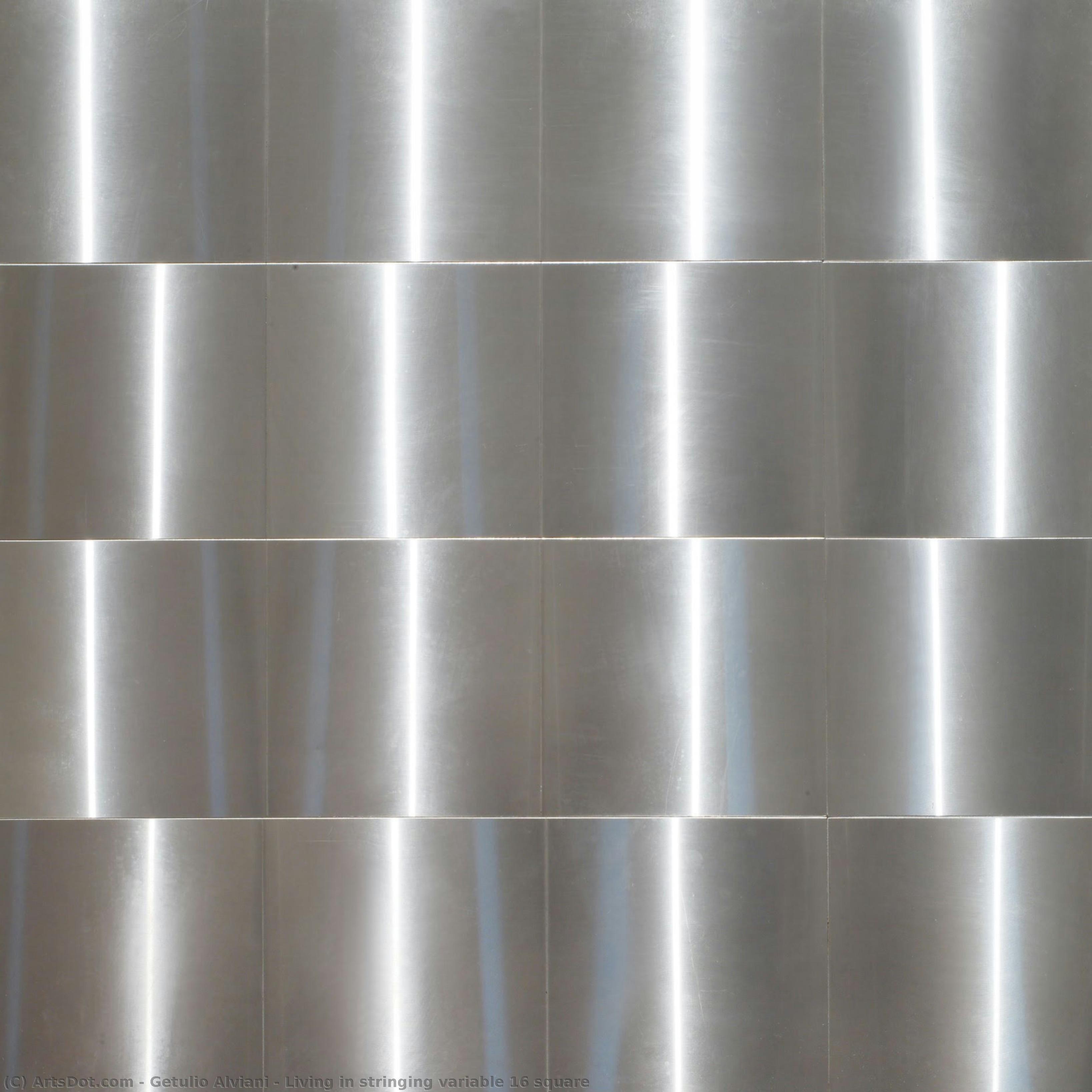
Teos järgib teie valikuid: , .
Kunstniku elulugu
Explore Getulio Alviani's innovative optical & kinetic art! Known for 'Superficie a testura vibratile,' his work blends illusion, aluminum, and dynamic visual experiences.
 Loe lähemalt
See teos on autoriõigusega kaitstud
Sellel lehel kuvatav kunstiteos on kaitstud autoriõigusega, mis tähendab, et meil ei ole seaduslikku õigust luua või müüa identset reproduktsiooni. Seda kaitset rakendatakse rahvusvaheliste kokkulepete alusel, nagu näiteks Berne konventsioon ning riiklike seadustega, sealhulgas nendega, mida on sätestatud USA autoriõiguse seadus – 17. peatükk.
Austasena ja seaduslikuna alternatiivina pakume originaalist inspireeritud, käsitsi maalitud isikupärastatud teoseid. Meie osutavad ja professionalsed kunstnikud uurivad hoolikalt originaali stiili, meelemoi ja kunstilist olemust, et luua uus, ainulaadne teos, mis tekitab sama tunnet – olles samal ajal omaette originaalne looming.
See meetod järgib täielikult autoriõiguse reegleid, kuna see ei põhine kaitstud kunstiteose kopeerimisel või dupliteerimisel. Selle asemel on tegu loova reinterpreetatsiooniga – uue maaldisega, mis on algteosest inspireeritud, kuid ei ole sellest identiline.
Tellige oma neljas lihtsus
Ärge kiirustage. Saate igal hetkel vastuseid muuta; tellimuskarril kuvatav hind muutub vastavalt tehtud valikutele.
1 Esimene samm neljast
On which medium should it be printed?
Canvas is printed with giclée inks and can be stretched or framed like a painting; paper comes flat, or framed behind glass.
2 Teine samm neljast
Millist suurust soovite?
Need suurused säilitavad originaalteose proportsioonid. Joonis näitab teie valikut seina küljel, kaheMeetise diivani kohal.
Või sisesta oma mõõdud
Vali meie eelmääratud suurused, mis vastavad teose algupärastele proportsioonidele.

Sisestage vajalik laius ja kõrgus, et see sobiks teie raamile või seinale. Trükki saab ainult lõigata, seda ei saa kunagi pildist suuremaks teha, seega ka erineva mustega suurus kaotab osa pildist. Enne trükkimist saadame teile kinnitamiseks digitaalse näidisprojektsiooni. Sellel lehel näidatud pilt ei kujuta reaalset lõiget — seda näitab ainult näidisprojektsioon.
3 Kolmandas sammis neljast
Kuidas see peaks valmistatud olema: rullitud, pingutatud või raamitud?
Alljadevad hinnad kehtivad esimeses sammus valitud suuruse kohta.
Vali pingutatud kanga servade stiil
Vali oma raam

Valge serv €1

häguse servaga lõppviimistlus €1

Laiendatud €1

P118B €10

P118H €10

P118W €10

P438Z €10

P508JH €12

P508YH €12

P805H €10

P805Z €10

P919BZ €10

P919G €10

P919XJ €10

P959ZH €10

P968JZ €12

W106C €8

W218G €10

W218JH €8

W218Y €10

W307PJ €10

W316G €10

W316PJ €8

W316Y €10

W398PJ €8

W4111J €10

W500HY €15

W500JH €15

W692G €12

W849H €8

W940BG €15

W953PJ €8

H24-GOLD €30

H24-SILVER €30

H36-GOLD €45

H36-SILVER €45
Raamitud
Kujund: . Kogumõõt koos raamiga: .
4 Neljas samm neljast
Mõned lõppviimistlusvõimalused
Kõik need on valimiste korral vabatahtlikud. Juba valitud vastustele ei rakendu täiendav kulu.
Ülemaailmne tarne () 2 nädala jooksul, tavalise 4/5 nädala asemel. (21 november)
Nimetelis, nagu muuseumis?
Graveeritud pronksplaadi üksikasjad
This elegant plaque features the artist's name and the title of the artwork, finely engraved for a timeless presentation.
It is made from bronze with a refined, elegant finish. The text is precisely laser-engraved for a sharp and permanent result. Measuring 9x2 cm, the plaque is compact yet easy to read. It's built to be durable and scratch-resistant, offering a professional, museum-quality look. Mounting is simple thanks to the included adhesive backing.
Läbipaistva akrüülplaadi üksikasjad
The plaque includes essential engraved details such as the artist's name, the title of the artwork, the date it was created, the type of media used-like oil on canvas or watercolor-a brief description of the piece, and a QR code that links to the complete artwork information.
It is crafted from clear acrylic, offering a sleek, modern appearance. The text is UV-engraved in black to ensure strong visual contrast. With a size of 10x15 cm, it ensures optimal readability. It comes equipped with two metal hooks for secure wall mounting. The plaque is designed to be weather-resistant, making it suitable for various environments, and it includes interactive features that work seamlessly with smartphone scanning.
Musta akrüülplaadiรายละเอียด (Note: The user provided "Musta akrüülplaadi detailid" as the current translation and asked for an improved version. Since "Musta akrüülplaadi
This elegant plaque includes engraved information such as the artist's name, the title of the artwork, the date it was created, the type of media used (like oil on canvas or watercolor), a short description of the artwork, and a QR code for quick access to more information.
The plaque itself is made from refined black acrylic with a premium finish. The text is laser-engraved in white for high contrast and readability. Its size is 10x15 cm, designed to be easy to read. It comes with two metal hooks for professional mounting. The design is sleek and fits any interior style. It is also weather-resistant and durable, with built-in digital integration for mobile compatibility.
Kaitsev lakikih?
Millal te seda vajate?
✓ Kontrolli ja telli
Your print, as you ordered it

Living in stringing variable 16 square
Reproduktsiooni tehnika
Reproduktsiooni suurus
-

Reproduktsiooni raamivalikud
-
-
Kunstiteoste või reproduktsioonide puhul, mille üks külg on üle 105 cm (umbikmolt 41 tolli), saadetakse raam kirjal asendis, la Dismantlitud komplektina. See meetod tagab ohutuse kohaletoimetamisel ja väldib transpordil tekkivaid kahjustusi.
Vajalik professionaalne kokkupanek – see ei ole isetegevusega valmistamiseks mõeldud toode.
Komplekt tuleb kokku panna ja lõvet pingutada kogemusega professionaalse raamija, kasutades puiduliim (ei kuulu komplekti), lõvetpingi ja klempe, et hoida raami kande mustad õigena liimi kuivamisaja jooksul. Vale kokkupanek või ebaühtlane lõvetping võib kunstiteost püsivalt kahjustada ning seda
 Kunstiteoste või reproduktsioonide puhul, mille üks külg on üle 105 cm (umbikmolt 41 tolli), saadetakse raam kirjal asendis, la Dismantlitud komplektina. See meetod tagab ohutuse kohaletoimetamisel ja väldib transpordil tekkivaid kahjustusi.
Kaasatud on kõik tahked puidust liistud, täpselt lõigatud vastavaks suuruseks.
Kokku panemiseks kasutatakse lisatud kruvisid ning nurkade liimamiseks vajalikku puuliima, mida ei ole komplektis ja mida peab raamivalmistaja ise hankima.
Vajalik on kasutada professionaalseid tööriistu, mis ei kuulu komplekti: lõvetelapide pingist (pingutaja) ja klambreid, et hoida raami puidu nurgas õigena liimi kuivamisaja jooksul.
Oluline:
Nurgaliimamiseks on vaja puiduliim, liimimine peab toimuma klempide all kuni liim on täielikult kuivanud ning kokku monteeritud raami kanga pingutamiseks on vajalik kanga pingutustang. Kumbki neist ei kuulu komplekti. Palun veenduge enne selle suuruse tellimist, et teil on saadaval kogenud professionaalne raamistaja.

Nimesildikiri
-
-

Kaitsevärnitsus
Läikiv lakk (muudab värvid elavamaks ning kaitseb valgust ja niiskust eest)
-

Kiire tarne
Ülemaailmne tarne piirkonda 2 nädala jooksul, tavapärase 4/5 nädala asemel. 21 november
-
Kiirsaatmine
Ülemaailmne tarne riiki 4–5 nädala jooksul. (28 november).
Sisse kuuluv
Koguhind
€ 56
Klaasivalik on saadaval ainult kuni 110 cm suuruses teostes
Säli iga tellimusega
- Tasuta ekspresssaatmine üle maailma
- Kõrgekvaliteediline lina-kangas
- Täielik transpordikindlustus
- Tollimaksude tagastamise garantii
- Värvitoime täpsuse garantii
- 100 päeva tagastusõigus (ainult valmistusdefektide korral)
- 100% raha tagasi garantii
- Hulgusoodustus


 Eelvaade

 Osta käsitsi maalatud teos
 Saada
 Jaga
 Teave teose kohta
 Juhend


 Laadi alla
 Sarnased teosed
 Röntgenuuring
 Slaidietendus
 KÜSIMUSED JA VASTUSID
 Statistika
Sarnased teosed


Getulio Alviani
1939 - 2018, Italy
Kunstniku elulugu
A Pioneer of Optical Dynamics: The Life and Art of Getulio Alviani
Getulio Alviani, born in Udine, Italy, in 1939 and passing away in Milan in 2018, stands as a pivotal figure in the evolution of post-war abstract art. He wasn’t merely a painter or sculptor; he was an ‘inventor in plasticity,’ as he described himself—a relentless explorer of visual perception, light, and movement. His early life hinted at his future path, demonstrating a keen aptitude for design and geometric drawing even as a child. While initially enrolled at the Venice Art School, Alviani quickly found traditional academic approaches limiting, preferring instead to immerse himself in the study of classical masterpieces and practical work assisting local architects with technical projects like etchings. This blend of artistic appreciation and hands-on experience laid the foundation for his unique approach. He began working within industrial design, a realm that would profoundly shape his aesthetic sensibilities and provide crucial insights into the relationship between form, function, and perception.From Industrial Design to Kinetic Exploration
The late 1950s marked a turning point in Alviani’s career as he delved deeper into the complexities of “production” and “construction.” His initial foray into art involved designing electric pipes, winning a competition that showcased his innovative thinking. This led to a position as artistic director for Ave, a prominent company, where he honed his skills in graphic design and visual communication. However, it was during this period that Alviani’s fascination with the interplay of light and reflective surfaces began to take hold. Working within a factory environment, he observed polished aluminum surfaces and recognized their potential to create dynamic visual effects through manipulation—polishing and abrasion became tools for unlocking new perceptual experiences. This experimentation culminated in his landmark series, “Superfici a testura vibratile” (Vibrating Texture Surfaces), which would propel him onto the international art stage. These weren’t static objects but rather carefully constructed surfaces designed to interact with light, shifting and changing depending on the viewer's angle of observation. In 1961, his invitation to the Zagreb exhibition “Nove Tendencije” connected him with a network of like-minded artists exploring optical and kinetic art—Julio Le Parc, François Morellet, and Enrico Castellani among them. This exchange of ideas was crucial in solidifying Alviani’s commitment to a dynamic art that actively engaged the viewer.The Milan Years: Dialogue with Masters and International Recognition
Alviani's move to Milan in 1962 proved transformative. The city became his base, fostering collaborations and dialogues with some of Italy’s most influential artists—Lucio Fontana, Piero Manzoni, Max Bill, and Bruno Munari. Fontana, particularly, recognized the potential in Alviani’s work, acquiring several “surfaces” and demonstrating a keen understanding of their innovative qualities. This period saw Alviani refine his techniques and explore new avenues within optical art. He wasn't simply interested in creating illusions; he sought to understand *how* perception itself functioned. His participation in the 1964 Venice Biennale, sharing space with Enrico Castellani, further cemented his reputation. The pinnacle of early recognition came in 1965 with an invitation to William C. Seitz’s groundbreaking exhibition “The Responsive Eye” at MoMA in New York. This show, dedicated to Kinetic and Programmed Art, brought Alviani's work to a global audience, and the museum’s acquisition of one of his pieces—used as a poster image for subsequent exhibitions—underscored its significance. His inclusion in Documenta 4 in Kassel in 1968 further solidified his position within the international art community.A Legacy of Interaction: Beyond Painting and Sculpture
Throughout the 1970s, Alviani expanded his artistic horizons, traveling to South America and accepting a directorship at the Jesús Soto Museum of Modern Art in Ciudad Bolívar, Venezuela. This period broadened his perspective and reinforced his commitment to fostering dynamic art experiences. While primarily known for his “Superfici a testura variabile” – polished aluminum works that reflected light in ever-changing hues – Alviani’s artistic output was remarkably diverse. He explored “chromodynamic surfaces,” investigating primary color interactions, and created mesmerizing “mirrors” with their illusion of rings formed on reflective metal. His work consistently challenged the boundaries between painting, sculpture, and design. Alviani wasn't content to simply create objects; he aimed to create experiences. He authored a book on Josef Albers in 1988, demonstrating his deep engagement with art theory and history, and collaborated with Giancarlo Pauletto on a volume dedicated to Michel Seuphor. His work continues to be actively traded in international auctions, prized for its intellectual rigor, formal precision, and captivating visual effects. Getulio Alviani’s legacy lies not only in his stunning creations but also in his unwavering commitment to exploring the fundamental principles of perception and interaction—a pursuit that continues to inspire artists today.Sarnased artiklid
Beyond Representation: Exploring the Radical Geometry of Suprematism & Its Spiritual Foundations
Explore the revolutionary world of Suprematism with our expert guide. Discover Kazimir Malevich's groundbreaking art, its spiritual foundations & lasting influence on modern design. Learn about collecting this iconic movement.

Geomeetrilise Abstraktsiooni 10 Meisterteost: Kunst ja Kodukaunistus ArtsDot.com-is
Avastage geomeetrilise abstraktsiooni 10 suurteost – Kandinsky, Mondrian ja teised. Lugege kunstiteoste lugusid ning leidke inspiratsiooni kodukaunistuseks ArtsDot.com-is! Kunstikollektsioon ja reprodutsioonid.

Pietro da Cortona: Baroque Grandeur & the Synthesis of Roman Painting
Explore the life & masterpieces of Pietro da Cortona, a defining figure of the Italian Baroque. Discover his stunning frescoes at Palazzo Barberini and lasting influence on Roman art history. Learn more with ArtsDot.