A Vision of Faith and Transformation: The Hermit Saints Triptych (Central Panel)
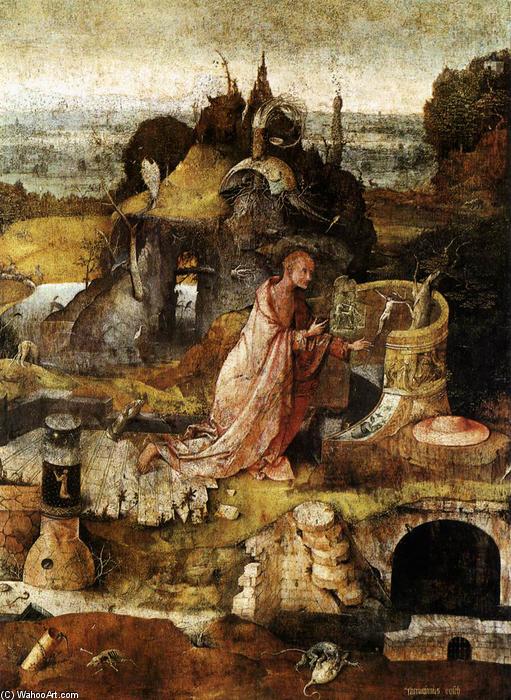
This captivating oil painting by Hieronymus Bosch, dating from 1505 and measuring 86 x 50 cm, offers a profound glimpse into the spiritual landscape of the Early Netherlandish period. More than just a religious scene, it’s a meticulously crafted narrative brimming with symbolism and psychological depth.
Subject & Narrative
The central panel depicts a pivotal moment in the legend of Saint Philip – his conversion sparked by encountering a fish. We see the saint kneeling in fervent prayer before a basin containing the miraculous creature, an image laden with theological significance. Behind him unfolds a vast and atmospheric landscape featuring rugged mountains and a distant cityscape, suggesting both the isolation necessary for spiritual contemplation *and* the world to which he will return transformed. This isn’t merely an illustration of a saint's life; it’s a visual meditation on faith, divine intervention, and personal metamorphosis.
Style & Technique
Bosch’s distinctive style is immediately recognizable here. He masterfully blends meticulous realism with fantastical elements, creating a world that feels both tangible and dreamlike. The painting showcases the hallmarks of Early Netherlandish technique: layered oil glazes build up rich color and luminosity, while precise detail renders textures – from the rough stone of architectural features to the delicate scales of the fish – with astonishing accuracy. The earthy palette—dominated by browns, ochres, and reds—contributes to a somber yet deeply evocative mood. Bosch’s use of atmospheric perspective creates a convincing sense of depth, drawing the viewer into the scene.
Symbolism & Iconography
Every element within this composition carries symbolic weight. The
fish represents Saint Philip's first miracle and, more broadly, baptism and spiritual renewal. The
basin symbolizes purification and the vessel of faith. The imposing
mountainous landscape suggests a challenging spiritual journey or ascent towards enlightenment. Bosch was renowned for embedding complex allegories within his work, inviting viewers to decipher layers of meaning beyond the surface narrative.
Historical Context & Artistic Influence
Hieronymus Bosch (c. 1450-1516) remains one of art history’s most enigmatic figures. Born in 's-Hertogenbosch, Netherlands, his work defied easy categorization and profoundly influenced subsequent generations of artists, including Pieter Bruegel the Elder. He operated during a period of religious upheaval and societal change, and his paintings often reflect anxieties about sin, salvation, and the human condition. Bosch’s unique vision—characterized by surreal imagery and moral complexity—set him apart from his contemporaries and continues to captivate audiences today.
Emotional Impact & Interior Design
This panel evokes a sense of quiet contemplation and spiritual yearning. Its muted color palette and atmospheric depth create an aura of solemnity, while the intricate details reward close viewing. As a statement piece, it would lend gravitas and intellectual curiosity to any interior space. The painting’s earthy tones complement both traditional and contemporary settings, adding a touch of Old World elegance and artistic sophistication.
- Ideal for libraries, studies, or contemplative living spaces.
- Pairs well with antique furniture and muted color schemes.
- A conversation starter that invites reflection and discussion.
This artwork is not simply a historical artifact; it’s a timeless exploration of faith, transformation, and the enduring power of the human spirit.