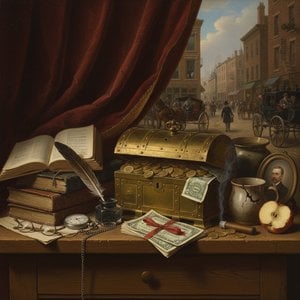
William Michael Harnett: El Ilusionista de la Vida Cotidiana
William Michael Harnett (1848 – 1892) se erige como una figura singular en la historia del arte estadounidense, celebrado por sus magistrales pinturas en trompe-l'œil que elevan lo mundano a ilusiones asombrosas. Nacido en Clonakilty, Condado de Cork, Irlanda, los primeros años de Harnett estuvieron marcados por la emigración a Filadelfia poco después de su nacimiento, lo que lo moldeó como un artista profundamente arraigado tanto en la tradición europea como en el floreciente realismo americano. Sus años formativos transcurrieron perfeccionando habilidades en el diseño de grabados sobre plata de mesa —un oficio que le inculcó precisión y una atención meticulosa al detalle—, mientras buscaba una formación artística formal en instituciones como la Academia de Bellas Artes de Pensilvania y la Cooper Union.- Formación Temprana y Técnica: La dedicación de Harnett al dominio de la técnica comenzó con clases nocturnas en Penn y NYAD, donde absorbiendo influencias de luminarias como Raphael Peale Jr., pionero del bodegón de mesa en América. Esta influencia es palpable en el estilo distintivo de Harnett, un alejamiento deliberado de las convenciones académicas predominantes de su época.
- La Visión del Trompe-l’œil: El gran avance de Harnett llegó con su adopción del trompe-l’œil, una técnica tomada de los maestros holandeses del siglo XVII, como Pieter Claesz. A diferencia de las representaciones tradicionales que aspiran a una representación fiel, el trompe-l'œil busca engañar al ojo, creando una ilusión de profundidad y tridimensionalidad dentro de una superficie plana. Harnett manipuló con destreza la perspectiva, el sombreado y la textura para lograr esta hazaña asombrosa.
Obras Notables y Estilo Artístico
La obra de Harnett se caracteriza por su enfoque inquebrantable en objetos comunes —pipas, periódicos, bolsas de tabaco, violines, manzanas, botellas de vino— presentados con un nivel extraordinario de realismo que roza lo alucinatorio. Sus pinturas no son meras representaciones; son invitaciones a participar en un rompecabezas perceptivo. Consideremos “After the Hunt” (Después de la caza), un cuarteto de lienzos que representan parafernalia de caza y animales de caza muertos. La ejecución meticulosa de Harnett captura cada matiz de textura y luz, explotando las limitaciones del trompe-l'œil para intensificar su impacto. El espacio reducido de estas pinturas es crucial: cualquier movimiento del espectador interrumpe la ilusión, enfatizando el genio de Harnett al manipular la percepción visual.- Serie “After the Hunt”: Esta serie ejemplifica perfectamente la técnica de Harnett, demostrando cómo utiliza trucos ópticos para crear una ilusión convincente de profundidad dentro de un espacio confinado.
- <Temas Recurrentes: Los motivos recurrentes incluyen instrumentos (particularmente violines), bolsas de tabaco y frutas meticulosamente dispuestas; objetos que hablan tanto de los intereses personales del artista como de su compromiso más amplio con los precedentes artísticos.
Reconocimiento y Legado
El trabajo de Harnett obtuvo un reconocimiento considerable durante su vida y continúa resonando en el público contemporáneo. Museos como la Albright-Knox Art Gallery, el Museo Americano de Historia Natural y el Metropolitan Museum of Art exhiben con orgullo sus pinturas, asegurando que su visión persista a través de las generaciones. La influencia de Harnett se extiende más allá de la imitación estilística; él defendió un nuevo enfoque del realismo, uno que priorizaba la profundidad ilusionista sobre la mera exactitud superficial. Su legado está consolidado en las obras de los artistas que le sucedieron, particularmente en Jefferson David Chalfant, cuya técnica de trompe-l’œil debe una deuda considerable a la visión pionera de Harnett.Exploración Adicional
Para profundizar en el viaje artístico de William Michael Harnett y explorar sus cautivadoras pinturas, visite ArtsDot.com para obtener información detallada sobre su vida y obra. También considere explorar las colecciones de instituciones como la Residenz en Múnich y el Museo de Arte de Filadelfia para experimentar el arte de Harnett de primera mano.Preguntas y respuestas
¿Dónde se encuentran las obras de William Michael Harnett organizadas por color?
Las obras de William Michael Harnett pueden explorarse por color en la página Índice Espectral del artista.
¿Cuál es el lugar y el año de nacimiento de William Michael Harnett?
William Michael Harnett nació en Clonakilty en 1848.
¿En qué periodo histórico trabajó William Michael Harnett?
William Michael Harnett trabajó durante el periodo Siglo XIX. Este periodo sitúa la actividad del artista en la historia.