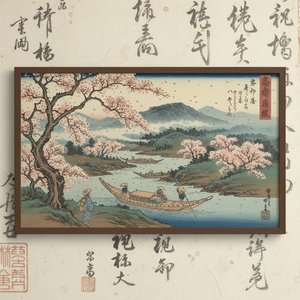
Soga Shōhaku (1730–1781): A Rebel Against Tradition
Soga Shōhaku, a japanese painter from the edo period (1730-1781), defied conventions with his unique brush style, reminiscent of the muromachi period, which was already 150 years out of vogue by the time of his birth. This distinctive approach set him apart from his contemporaries and cemented his place as one of the most intriguing figures in Edo art history. Despite a tragically short life—he died at just 52—Shōhaku’s artistic legacy continues to inspire admiration for its boldness and originality.Early Life and Artistic Training
Miura Sakonjirō, Shōhaku's birth name, was born in Kyoto around 1730 into a wealthy merchant family. Sadly, all of his immediate family members perished before he reached adolescence, leaving him orphaned at a young age. Determined to forge a path as an artist, he embarked on intensive training under Takada Keiho, a master of the Kanō School—a prestigious institution that championed Chinese artistic techniques and subject matter. This formative experience instilled in him a deep appreciation for the stylistic conventions of his time while simultaneously fueling a desire to transcend them. His studies encompassed both the Kanō School’s established methods and those of the Unkoku School, reflecting a nuanced understanding of artistic tradition.The Influence of Soga Jasoku and Embracing Muromachi Style
Shōhaku's artistic trajectory took an unexpected turn when he encountered the work of Soga Jasoku—another artist who had championed the Muromachi period’s aesthetic. Unlike many of his peers who adhered to the prevailing stylistic norms, Shōhaku deliberately rejected the grandeur and formality favored by the Kanō School, opting instead for a more restrained approach rooted in the expressive dynamism of earlier masters. This decision wasn't merely stylistic; it represented a profound philosophical commitment to honoring artistic heritage while simultaneously pushing boundaries. He famously declared himself Jasoku ken (“the tenth”), signifying his devotion to Soga Jasoku’s legacy and establishing himself as an independent voice within the art world.Notable Works: A Visionary Expression
Shōhaku's oeuvre is characterized by a remarkable range of subjects—from monumental landscapes to intimate portraits—each imbued with a distinctive visual vocabulary that defies easy categorization. Among his most celebrated paintings are “Race at Uji River,” a polychromatic screen depicting a pivotal episode from the Warring States epic "The Tale of Genji," and “The Immortal Li Tieguai,” a captivating depiction of one of China’s Eight Immortals—a testament to Shōhaku's ability to convey complex narratives through masterful brushwork. His paintings frequently incorporate grotesque imagery, reflecting his fascination with the darker side of human experience and challenging conventional notions of beauty. Particularly noteworthy is “Nansen Cuts the Cat in Two,” a striking composition that exemplifies Shōhaku’s signature haboku technique—a method of ink monochrome painting characterized by broad strokes and atmospheric perspective.A Singular Vision: Philosophical Roots and Legacy
Shōhaku's artistic vision was profoundly shaped by Confucian and Zen philosophies, particularly Yangmingism—which valued “strangeness” and “madness.” This intellectual framework informed his approach to art, encouraging him to embrace unconventional stylistic choices and explore themes that resonated with spiritual contemplation. His willingness to depict prominent figures as vulgar characters—a daring gesture for the time—underscored his commitment to artistic integrity and challenged prevailing social conventions. Shōhaku’s influence extended beyond his own lifetime, inspiring subsequent generations of artists who sought to emulate his distinctive style and philosophical outlook. He remains a symbol of artistic rebellion against tradition and an enduring testament to the power of imagination and emotional expression. His work continues to captivate viewers today, prompting reflection on the relationship between art, spirituality, and human experience.Preguntas y respuestas
¿Dónde puedo ver el perfil cromático de la obra de Soga Shōhaku?
El Genoma de la Paleta de Soga Shōhaku es una página que presenta el perfil cromático de la obra del artista.
¿Dónde se encuentran las obras de Soga Shōhaku agrupadas por paleta?
La página Por paletas de colores agrupa las obras de Soga Shōhaku según sus paletas de colores.
¿Dónde se encuentran las obras de Soga Shōhaku agrupadas por palabras clave?
La página Por palabras clave de Soga Shōhaku agrupa las obras del artista por sus palabras clave.
¿Existe una cronología de las obras de Soga Shōhaku?
Las obras de Soga Shōhaku pueden verse en orden cronológico en la página de Cronología de obras del artista.
¿En qué periodo histórico trabajó Soga Shōhaku?
Soga Shōhaku trabajó durante el periodo Edad Moderna temprana. Este periodo sitúa la actividad del artista en la historia.
¿Puedo explorar las obras de Soga Shōhaku por estado de ánimo?
La página de Galería de estados de ánimo del artista muestra las obras de Soga Shōhaku organizadas según su atmósfera.
¿Puedo explorar las obras de Soga Shōhaku por espectro de color?
El Índice Espectral de Soga Shōhaku es una página que organiza las obras del artista por sus colores.
¿En qué ciudad y país nació Soga Shōhaku?
Soga Shōhaku nació en Kyoto, en Japón.