Ramsay Richard Reinagle: Uniendo a los Maestros Holandeses y las Visiones Panorámicas
Ramsay Richard Reinagle (1775-1862) se erige como una figura fascinante en la historia del arte británico: un pintor que fusionó con maestría el rigor estilístico de los maestros holandeses con ambiciosas exploraciones panorámicas, alcanzando finalmente el renombre gracias a sus meticulosas copias e innovadoras presentaciones teatrales. Nacido en Londres, hijo de Philip Reinagle RA —él mismo un célebre artista del paisaje y la fauna—, Ramsay heredó un linaje profundamente arraigado en la tradición artística, moldeando su propia carrera bajo la mirada atenta y la influencia de su padre. Su formación inicial comenzó en los íntimos confines del estudio de Philip Reinagle, donde absorbió las técnicas y sensibilidades estéticas características de Rembrandt y
Rubens. Este periodo formativo le inculcó una dedicación inquebrantable a la precisión y al detalle, cualidades que definirían su enfoque artístico a lo largo de toda su vida.
Su exposición debut en la Royal Academy en 1788 marcó un hito significativo, estableciendo la presencia de Reinagle en la escena artística británica y presagiando sus futuras colaboraciones con destacados empresarios teatrales. Un peregrinaje a Italia en 1796 resultó crucial, sumergiéndolo en el fervor artístico de Roma y fomentando conexiones con colegas que defendían las influencias holandesas. Visitas posteriores a Holanda le permitieron estudiar directamente de los grandes maestros, un esfuerzo deliberado por perfeccionar su oficio y elevar su visión artística. Este viaje internacional enriqueció su paleta y su perspectiva, permitiéndole aportar una sofisticación continental al mercado del arte londinense.
El Arte de la Inmersión: Panoramas y Retratos
A su regreso a casa, la carrera de Reinagle tomó un giro extraordinario hacia lo inmersivo. Se involucró en el teatro de panoramas de Robert Barker, donde perfeccionó sus habilidades para crear experiencias visuales a gran escala que cautivaron la imaginación del público. Su asociación con Thomas Edward Barker consolidó esta inclinación teatral, dando lugar a la producción de panoramas revolucionarios que representaban lugares legendarios como Roma, la bahía de Nápoles, Florencia, Gibraltar y París. Estas obras no eran meras pinturas, sino ventanas hacia mundos distantes, ofreciendo una sensación de viaje y descubrimiento a una era fascinada por lo exótico y lo remoto.
Si bien sus obras panorámicas capturaban la grandeza de los paisajes, Reinagle siguió siendo un maestro del retrato íntimo y del estudio detallado. Su capacidad para capturar el carácter y la textura es evidente en diversas obras notables, entre las que destacan:
- Henry Walker: Un impactante retrato del siglo XIX que captura a un caballero elegante con un estilo atemporal y detalles refinados.
- Un ornitólogo, probablemente John Latham: Una pieza cautivadora donde la curiosidad científica se encuentra con la gracia artística, presentando a un sujeto rodeado de aves diversas y meticulosamente representadas.
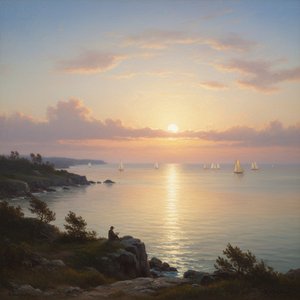
- Paisaje italiano con lago: Un testimonio de su habilidad para traducir la luz y la atmósfera de sus viajes mediterráneos en escenarios evocadores.
Legado e Importancia Histórica
La trayectoria de la carrera de Reinagle no estuvo exenta de complejidades; su incursión en el negocio de los panoramas enfrentó desafíos significativos cuando Henry Aston Barker adquirió ciertos intereses, alterando el panorama del arte teatral en Londres. Sin embargo, a pesar de estos cambios, la contribución de Reinagle a la escuela británica sigue siendo profunda. Logró cerrar la brecha entre las tradiciones clásicas de los Antiguos Maestros y la creciente demanda de espectáculos públicos grandiosos y de gran escala.
Su legado se define por una versatilidad única: la capacidad de transitar desde la observación científica y precisa requerida para los estudios ornitológicos hasta la grandeza atmosférica y expansiva de un paisaje italiano. A través de su obra, somos testigos de la evolución del arte británico mientras se desplazaba desde los legados estructurados del siglo XVIII hacia la era más expansiva y visualmente inmersiva del siglo XIX. Ramsay Richard Reinagle permanece como un vínculo vital en esta cadena, un pintor cuyo ojo para el detalle y pasión por lo panorámico ayudaron a redefinir la manera en que las audiencias experimentan el mundo a través del arte.
Preguntas y respuestas
¿Existe un recorrido virtual en 3D de las obras de Ramsay Richard Reinagle?
La Museo 3D de Ramsay Richard Reinagle es una página que muestra las obras del artista en una galería virtual tridimensional.
¿Cuántas obras de Ramsay Richard Reinagle hay disponibles para explorar?
Puede explorar 83 obras de arte obras de Ramsay Richard Reinagle en la página Todas las obras.
¿De dónde es Ramsay Richard Reinagle?
Ramsay Richard Reinagle nació en Reino Unido.
¿Cuál es el lugar y el año de nacimiento de Ramsay Richard Reinagle?
Ramsay Richard Reinagle nació en Londres en 1775.
¿Dónde puedo ver las obras de Ramsay Richard Reinagle en orden cronológico?
La página de Cronología de obras del artista presenta las obras de Ramsay Richard Reinagle ordenadas por fecha, año tras año.
¿En qué movimientos trabajó Ramsay Richard Reinagle?
Las obras de Ramsay Richard Reinagle pueden explorarse por movimiento en la página de Todos los movimientos del artista.
¿En qué ciudad y país nació Ramsay Richard Reinagle?
Ramsay Richard Reinagle nació en Londres, en Reino Unido.