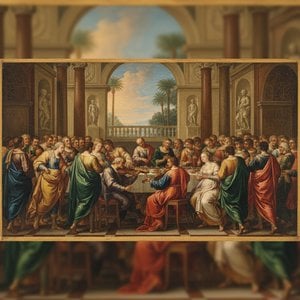
El Visionario Veneciano: La Vida y el Legado de Paolo Antonio Pagani
En el vibrante tapiz bañado por la luz de finales del siglo XVII, pocos artistas encarnaron la dramática transición del artificio manierista a la grandeza barroca de una manera tan única como Paolo Antonio Pagani. Nacido en 1655 en las tranquilas tierras fronterizas de Valsolda, el viaje de Pagani fue uno de constante movimiento y profunda transformación. Aunque sus primeros años estuvieron arraigados en la región de Lombardía, fue su migración a Venecia en 1667 lo que encendió su espíritu creativo. Este traslado lo situó en el corazón mismo de una revolución visual, donde la elegancia persistente del Manierismo comenzó a fusionarse con la intensa y envolvente emotividad de la era Barroca. Mientras recorría los canales y estudios de Venecia, Pagani desarrolló una versatilidad técnica que le permitiría dominar no solo el pincel, sino también la delicada precisión de la aguja de grabado.
La identidad profesional temprana de Pagani estuvo profundamente entrelazada con el arte del grabado. Demostró una capacidad extraordinaria para traducir las texturas pictóricas de sus contemporáneos al lenguaje gráfico de la aguatinta. Uno de sus logros más significativos en sus inicios fue una serie monumental de diez aguatintas inspiradas en los lienzos de Giuseppe Diamant, un maestro veneciano conocido por combinar la gracia clásica con el movimiento dinámico. A través de estas estampas, Pagani hizo más que simplemente replicar obras existentes; actuó como un conducto vital para las ideas artísticas, difundiendo el sofisticado vocabulario visual de Venecia hacia territorios mucho más amplios. Este período de su vida lo consolidó como un artista capaz de una profunda experimentación técnica, un rasgo que definiría sus posteriores y más ambiciosos proyectos arquitectónicos y de fresco.
Un Viaje a través de Cortes Imperiales y Espacios Sagrados
La trayectoria de la carrera de Pagani tomó un giro magnífico hacia el norte cuando fue invitado a la corte imperial de Viena. Entre 1690 y 1696, bajo el patrocinio del emperador Leopoldo I, Pagani expandió sus horizontes artísticos mucho más allá de la península italiana. Esta exposición a las tradiciones de Europa Central infundió su obra con un nuevo sentido de la escala y una sensibilidad más robusta y dramática. La atmósfera cosmopolita de Viena le permitió absorber diversas influencias, refinando un estilo capaz de dominar los vastos y elevados espacios de la arquitectura imperial. Fue durante esta era cuando Pagani comenzó verdaderamente a dominar el arte de la quadratura, la técnica ilusionista de pintar perspectivas arquitectónicas que parecen extender el espacio real de una estancia hacia un cielo infinito.
A su regreso a Valsolda en 1696, Pagani se embarcó en lo que muchos estudiosos consideran su obra maestra definitiva: la decoración con frescos de la nave de la iglesia parroquial de San Martino. Este proyecto se erige como un testimonio impresionante de su habilidad para manipular la luz y la perspectiva. En este espacio sagrado, utilizó una técnica conocida como sotto in su —una perspectiva "desde abajo hacia arriba"— para crear visiones celestiales y vertiginosas que parecen disolver el propio techo. Su trabajo en San Martino se caracteriza por:
- Paletas de Colores Luminosas: Un uso vibrante de la luz que anticipa el brillo de maestros posteriores como Tiepolo.
- Complejidad Ilusionista: La creación de cúpulas y arcos interconectados que guían la mirada a través de una compleja narrativa de santos e intervención divina.
- Profundidad Narrativa: Una integración fluida de temas iconográficos, que van desde la Asunción de la Virgen hasta el martirio de figuras cristianas primitivas.
La Significación Perdurable de un Maestro Olvidado
Aunque la historia a veces ha pasado por alto a Pagani en favor de nombres más ampliamente reconocidos, su contribución a la evolución de la pintura europea sigue siendo innegable. Fue un artista de transición, un puente entre la elegancia estructurada del pasado y la exuberancia teatral del futuro. Su capacidad para desplazarse entre la escala íntima de un retrato —como su evocador San Jerónimo— y la escala monumental de un techo catedralicio demuestra una amplitud de visión excepcional. La obra de Pagani sirve como un vínculo vital en el linaje del arte italiano, encarnando el espíritu de una época que buscaba desdibujar las líneas entre lo terrenal y lo divino mediante el puro poder de la invención artística.