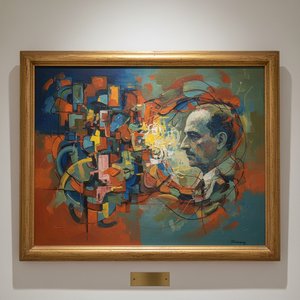
Nicolás Martínez Ortiz de Zárate: A Voice of Basque Identity
Nicolás Martínez Ortiz de Zárate (1907-1991) stands as a pivotal figure in Spanish art history, particularly within the realm of Basque cultural representation. Born in Bilbao, Spain, his artistic journey began with foundational training at the Escuela de Artes y Oficios de Atxuri, equipping him with skills in painting, drawing, and lithography – techniques that would become hallmarks of his distinctive style. Early Influences: Martínez Ortiz’s formative years coincided with the burgeoning avant-garde movement in Paris, where he encountered influential artists like Paco Durrio. This exposure profoundly shaped his artistic sensibilities and honed his technical prowess. He absorbed the dynamism and expressive power of movements such as Cubism and Surrealism, recognizing their capacity to convey complex emotions and ideas beyond mere visual representation. Return to Bilbao & Artistic Engagement: Upon returning to Bilbao, he actively participated in the local artistic community, accepting a position at the Asociación de Artistas Vascos and showcasing his work in numerous exhibitions and competitions. His dedication to Basque art was unwavering; Martínez Ortiz sought to capture the spirit of his homeland through meticulous observation and bold artistic choices. He became a respected voice within Bilbao’s cultural landscape, advocating for artistic innovation while honoring traditions rooted in Basque heritage. The Civil War Years: Martínez Ortiz’s involvement extended beyond aesthetic pursuits; during the tumultuous Spanish Civil War, he served as a muralist and cartelist, contributing to monumental artworks that reflected the ideological tensions of the era, notably designing banknotes for Banco de España. These commissions demanded an uncompromising commitment to conveying political messages through visual language—a testament to Martínez Ortiz’s belief in art's capacity to engage with social issues.A Style Defined by Social Consciousness
Martínez Ortiz’s artistic style is characterized by its unwavering commitment to social and political themes interwoven with vibrant color palettes and dynamic compositions. He eschewed mere decorative artistry, striving instead to convey narratives that resonated with the realities of his time. His canvases pulsate with energy, utilizing bold hues—particularly reds and yellows—to capture movement and emotion. Martínez Ortiz’s compositional choices prioritized dynamism, mirroring the urgency of the issues he addressed. Recurring motifs explored Basque traditions and cultural identity, often imbued with symbolic references to Basque history and folklore. He skillfully blended modernist techniques with elements of Art Deco and Costumbrismo, creating works that simultaneously celebrated beauty and confronted social injustices. Notable Works & Collections Martínez Ortiz’s artistic legacy is cemented by several celebrated paintings that continue to captivate audiences today. Among these are “San Sebastián, Great Basque Week, 1931,” a masterful depiction of Basque culture and tradition housed at the Museo de Bellas Artes Bilbao; “Bilbao Industry & Commerce Exhibition, 1934” which vividly portrays the industrial landscape of Bilbao; and “Bilbao 1932, famed bullfights,” capturing the spectacle and ritualistic fervor of Spanish bullfighting. His paintings are also held in the Colección Andrés Blaisten, showcasing his enduring influence on Mexican art and culture. Connections & Artistic Roots Martínez Ortiz’s artistic development was nurtured by connections to fellow artists like Carlos Mérida, Federico Cantú Garza, and Casimiro Castro. He absorbed inspiration from the Spanish avant-garde movement—particularly Goya and Picasso—demonstrating a deep understanding of artistic precedents. His stylistic sensibilities reflected a profound engagement with the intellectual currents shaping 20th-century art, cementing his place as a significant contributor to Basque artistic history.Preguntas y respuestas
¿Dónde y cuándo nació Nicolás Martínez Ortiz De Zárate?
Nicolás Martínez Ortiz De Zárate nació en Bilbao en 1907.
¿Existe un recorrido virtual en 3D de las obras de Nicolás Martínez Ortiz De Zárate?
Las obras de Nicolás Martínez Ortiz De Zárate pueden verse en una galería 3D en la página Galería 3D del artista.
¿Puedo explorar las obras de Nicolás Martínez Ortiz De Zárate por tema?
El Índice temático de Nicolás Martínez Ortiz De Zárate es una página que organiza las obras del artista según sus temas.