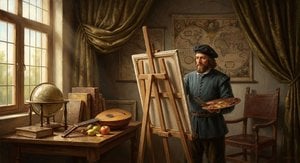
Nicolaas van der Waay: A Dutch Decorative Artist Embracing Impressionism
Nicolaas van der Waay (1855-1936) stands as a pivotal figure in the vibrant artistic landscape of Amsterdam’s Golden Age, embodying both meticulous craftsmanship and an evolving embrace of Impressionistic sensibilities. Born in Amsterdam, he honed his artistic skills under the tutelage of Louis Koopman, whose daughter would become his lifelong companion—a relationship that profoundly shaped his personal life and undoubtedly influenced his creative vision. His formal training at the Rijksakademie solidified his foundation in classical art principles, yet it was a formative encounter with Jan Hillebrand Wijsmuller that propelled him toward a more expressive style, mirroring the burgeoning Hague School movement.
Early Influences and Training: The Rijksakademie Years: Classical Foundations
Nicolaas van der Waay’s artistic journey commenced at the Rijksakademie van beeldende kunsten in Amsterdam, where he immersed himself in the traditions of academic painting. Under the guidance of luminaries like Willem Maris and Anton Smeerdijk—artists who championed realism and meticulous observation—he mastered techniques rooted in disegno italiano, diligently studying the works of Michelangelo and Raphael. This rigorous training instilled a deep appreciation for anatomical accuracy and compositional balance, shaping his artistic sensibilities throughout his career. Notably, he collaborated closely with Jan Wijsmuller, sharing a studio and fostering intellectual discussions that broadened his perspectives on artistic innovation. Their shared commitment to scholarly pursuits underscored the importance of grounding creativity in established knowledge—a cornerstone of Van der Waay’s artistic ethos.
Collaboration and Artistic Growth: Wijsmuller’s Workshop
The Rijksakademie served as more than just an institution for formal instruction; it fostered a dynamic environment where artists exchanged ideas and honed their skills collaboratively. Nicolaas van der Waay benefited immensely from this supportive atmosphere, engaging in spirited debates with fellow students about artistic trends and stylistic approaches. His association with Jan Wijsmuller proved particularly fruitful, stimulating his imagination and encouraging him to experiment with new techniques—a pivotal step toward embracing Impressionism’s liberating spirit. This formative period instilled in Van der Waay a lifelong dedication to artistic excellence and a belief in the transformative power of intellectual engagement.
His Artistic Career: From Willink van Collenprijs to Royal Commissions
Nicolaas van der Waay's artistic career gained considerable momentum following his receipt of the prestigious Willink van Collenprijs in 1880 for his painting “Among Friends.” This recognition validated his talent and propelled him into a more ambitious phase of creative endeavor—establishing a larger studio alongside Ernst Witkamp, who shared similar academic inclinations. The year 1883 witnessed Van der Waay’s daring participation in the Prix de Rome competition—though no prize was awarded due to insufficient entries—a setback that nevertheless spurred him toward securing August Allebé's ministerial grant, affording him invaluable opportunities for study abroad in Italy. Upon his return, he accepted a professorship at the Rijksakademie, dedicating thirty years of his life to nurturing young talent and disseminating artistic knowledge—leaving an indelible mark on the artistic landscape of Amsterdam.
Academic Career and Mentorship: The Influence of Isaac Israëls
Beyond academia, Nicolaas van der Waay demonstrated remarkable versatility across diverse genres—stamp designs, coin illustrations, banknote artwork—demonstrating his adaptability to commercial commissions while upholding artistic integrity. His stylistic evolution was profoundly impacted by the influence of Isaac Israëls, a fellow artist who championed Impressionistic principles and encouraged Van der Waay to liberate his brushstrokes from rigid conventions. This encounter fostered a more expressive style characterized by vibrant color palettes and loose compositional arrangements—a hallmark of Hague School aesthetics. He instilled in his students a passion for observation and experimentation—inspiring them to pursue artistic innovation with unwavering determination.
Notable Commissions and Artistic Legacy: The Golden Coach and Beyond
Nicolaas van der Waay’s artistic legacy extends far beyond the confines of the Rijksakademie, encompassing monumental commissions that solidified his reputation as one of Amsterdam's most celebrated artists. Perhaps most notably, he undertook the ambitious task of illustrating the Golden Coach—the ceremonial carriage transporting the Dutch monarch—capturing its grandeur and symbolism with meticulous detail. This undertaking showcased Van der Waay’s mastery of technique and his ability to convey complex narratives through visual imagery—a testament to his artistic vision and enduring impact on Dutch cultural heritage. Furthermore, he produced poignant paintings depicting the lives of girls from the Amsterdam Orphanage—expressing compassion for vulnerable populations and elevating social consciousness through art—solidifying his place as a humanist artist committed to enriching society’s understanding of human experience. His work continues to inspire admiration and scholarly inquiry, ensuring that Nicolaas van der Waay's artistic contributions endure for generations to come.