El pionero veneciano del paisaje
Marco Ricci se erige como una figura fundamental en el gran tapiz de la pintura barroca veneciana, un maestro cuyo pincel insufló vida a las expansiones atmosféricas del siglo XVIII. Nacido en Belluno, Italia, en 1676, la trayectoria artística de Ricci estuvo profundamente arraigada en un linaje de excelencia. Su formación inicial comenzó bajo la mirada atenta de su tío, el célebre Sebastiano Ricci, probablemente dentro de los vibrantes núcleos artísticos de Milán a mediados de la década de 1690. Este período fundacional estableció una conexión profunda con la tradición veneciana, cuando se trasladó a Venecia en 1696 para unir fuerzas con su tío. Juntos, emprendieron una carrera colaborativa que redefiniría los límites del paisaje, fusionando la grandeza clásica con una sensibilidad nueva y más expresiva.
La evolución del estilo de Ricci fue moldeada por una rica confluencia de influencias que tendieron puentes entre los ideales estructurados del pasado y la libertad floreciente del Rococó. Absorbió la perspectiva luminosa y atmosférica de Claude Lorrain y Gaspard Dughet, maestros que habían perfeccionado el arte de la escena natural idealizada. Sin embargo, existía una corriente más ruda y emotiva en su obra, extraída del pincel expresivo de Salvatore Rosa y de la aplicación suelta y enérgica presente en las obras de Alessandro Magnasco. Esta síntesis única permitió a Ricci ir más allá del mero registro topográfico, creando en su lugar paisajes que se sentían vivos con movimiento, luz y un sentido de narrativa dramática.
Un legado de colaboración y grandeza
Uno de los aspectos más notables de la carrera de Ricci fue su profunda disposición para participar en el espíritu colaborativo de su época. Su trabajo a menudo desdibujaba las líneas entre la autoría individual y el genio colectivo, particularmente en proyectos decorativos de gran escala. Un ejemplo notable de esta grandeza se encuentra en sus contribuciones a la decoración de la Sala d'Ercole en el Palazzo Fenzi junto a Sebastiano Ricci, donde demostró una capacidad para dominar vastos espacios arquitectónicos con vistas panorámicas y detalles intrincados. Este talento para el diseño a gran escala se extendió al ámbito teatral, donde su habilidad en el diseño de escenografía operística le permitió manipular la luz y el espacio para crear mundos imaginarios e inmersivos.
La influencia de Ricci no se limitó a las fronteras de la Serenísima República. Impulsado por el aliento de Charles Montagu, el 4.º conde de Manchester —embajador de Venecia en Inglaterra—, Ricci emprendió un viaje transformador a Londres a finales de 1708. Esta conexión inglesa expandió sus horizontes e introdujo su sensibilidad veneciana ante una nueva audiencia internacional, consolidando aún más su reputación como maestro paneuropeo. Su capacidad para adaptar su estilo a diferentes contextos culturales, manteniendo su identidad central como innovador del paisaje, permanece como un testimonio de su versatilidad.
Obras maestras de luz y atmósfera
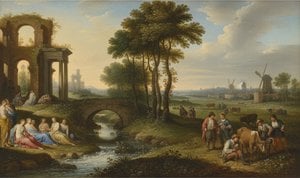
El encanto perdurable de la obra de Marco Ricci reside en su capacidad para capturar las cualidades efímeras del mundo natural. Sus pinturas a menudo sirven como ventanas hacia un pasado idealizado, donde la arquitectura clásica y la naturaleza indómita existen en un equilibrio delicado y armonioso. Ya sea representando una serena Villa en un entorno de parque o un más dinámico Paisaje con río y figuras, Ricci utilizó la luz para guiar el ojo del espectador a través de composiciones compleulas, creando profundidad y una sensación de profunda tranquilidad.
Su maestría técnica es evidente en varias áreas clave de su trabajo:
- Perspectiva atmosférica: El uso de tonos suaves y brumosos para crear una ilusión de vasta distancia y ligereza.
- Pincelada dinámica: Una aplicación vigorosa de la pintura que transmite el movimiento del agua, el viento y el follaje.
- Integración narrativa: La colocación fluida de figuras dentro de los paisajes para sugerir historias de mitología clásica o vida pastoral.
- Armonía arquitectónica: La integración de ruinas y villas para evocar un sentido de historia y el paso del tiempo.
En última instancia, Marco Ricci fue más que un simple pintor de escenarios; fue un arquitecto de la emoción. A través de su enfoque innovador del género paisajístico, allanó el camino para los triunfos posteriores de Canaletto y Guardi, asegurando que la tradición veneciana de la pintura de paisaje permaneciera como una piedra angular de la historia del arte europeo.
Preguntas y respuestas
¿Puedo ordenar las obras de Marco Ricci por color?
La página Índice Espectral organiza las obras de Marco Ricci por color.
¿En qué ciudad y país nació Marco Ricci?
Marco Ricci nació en Belluno, en Italia.
¿Existe una cronología de las obras de Marco Ricci?
Existe una cronología de las obras de Marco Ricci: la página Cronología de obras del artista ordena las obras por fecha de creación.
¿De dónde es Marco Ricci?
Marco Ricci nació en Italia.
¿Puedo estudiar el uso del color de Marco Ricci en toda su obra?
El perfil cromático de la obra de Marco Ricci se muestra en la página Genoma de la Paleta del artista.
¿Cuál es el lugar y el año de nacimiento de Marco Ricci?
Marco Ricci nació en Belluno en 1676.
¿En qué periodo histórico trabajó Marco Ricci?
Marco Ricci trabajó durante el periodo Edad Moderna temprana. Este periodo sitúa la actividad del artista en la historia.