El arquitecto silencioso del legado de Miguel Ángel
En el vibrante y a menudo turbulento paisaje de la Roma de mediados del siglo XVI, ciertos nombres resuenan con la fuerza atronadora de la creación, mientras que otros habitan en el delicado y esencial espacio del refinamiento. Marcello Venusti pertenece a esa profunda segunda categoría: un pintor cuyas manos trabajaron bajo la sombra de gigantes, pero cuya visión poseía una gracia correctiva singular. Nacido cerca de Como, en el accidentado terreno de Mazzo di Valtellina hacia 1512, Venusti emergió de las colinas italianas para convertirse en un conducto vital para la estética manierista. Su trayectoria fue una de profundo aprendizaje y absorción intelectual, moldeada significativamente por su formación temprana bajo el estimado Perino del Vaga. Este vínculo formativo lo ancló dentro de las sofisticadas corrientes estilísticas de Roma, preparándolo para traducir el lenguaje monumental del Alto Renacimiento al vocabulario más estilizado, alargado y emotivo del Manierismo.
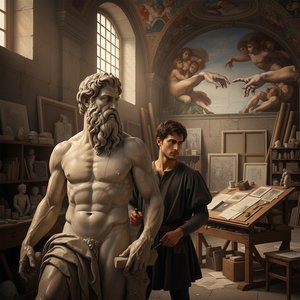
La importancia histórica de Venusti está inextricablemente ligada a su extraordinaria relación con las obras de Miguel Ángel Buonarroti. Mientras muchos artistas de su época buscaban únicamente imitar a los maestros, Venusti actuó como un puente meticuloso entre la visión y la realidad. Su logro más celebrado sigue siendo la copia al óleo a escala del Juicio Final, encargada por el cardenal Alessandro Farnese. No se trató de una mera reproducción; fue un esfuerzo erudito completado durante la propia vida de Miguel Ángel y, lo que es crucial, con su aprobación explícita. A través de esta obra, Venusti capturó un momento fugaz en la historia del arte, preservando la pureza cruda y muscular de los frescos de la Capilla Sixtina antes de que las adiciones posteriores y más conservadoras de draperías alteraran su impacto original. Al hacerlo, se convirtió en un historiador accidental, proporcionando a los estudiosos modernos la ventana más precisa a la majestuosidad sin adornos de la obra maestra tardía de Miguel Ángel.
Una maestría de devoción y detalle
Más allá de su papel como intérprete fiel de Miguel Ángel, la obra independiente de Venusti revela a un artista profundamente comprometido con las exigencias espirituales y dramáticas de los encargos eclesiásticos romanos. Su pincelada navegaba a menudo la tensión entre el rigor anatómico de su formación y la elegancia graciosa, a veces artificial, característica del movimiento manierista. En obras como Cristo en el Huerto, albergada en la Galleria Doria Pamphilj, se observa una capacidad profunda para evocar profundidad psicológica a través de la luz y la forma. No se limitaba a pintar figuras; orquestaba escenas de intenso peso teológico, trabajando frecuentemente a partir de diseños proporcionados por el propio Miguel Ángel, como su Anunciación para la iglesia de Santa Maria della Pace o el Cristo cargando con la Cruz que se encuentra en el Palazzo Borghese.
La amplitud de las contribuciones de Venusti al paisaje romano se evidencia en la gran variedad de sus temas sagrados:
- Narrativas bíblicas: Su habilidad para representar escenas complejas como la Sagrada Familia y Cristo expulsando a los mercaderes del templo demuestra un dominio tanto de la composición a gran escala como de la emoción humana íntima.
- Retablos eclesiásticos: Venusti era una mano muy solicitada por las iglesias romanas, decorando espacios como Santa Maria sopra Minerva con representaciones del Cristo Resucitado y contribuyendo a la Capilla de Santiago Apóstol.
- Refinamiento estilístico: Su talento residía en sus "ajustes silenciosos", donde corregía sutilmente las discrepancias de escala entre las figuras, asegurando que, incluso al seguir el diseño de un maestro, la composición final alcanzara una realidad armoniosa y equilibrada.
Al reflexionar sobre la vida de Marcello Venusti, vemos a un artista que no encontró la grandeza eclipsando a sus predecesores, sino iluminándolos. Fue un pintor de precisión y un custodio de la belleza, asegurando que las visiones monumentales del Renacimiento fueran preservadas, refinadas y transmitidas a las generaciones futuras con una fidelidad inquebrantable.
Preguntas y respuestas
¿Dónde puedo ver todas las obras de Marcello Venusti?
Puede explorar todas las obras de Marcello Venusti en este sitio web desde la página de Todas las obras de arte del artista.
¿Puedo explorar las obras de Marcello Venusti por paleta de colores?
La página Por paletas de colores agrupa las obras de Marcello Venusti según sus paletas de colores.
¿Dónde puedo ver las obras de Marcello Venusti organizadas por atmósfera?
Puedes explorar las obras de Marcello Venusti por estado de ánimo en su página Rincón de emociones, donde las piezas se organizan según la emoción que transmiten.