Menú
Asesoría de arte gratuita

Ludwig Gies

1887 - 1966

Resumen biográfico

  • Copyright status: Under copyright
  • Museums on APS:
    • Sociedad Numismática Americana
    • Sociedad Numismática Americana
    • Sociedad Numismática Americana
    • Sociedad Numismática Americana
    • Sociedad Numismática Americana
  • Art period: Arte moderno
  • Top 3 works:
    • The Torpedoed
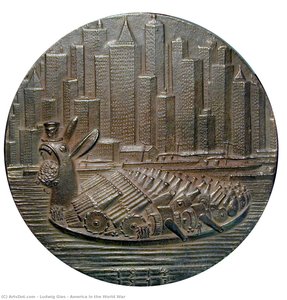
    • America in the World War
  • Born: 1887, Múnich, Alemania
  • Ver más…
  • Top-ranked work: The Torpedoed
  • Works on APS: 2
  • Died: 1966
  • Nationality: Alemania
  • Lifespan: 79 years

Test de arte

Solo hay una respuesta correcta para cada pregunta.

Pregunta 1:
¿Cuál fue el movimiento artístico más influyente en la obra escultórica de Ludwig Gies?
Pregunta 2:
¿Por qué el crucifixos de Lübeck fue considerado arte degenerado por los nazis?
Pregunta 3:
¿En qué año Gies creó el emblema nacional alemán, conocido como el Águila Federal?
Pregunta 4:
¿Dónde se encuentra una extensa colección de obras maestras escultóricas y pictóricas que ofrecen un contexto importante para comprender la visión artística de Gies?
Pregunta 5:
¿Qué influencia tuvo Gies en las generaciones posteriores de estudiantes de escultura en Berlín?

Ludwig Gies: Sculptor of Faith and National Identity

Ludwig Gies (3 September 1887 – 27 January 1966) stands as a pivotal figure in German sculpture and medal design during the early twentieth century, particularly remembered for his monumental crucifix in Lübeck Cathedral and his iconic Federal Eagle. His artistic journey reflects not only stylistic innovation but also profound engagement with socio-political currents shaping Germany’s era—from Expressionism to the tumultuous years of Weimar Republic and Nazi propaganda.

Early Life & Artistic Formation

Born in Munich, Gies's formative years were marked by a grounding in traditional craftsmanship alongside burgeoning influences from avant-garde movements. His apprenticeship at Winhart & Co., combined with evening classes at the Königliche Kunstgewerbeschule under Fritz von Miller and Anton Pruska, established him as a skilled artisan while exposing him to the intellectual ferment of Berlin’s artistic circles. This dual education fostered a unique perspective—one that blended meticulous technique with an awareness of emerging aesthetic trends.

The Crucible of Expressionism

Gies's sculptural output during the 1910s embodies the spirit of Expressionism. Driven by emotional intensity and symbolic representation—particularly evident in his depictions of suffering and loss—he wrestled with anxieties surrounding war and societal upheaval. Artists like Richard Riemerschmid and Bruno Paul profoundly impacted Gies’s artistic sensibilities, encouraging him to confront uncomfortable truths about humanity through powerful imagery. His work during this period foreshadowed a broader artistic preoccupation with expressing inner turmoil and challenging conventional notions of beauty.

Collaboration & Patronage: Bauhaus Influence

Gies’s association with Bruno Paul and the Bauhaus movement cemented his position at the forefront of German design. He collaborated extensively with Paul on decorative projects, exploring geometric abstraction alongside figurative elements—a testament to the transformative impact of modernist ideals on artistic practice. The Bauhaus ethos championed functionality and simplicity, yet Gies skillfully integrated expressive gestures into these designs, demonstrating a remarkable ability to synthesize disparate influences.

The Lübeck Crucifix: Trauma and Artistic Debate

Perhaps Gies’s most enduring legacy resides in his monumental crucifix for Lübeck Cathedral, commissioned in 1922. This ambitious undertaking—a towering bronze sculpture depicting Christ on the cross—became embroiled in controversy following its desecration by Nazi vandals during Kristallnacht in November 1938. The crucifix was deemed “degenerate art” by Joseph Goebbels and Hermann Göring, aligning it with Hitler’s aesthetic crusade against Jewish culture and artistic expression. Despite this condemnation, Gies's crucifix remains a powerful symbol of faith and resilience—a poignant reminder of the fragility of cultural heritage under totalitarian rule. Its enduring presence serves as an indictment of ideological intolerance and underscores the importance of safeguarding artistic integrity.

The Federal Eagle: Propaganda Iconography & Legacy

Gies’s creation of the Federal Eagle in 1953 for the Reichstag building represents a significant shift toward monumental sculpture serving as instrument of national propaganda. The eagle, modeled after Germanic heraldry and incorporating Art Deco stylistic elements, embodies the aspirations of postwar Germany—a desire to reaffirm its identity amidst the shadow of defeat. His influence extended beyond individual masterpieces; Gies instilled a commitment to craftsmanship and symbolic representation within generations of students at the Universität der Künste Berlin. He is remembered as one of Germany’s most important sculptors of the twentieth century, whose work continues to inspire artists today—a testament to his enduring artistic vision.