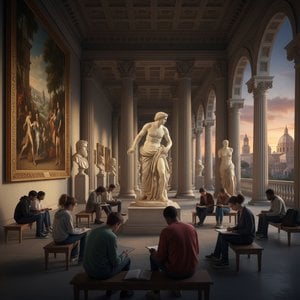
Louis Jean Jacques Durameau: Una visión onírica de la grandeza barroca
Louis Jean Jacques Durameau (1733-1796) se erige como una figura singular en la historia del arte francés: un pintor cuya obra encarna la influencia persistente de la estética barroca, al tiempo que abraza el espíritu naciente del simbolismo. Nacido en París, descendía de un linaje impregnado de tradición artística; su padre, Jacques Durameont, era un maestro impresor especializado en el grabado calcográfico, lo que le inculcó un profundo aprecio por la artesanía meticulosa y la sutileza tonal. Este entorno formativo moldeó profundamente la sensibilidad artística de Durameau, guiándolo hacia el taller del escultor Jean-Baptiste Defernex, un maestro reconocido por sus retratos descarnados que priorizaban el realismo psicológico sobre la belleza idealizada, un enfoque estilístico que se convertiría en el núcleo de su propia y distintiva visión. Tras la tutela de Defernex, Durameau entró en la órbita de Jean-Baptiste Marie Pierre, otro escultor influyente que defendía los ideales clásicos y fomentaba una rigurosa disciplina artística. Este periodo de intensa formación culminó en uno de los honores más prestigiosos que un artista de su época podía alcanzar: el Grand Prix de Rome. En 1757, Durameau obtuvo este codiciado encargo, una victoria que lo impulsó hacia el reconocimiento internacional y estableció estándares exigentes para su obra futura. Su tema ganador, basado en la narrativa bíblica de Eliseo resucitando al hijo de la sunamita, ejemplificó un dominio floreciente de la composición dramática y el peso emocional, demostrando una capacidad para representar la intervención divina mediante una magistral gradación tonal y una sensación de grandeza abrumadora.El dominio de la línea y la luz
La trayectoria artística de Durameau estuvo definida por una tensión única entre la precisión de sus raíces de grabador y la emoción fluida de la tradición pictórica. Poseía el dominio de un virtuoso del dibujo, utilizando a menudo tiza negra, pastel y lápiz para capturar los matices fugaces de la expresión humana. Sus obras, como el Presunto retrato de Joseph Pellerin, demuestran una profunda capacidad para insuflar vida a sus sujetos mediante un delicado trazo y un sutil juego de luces. Esta destreza técnica se extendió más allá del simple retrato; era igualmente hábil en composiciones de gran escala que exploraban temas mitológicos e históricos, dotándolos a menudo de una teatralidad que recordaba a la era barroca. La amplitud de su habilidad técnica es quizás más evidente en sus contribuciones a las artes decorativas. Sus diseños para la Manufacture Nationale des Gobelins, como la magnífica serie de tapices La continencia de Bayard, revelan a un artista capaz de traducir el complejo drama narrativo al medio de la lana y la seda. En estas obras, el sentido del movimiento y la escala monumental de Durameau le permitieron cerrar la brecha entre la pintura de bellas artes y los grandes programas decorativos que definieron el prestigio real francés durante el siglo XVIII.Legado e importancia histórica
A medida que avanzaba el siglo XVIII, la obra de Durameau comenzó a reflejar un cambio en la conciencia europea, alejándose de las estructuras rígidas del clasicismo hacia una narrativa más evocadora y atmosférica. Si bien sus cimientos permanecieron arraigados en las disciplinadas tradiciones de la Academia Francesa, sus exploraciones posteriores insinuaban una forma de ver más profunda e introspectiva. Su capacidad para capturar tanto lo monumental como lo íntimo le permitió mantenerse vigente durante un periodo de inmensa agitación política y social en Francia. Hoy en día, la importancia de Louis Jean Jacques Durameau reside en su papel como puente entre épocas. Sigue siendo un tema vital para los estudiosos interesados en:- La evolución del retrato francés, desde el realismo psicológico hasta el idealismo clásico.
- La intersección técnica entre la precisión del grabado y la expresión pictórica.
- La influencia del Grand Prix de Rome en el desarrollo de la estética europea del siglo XVIII.
- La integración del diseño de bellas artes dentro de los prestigiosos talleres de tapicería de los Gobelinos.
Preguntas y respuestas
¿Dónde puedo ver las obras de Louis Jean Jacques Durameau organizadas por atmósfera?
Puedes explorar las obras de Louis Jean Jacques Durameau por estado de ánimo en su página Rincón de emociones, donde las piezas se organizan según la emoción que transmiten.
¿Puedo explorar las obras de Louis Jean Jacques Durameau por técnica?
Puedes explorar las obras de Louis Jean Jacques Durameau por técnica en su página de Todas las técnicas.
¿De dónde es Louis Jean Jacques Durameau?
Louis Jean Jacques Durameau nació en Francia.