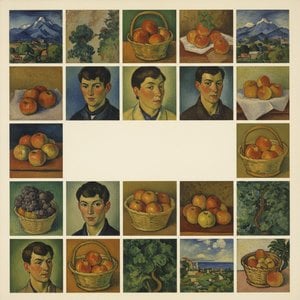
Léo Gausson (1860 – 1944): Pioneer of Breton Impressionism
Léo Gausson, born in Paris on February 14th, 1860, emerged as a prominent figure within the burgeoning Neo-Impressionist movement during the Belle Époque. His artistic journey was deeply rooted in Brittany, where he established his studio and cultivated an enduring fascination with the rugged landscapes of Cornwall and its surrounding coastline. Unlike many of his contemporaries who sought inspiration in urban vistas, Gausson’s gaze turned consistently towards the elemental beauty of Breton nature—a choice that profoundly shaped his distinctive visual language.- Early Influences: Gausson's formative years were marked by exposure to Impressionist masters like Monet and Sisley, fostering an appreciation for capturing fleeting moments of light and color. However, he swiftly distanced himself from Impressionism’s focus on optical realism, recognizing its limitations in conveying emotional depth.
- The Neo-Impressionist Breakthrough: Embracing the theories championed by Georges Seurat and Paul Signac, Gausson adopted the Synthetic method—a technique characterized by meticulous layering of small dots of pure pigment. This approach allowed him to achieve unprecedented luminosity and vibrancy, mirroring the shimmering surfaces of Breton seascapes.
- Brittany: His artistic homeland became an inexhaustible source of inspiration. Gausson meticulously documented the dramatic interplay between light and shadow on granite cliffs, sandy beaches, and turbulent waters. These landscapes weren’t merely depicted; they were imbued with symbolic resonance—representing resilience, solitude, and the enduring spirit of Breton tradition.
Notable Works & Artistic Style
Gausson's oeuvre comprises a remarkable collection of paintings, prints, and sculptures that exemplify his unwavering commitment to Neo-Impressionist principles. His canvases—such as “Les meules près du chemin” (The Wheat Stalks Near the Path) and "Sans titre" – are distinguished by their masterful use of color palettes derived directly from Breton pigments—ochres, siennas, and ultramarine blues—creating a palpable sense of atmosphere. The dots of pigment, applied with painstaking precision, generate an illusionistic depth that transcends mere visual representation. Furthermore, Gausson skillfully incorporated sculptural elements into his artistic practice, reflecting his belief in the importance of tactile experience alongside visual perception.- Prints: Gausson’s prints—particularly his lithographs depicting Breton coastal scenes—served as crucial vehicles for disseminating his aesthetic vision. These images captured the essence of Breton landscapes with remarkable clarity and emotional intensity, solidifying his reputation as a master printmaker.
- Sculpture: Although less prolific in sculpture than painting, Gausson produced several evocative sculptures that explored themes of Breton identity and mythology—often utilizing granite to evoke the rugged grandeur of Cornwall.
Legacy & Historical Significance
Léo Gausson’s contribution to French art history extends beyond his individual achievements. He stands as a pivotal figure in establishing Breton Impressionism—a distinctive stylistic variant that fused Neo-Impressionist techniques with the expressive spirit of regional folklore and tradition. His work continues to resonate with audiences today, demonstrating the enduring power of artistic exploration rooted in observation and emotion. As a testament to his dedication to preserving Breton heritage through art, Gausson’s legacy remains firmly embedded within the cultural landscape of Brittany—a beacon of avant-garde creativity amidst the conservative currents of the early 20th century.- Influence: Gausson's meticulous approach to color and texture influenced subsequent generations of Breton artists, fostering a tradition of landscape painting characterized by luminous hues and textural richness.
Preguntas y respuestas
¿Puedo explorar las obras de Léo Gausson por estado de ánimo?
La Galería de estados de ánimo de Léo Gausson es una página que organiza las obras del artista según el estado de ánimo.
¿Puedo explorar las obras de Léo Gausson por espectro de color?
Las obras de Léo Gausson pueden explorarse por color en la página Índice Espectral del artista.
¿Dónde puedo ver todas las obras de Léo Gausson?
Todas las obras de Léo Gausson en este sitio web pueden explorarse desde la página de Todas las obras del artista.
¿En qué periodo histórico trabajó Léo Gausson?
Léo Gausson trabajó durante el periodo 19th Century. Este periodo sitúa la actividad del artista en la historia.
¿Cómo evolucionó el arte de Léo Gausson a lo largo del tiempo?
La trayectoria de Léo Gausson se despliega etapa por etapa en la página Crónica: una línea de tiempo horizontal de sus obras, agrupadas en capítulos según sus periodos creativos.
¿Dónde puedo ver las obras de Léo Gausson en una galería 3D?
Es posible realizar una visita virtual: la página Museo 3D de Léo Gausson presenta las obras del artista en una galería tridimensional.
¿Cuántas obras de Léo Gausson hay disponibles para explorar?
Puede explorar 12 obras de arte obras de Léo Gausson en la página Todas las obras.