Jorge Alberto Mendonça Paulino: A Painter's Journey Through Angola and Spain
Jorge Alberto Mendonça Paulino, known simply as Mendonça, stands apart from many celebrated footballers of his era—not merely for his prolific goalscoring record but also for a surprising artistic passion that blossomed alongside his sporting career. Born in Luanda, Angola, in 1938, Mendonça’s life narrative intertwines seamlessly with the vibrant hues and textures of his paintings, reflecting both personal introspection and an appreciation for the natural world.
Early Life & Football Beginnings: Mendonça's formative years were steeped in the colonial legacy of Angola, shaping his worldview and undoubtedly influencing his artistic sensibilities. He began his football journey with SC Braga, Portugal’s powerhouse club, honing his skills before embarking on a transformative relocation to Spain in 1958. This move propelled him into the spotlight of Atlético Madrid, where he would spend twelve seasons establishing himself as one of La Liga's most consistent performers. His debut at Sporting Lisboa marked the beginning of a distinguished career, characterized by dedication and perseverance—qualities that would later translate into his artistic endeavors.
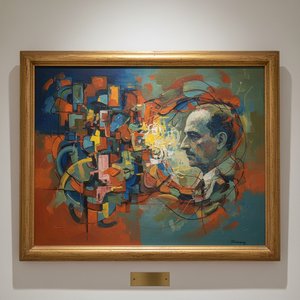
Atlético Madrid Dominance & Artistic Exploration: Atlético Madrid wasn’t just a football club; it was a crucible for Mendonça’s artistic pursuits. During his tenure, he achieved remarkable success—five major titles including two UEFA Cups—but simultaneously nurtured a burgeoning talent for painting. His canvases often depict landscapes imbued with symbolic resonance, capturing the grandeur of Morro do Jaraguá, a prominent hill overlooking Luanda, and exploring abstract representations of emotions and memories. These paintings demonstrate a profound understanding of color theory and composition, reflecting his meticulous observation of the natural world—a habit that would inform his artistic process throughout his life. The pressure to perform on the pitch undoubtedly fueled his desire for creative expression, resulting in works that convey both visual beauty and emotional depth.
Barcelona & Mallorca: Following Atlético Madrid’s departure in 1967, Mendonça continued his professional football career with FC Barcelona and RCD Mallorca. However, it was the arrival of Narcís de Carreras as president at Barça that proved problematic—the club's leadership clashed with Mendonça’s religious convictions, prompting a transfer to Mallorca. This experience underscored the importance of aligning personal values with professional pursuits—a lesson he carried forward into his subsequent artistic endeavors.
Faith & Artistic Shift: Embracing Jehovah’s Witnesses in the late 1960s profoundly impacted Mendonça’s life and artistic vision. This spiritual commitment fueled his dedication to capturing beauty and conveying emotion through his paintings—a shift towards more contemplative and expressive works. He sought inspiration in biblical narratives and philosophical concepts, translating these ideas into visual metaphors that resonate with viewers on a deeper level. His art became an embodiment of his faith—a testament to the transformative power of belief and its ability to shape one’s perspective on life.
Legacy & Artistic Significance: While Mendonça's football achievements are undeniable, it is his artistic legacy that deserves particular consideration. His paintings offer a glimpse into the soul of an athlete who dared to pursue multiple passions, demonstrating that creativity can flourish even amidst demanding commitments. They stand as testament to the enduring power of observation and imagination—qualities that transcend sport and resonate across disciplines. Among Mendonça’s oeuvre are captivating pieces like “Untitled,” which exemplifies his masterful use of color and form to convey profound emotional depth. Also noteworthy is "Morro do Jaraguá," a landscape painting that embodies the artist's connection to his homeland and reflects a desire to capture its essence on canvas. His work continues to inspire artists and scholars alike, cementing his place as a multifaceted figure—a footballer who also possessed an extraordinary artistic talent.