El legado de un visionario marítimo
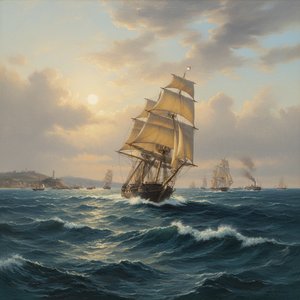
James Edward Buttersworth se erige como una figura monumental en el arte marítimo del siglo XIX, celebrado por su capacidad inigualable para capturar el dinamismo y la grandeza de los buques de vela frente a mares turbulentos. Nacido en Londres en 1817, hijo de Thomas Buttersworth Jr., quien fuera un respetado artista marino, James heredó un linaje impregnado de tradición artística. Esta herencia moldeó profundamente su estilo distintivo y una dedicación inquebrantable a documentar las competiciones náuticas de la época. Sus lienzos son instantáneamente reconocibles por su detalle meticuloso, una pincelada magistral y un sentido del movimiento cautivador que transporta al espectador directamente al corazón de la historia naval.
Los años formativos de Buttersworth transcurrieron perfeccionando sus habilidades bajo la tutela de su padre, absorbiendo las delicadas técnicas de la acuarela y desarrollando un ojo agudo para capturar las condiciones atmosféricas, una destreza que más tarde traduciría en impresionantes pinturas al óleo. Alrededor de 1845, emprendió un viaje transatlántico hacia Nueva Jersey, estableciendo un estudio en West Hoboken, donde continuó refinando su oficio y cultivando conexiones dentro de la floreciente escena artística estadounidense. Asimismo, mantuvo un estudio en Brooklyn, demostrando su versatilidad y compromiso con las artes más allá de las fronteras geográficas.
Maestría del mar y espíritu de competición
La carrera del artista estuvo marcada por una notable capacidad para fusionar la precisión técnica con la resonancia emocional. Cabe destacar que Buttersworth regresó a Inglaterra en 1851 para la regata por la Copa de Cien Libras, un evento crucial que consolidó su reputación como uno de los más destacados retratistas de barcos de América. Sus bocetos y pinturas de esta competición representan el registro definitivo del fervor competitivo de la temporada, mostrando una comprensión extraordinaria de la estrategia naval y la narrativa visual. A través de su pincel, la tensión del viento en las velas y el rocío del agua salada se vuelven palpables para el observador.
Su visión artística estuvo profundamente influenciada por los principios del Romanticismo, un movimiento caracterizado por el énfasis en la emoción, la imaginación y los paisajes dramáticos. Inspirándose en maestros como Turner y Constable, Buttersworth priorizó el poder expresivo de la naturaleza. Esta influencia es evidente en su tratamiento del océano, al que nunca representó como un mero telón de fondo, sino como un protagonista vivo y palpitante en cada escena. Su obra captura la dualidad del mar: su potencial aterrador y destructivo durante las tormentas, y su belleza majestuosa y serena bajo cielos despejados.
Significancia histórica y logro artístico
La importancia de James Edward Buttersworth reside no solo en su destreza técnica, sino también en su papel como cronista visual de una era que se desvanecía. A medida que la era de la vela comenzaba a ceder ante la revolución industrial, sus pinturas preservaron la dignidad y la complejidad de los grandes veleros que alguna vez dominaron los océanos del mundo. Sus contribuciones al arte marítimo incluyen:
- Retrato detallado de embarcaciones: Proporcionando un registro preciso y reverente de la arquitectura naval y el aparejo.
- Narrativa atmosférica: Utilizando la luz y la sombra para transmitir el temperamento impredecible del Atlántico y otros mares.
- Excelencia documental: Capturando el drama de alto riesgo de las regatas de yates y las competiciones marítimas del siglo XIX.
Hoy en día, la obra de Buttersworth sigue siendo una piedra angular tanto para coleccionistas como para historiadores. Su capacidad para casar la precisión de un dibujante con el alma de un pintor romántico garantiza que su legado continúe inspirando asombro, ofreciendo una ventana a un tiempo en el que el horizonte era una frontera de aventuras y el mar era la prueba definitiva del espíritu humano y la maestría artesanal.
Preguntas y respuestas
¿De dónde es James Edward Buttersworth?
James Edward Buttersworth nació en Reino Unido.
¿Dónde se encuentran las obras de James Edward Buttersworth agrupadas por técnica?
Las obras de James Edward Buttersworth pueden explorarse por técnica en la página de Todos los medios del artista.
¿En qué periodo histórico trabajó James Edward Buttersworth?
James Edward Buttersworth trabajó durante el periodo Siglo XIX. Este periodo sitúa la actividad del artista en la historia.