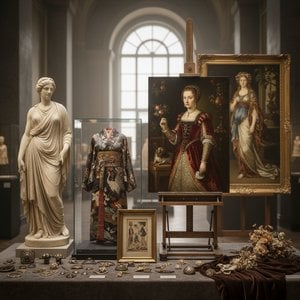
Jacques Doucet: The Poet of Pastel Elegance
Jacques Doucet (1853 – 1929) stands as a singular figure in the annals of Parisian couture, remembered less for grand pronouncements and more for an almost ethereal aesthetic—a preoccupation with delicate fabrics and luminous pastel hues that captured the spirit of Art Nouveau. Born into a family steeped in fashion tradition, Doucet’s artistic journey began not with formal training but with an innate understanding of color and texture, qualities he would translate into dresses that defied convention and captivated discerning clientele.
Early Life & Artistic Foundations
Details surrounding Doucet's formative years remain elusive, yet his familial connection to the textile industry undoubtedly instilled in him a profound appreciation for craftsmanship and material innovation. Unlike many of his contemporaries who adhered rigidly to established styles, Doucet possessed an inquisitive mind and actively sought inspiration from diverse sources—particularly Japonisme, the fascination with Japanese art and design that swept through Europe at the turn of the century. This influence is palpable in his designs, where stylized bamboo shoots and birds intertwine with flowing silk drapery, creating a visual dialogue between East and West. His family’s involvement in textiles nurtured within him an exceptional sensitivity to materials—a crucial element in achieving Doucet's signature style: dresses that seemed to float effortlessly on fabric, imbued with an otherworldly luminescence.
A Distinctive Style: Translucent Fabrics & Pastel Harmonies
Doucet’s distinctive approach centered around utilizing incredibly thin, translucent fabrics—primarily chiffon and crepe satin—layered upon one another to achieve breathtaking effects of color and luminosity. He deliberately avoided ostentatious displays in favor of subtle gradations of pastel shades—rose pinks, lavender blues, peach yellows—that evoked emotion through their delicate hues alone. Mastering draping techniques was paramount; Doucet’s creations possessed an unparalleled fluidity and grace, mirroring the flowing lines characteristic of Art Nouveau ornamentation. Critics lauded his ability to convey mood and atmosphere through color, describing his dresses as “poems woven in silk,” a testament to his belief that fabric could communicate emotion as powerfully as any painted image.
Notable Works & Influences
Among Doucet’s most celebrated pieces are the "Black Evening Cape with Medici Collar Sortie de Bal" and the "Day Dress," both exemplifying his stylistic principles. The evening cape, adorned with a dramatic Medici collar—a stylized floral motif inspired by Florentine heraldry—demonstrates Doucet’s understanding of decorative symbolism alongside technical prowess. Similarly, the Day Dress showcases the influence of Japonisme, featuring intricate bamboo and sparrow motifs rendered in silk, reflecting Doucet's commitment to exploring artistic traditions beyond Parisian boundaries. These garments stand as enduring symbols of elegance and sophistication, embodying Doucet’s vision for fashion—a fusion of refined artistry and meticulous craftsmanship.
His work resonated deeply with fellow designers like Paul Poiret, who embraced Doucet’s innovative approach to fabric manipulation and color palettes, propelling Art Nouveau aesthetics into mainstream fashion. Jacques Doucet's legacy extends far beyond his individual creations; he fundamentally altered perceptions of beauty within the couture world, establishing a precedent for prioritizing delicacy and subtlety as expressions of artistic vision. He remains an enduring emblem of Parisian elegance and a testament to the transformative power of artistic inspiration.
### Historical Significance
Jacques Doucet’s contribution to Art Nouveau transcends mere stylistic innovation. He championed a humanist aesthetic—one that prioritized beauty and grace above all else—challenging the prevailing conventions of Victorian fashion and paving the way for a more expressive and imaginative approach to design. His influence extended beyond couture, shaping decorative arts and influencing artists who sought to capture the spirit of the era. Doucet’s unwavering belief in the power of color and texture as vehicles for artistic expression solidified his place as one of the foremost figures in Parisian culture—a poet of pastel elegance whose legacy continues to inspire designers and art lovers alike.