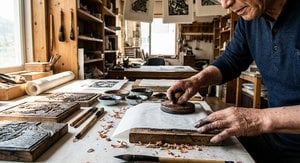
Yoshida Hiroshi (1876-1950): A Pioneer of Shin-hanga
Hiroshi Yoshida, a Japanese master of shin-hanga style—a revolutionary movement that revitalized traditional woodblock printing while embracing modern artistic sensibilities—stands as one of the most celebrated landscape artists of his era. Born in Kurume, Fukuoka, Japan, on September 19, 1876, Yoshida’s artistic journey began with a profound connection to nature and an unwavering dedication to preserving Japanese artistic heritage.Early Life and Artistic Training
Yoshida's formative years were marked by exposure to influential educators who instilled in him the foundational principles of Western painting alongside the meticulous techniques of Kyoto’s yōga-ka (Japanese landscape painters). He studied under Tamura Shōryū and Miyake Kokki, absorbing their teachings on composition, color theory, and artistic expression. Recognizing his talent early on, Kasaburo Yoshida—a junior high school art teacher—championed his aspirations, propelling him toward a distinguished artistic career. Moving to Tokyo at the age of 17, he enrolled in Koyama Shōtarō’s painting school, furthering his understanding of Western aesthetics and solidifying his commitment to innovation.Artistic Achievements: Embracing Collaboration and Innovation
Yoshida's professional life gained momentum in 1920 with his partnership with Watanabe Print Workshop, spearheaded by Watanabe Shōzaburō—a visionary publisher who championed shin-hanga’s revival. This collaboration commenced with a striking depiction of the Meiji Shrine, establishing Yoshida as a leading figure within the movement. In 1925, he established his own studio, meticulously blending traditional Japanese craftsmanship with Western artistic approaches to produce unparalleled prints. Notable works include “The Grand Canyon,” reflecting his fascination with American landscapes and showcasing his mastery of color palettes—a testament to his ability to capture emotion through visual representation—and “Glittering Sea,” part of the Seto Inland Sea series, demonstrating his profound appreciation for serene natural vistas. Yoshida’s dedication to preserving Japanese artistic traditions while experimenting with new techniques cemented his place in art history.Global Influence and Legacy
Yoshida's groundbreaking style profoundly impacted subsequent generations of artists worldwide. His expeditions across continents—particularly Europe and North America—fueled his creative vision, resulting in breathtaking depictions of iconic locations like the Taj Mahal, the Swiss Alps, and numerous National Parks in the United States. These journeys weren’t merely aesthetic pursuits; they were immersive explorations that deepened Yoshida's understanding of diverse artistic traditions and informed his distinctive approach to printmaking. His meticulous attention to detail—evident in his use of zinc plates for intricate designs—underscored his unwavering commitment to excellence. Yoshida’s influence extends beyond the realm of art, resonating within the broader cultural landscape as a symbol of Japan’s engagement with modernity while honoring its artistic heritage.Selected Paintings and Recognition
Yoshida's oeuvre encompasses a remarkable range of subjects and styles, reflecting his multifaceted artistic personality. Among his most celebrated pieces are “Himeji Castle, Evening,” housed in the Shizuoka Prefectural Museum of Art—a masterful portrayal of Japanese architectural grandeur—and “Prosperous Port in Kobe,” displayed at Kobe City Museum—capturing the vibrancy of a bustling urban scene. Furthermore, "The Thirty-Six Immortal Poets" (1 of a pair), residing at Denver Art Museum, exemplifies Yoshida’s ability to convey poetic emotion through visual imagery. His prints are held in prestigious collections globally, including the Metropolitan Museum of Art in New York and the National Museum of Modern Art in Tokyo—a testament to his enduring artistic legacy. Yoshida Hiroshi's contribution to shin-hanga and Japanese art continues to inspire artists today.Preguntas y respuestas
¿Existe un relato cronológico de Hiroshi Yoshida?
La Crónica de Hiroshi Yoshida es una línea de tiempo con desplazamiento vertical que presenta las obras del artista en orden cronológico, agrupadas en capítulos por periodos de su carrera.
¿Cuál es el lugar y el año de nacimiento de Hiroshi Yoshida?
Hiroshi Yoshida nació en Kurume en 1876.
¿Dónde puedo ver las obras de Hiroshi Yoshida en orden cronológico?
La página de Cronología de obras del artista presenta las obras de Hiroshi Yoshida ordenadas por fecha, año tras año.
¿Dónde puedo ver todas las obras de Hiroshi Yoshida?
Todas las obras de Hiroshi Yoshida en este sitio web pueden explorarse desde la página de Todas las obras del artista.
¿En qué ciudad y país nació Hiroshi Yoshida?
Hiroshi Yoshida nació en Kurume, en Japón.
¿Dónde puedo ver el perfil cromático de la obra de Hiroshi Yoshida?
El Genoma de la Paleta de Hiroshi Yoshida es una página que presenta el perfil cromático de la obra del artista.
¿De dónde es Hiroshi Yoshida?
Hiroshi Yoshida nació en Japón.