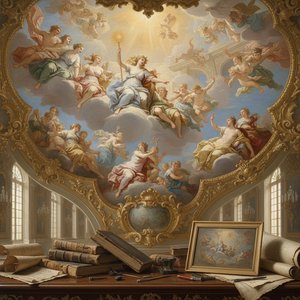
El legado veneciano de Giandomenico Tiepolo
En el corazón luminoso de la Venecia del siglo XVIII, un periodo definido por el esplendor decadente del Rococó, Giandomenico Tiepolo emergió como un maestro tanto del gran espectáculo como del drama humano íntimo. Nacido en 1727, su vida estuvo inextricablemente tejida en la trama de una de las dinastías más formidables de la historia del arte. Como hijo del legendario Giovanni Battista Tiepolo, Giandomenico no solo heredó un nombre; heredó un lenguaje visual de luz, movimiento y teatralidad. Si bien gran parte de su carrera temprana transcurrió bajo la sombra de los monumentales frescos de su padre, Giandomenico poseía un espíritu creativo singular que le permitió trascender la mera imitación, labrándose finalmente un nicho que combinaba la escala épica de su linaje con una observación conmovedora y, a menudo, satírica, de la vida veneciana.
Los años formativos del desarrollo de Tiepolo se caracterizaron por un profundo aprendizaje dentro de los mismos talleres que decoraron los palacios de Europa. Trabajando junto a su padre en proyectos ambiciosos, como los impresionantes frescos de Wurzburgo, Giandomenico dominó las complejidades técnicas de la composición a gran escala y la innovadora técnica del "esbozo al óleo". Este método, que permitía una captura más fluida y espontánea de la emoción, se convirtió en la piedra angular de su enfoque. A través de estas colaboraciones, aprendió a manipular la luz para crear profundidad y drama, pero también comenzó a desarrollar un interés por temas mucho más pequeños y delicados que se alejaban de los mitos heroicos favorecidos por la generación anterior.
Una maestría del movimiento y el personaje
A medida que su identidad artística maduraba, la obra de Giandomenico comenzó a exhibir una dualidad fascinante. Por un lado, mantuvo la gran tradición del arte decorativo veneciano, contribuyendo significativamente a interiores opulentos como los que se encuentran en la Villa Valmarana de Vicenza. Por otro lado, dirigió su mirada hacia las calles y los teatros de Venecia, encontrando inspiración en la Comedia dell'arte. Es dentro de este reino donde reside su imaginería más perdurable y evocadora, específicamente su célebre serie protagonizada por Punchinello. A través de estos personajes, Tiepolo se alejó de lo divino y lo mitológico para explorar lo caprichoso, lo grotesco y lo profundamente humano.
Su destreza técnica no se limitó al pincel; también fue un talentoso grabador, utilizando el aguafuerte para explorar líneas finas y texturas atmosféricas. Esta versatilidad le permitió capturar un amplio espectro de temas:
- Devoción religiosa: Obras como La agonía en el huerto demuestran su capacidad para manejar una profunda tensión espiritual con gracia clásica.
- Fantasías arquitectónicas: Sus representaciones de estructuras imaginarias, como la Vista del pabellón gótico, muestran un dominio de la perspectiva y una visión romantizada de la grandeza arquitectónica.
- Sátira social: A través de sus grabados, capturó la esencia fugaz y a menudo melancólica de la sociedad veneciana, utilizando máscaras y marionetas para reflejar las complejidades de la identidad humana.
Significancia histórica y espíritu perdurable
La importancia histórica de Giandomenico Tiepolo reside en su papel como puente entre las alturas vertiginosas de la era Barroco-Rococó y los estilos más introspectivos y observacionales que le seguirían. Si bien portó la antorcha del monumentalismo de su padre, también anticipó el cambio hacia un realismo más psicológico y social. Su capacidad para oscilar entre la escala épica de un fresco palaciego y la agudeza íntima de un estudio de personaje convierte su obra en una ventana única al alma de la Venecia de finales del siglo XVIII.
En última instancia, el legado de Tiepolo es uno de profunda adaptabilidad y profundidad emocional. No se limitó a replicar la gloria del pasado; la reinterpretó a través de un lente de observación contemporánea. Ya sea mediante las amplias narrativas de su formación temprana o los mordaces y hermosos grabados de sus años posteriores, Giandomenico Tiepolo permanece como una figura vital cuya obra continúa cautivando con su mezcla de magia teatral y tierna humanidad.
Preguntas y respuestas
¿Existe una cronología de las obras de Giandomenico Tiepolo?
Las obras de Giandomenico Tiepolo pueden verse en orden cronológico en la página de Cronología de obras del artista.
¿En qué ciudad y país nació Giandomenico Tiepolo?
Giandomenico Tiepolo nació en Venecia, en Italia.
¿Dónde se encuentran las obras de Giandomenico Tiepolo organizadas por color?
Las obras de Giandomenico Tiepolo pueden explorarse por color en la página Índice Espectral del artista.
¿Cómo evolucionó el arte de Giandomenico Tiepolo a lo largo del tiempo?
La trayectoria de Giandomenico Tiepolo se despliega etapa por etapa en la página Crónica: una línea de tiempo horizontal de sus obras, agrupadas en capítulos según sus periodos creativos.
¿Dónde se encuentran las obras de Giandomenico Tiepolo agrupadas por paleta?
Para encontrar obras de Giandomenico Tiepolo en una paleta específica, utilice la página de Por paletas de colores del artista.
¿Dónde puedo ver el perfil cromático de la obra de Giandomenico Tiepolo?
El perfil cromático de la obra de Giandomenico Tiepolo se muestra en la página Genoma de la Paleta del artista.
¿Cómo puedo encontrar obras de Giandomenico Tiepolo sobre un tema específico?
Las obras de Giandomenico Tiepolo pueden explorarse por palabra clave en la página de Por palabras clave del artista. Cada palabra clave agrupa las obras relacionadas.
¿Con qué otros nombres se conoce a Giandomenico Tiepolo?
Giandomenico Tiepolo aparece bajo los nombres alternativos Giovanni Domenico Tiepolo.