El arquitecto del cartel americano
En el vibrante y floreciente paisaje de la América de finales del siglo XIX, un nuevo lenguaje visual se estaba escribiendo en las calles y en las páginas de las publicaciones más prestigiosas de la nación. En el corazón de esta revolución se encontraba Edward Penfield, un artista cuyo nombre se ha vuelto sinónimo del nacimiento del diseño gráfico moderno. A menudo venerado como “el padre del cartel americano”, Penfield poseía una capacidad singular para destilar emociones complejas y narrativas sociales en formas impactantes y simplificadas. Su obra no se limitaba a decorar; comunicaba, tendiendo un puente entre las bellas artes y los medios de comunicación de masas con una elegancia que capturó el espíritu mismo de la Edad de Oro de la Ilustración.
Nacido el 2 de junio de 1866 en Brooklyn, Nueva York, Penfield estaba destinado a una vida moldeada por la precisión estética. Era hijo de Josiah B. Penfield, un respetado arquitecto, y este vínculo familiar con el diseño estructural probablemente le inculcó un dominio temprano de las relaciones espaciales y el equilibrio. Su formación académica en la prestigiosa Art Students League de la ciudad de Nueva York le permitió entrar en contacto con los mentores más influyentes de la época, incluido George de Forest Brush. Fue durante estos años formativos cuando Penfield comenzó a alejarse del denso realismo académico de sus predecesentes, mirando en su lugar hacia un futuro más depurado, donde contornos audaces y fondos despejados pudieran captar la atención del espectador en medio del caos urbano.
Un maestro de la página impresa
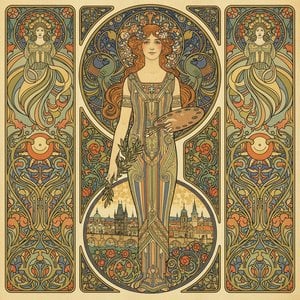
El verdadero cenit de la carrera de Penfield llegó a través de su relación transformadora con la revista Harper’s Magazine. Al desempeñarse como director de arte de la publicación, aprovechó los avances en la tecnología de impresión en color para crear una serie de carteles mensuales que se convirtieron en hitos culturales. A diferencia de los ornamentos fluidos y excesivamente recargados del movimiento europeo Art Nouveau, presentes en las obras de contemporáneos como Will Bradley, Penfield desarrolló una estética más contenida y únicamente estadounidense. Se inspiró profundamente en los planos planos y las siluetas marcadas de los grabados japoneses en madera, así como en las composiciones magistrales de maestros franceses como Henri de Toulouse-Lautrec y Jules Chéret.
Su estilo distintivo —caracterizado por una reducción deliberada del detalle y un uso asertivo del trazo— permitía que sus sujetos resonaran con una claridad inmediata. Ya fuera al representar a un caballero perdido en una tranquila contemplación en "Harper's August" o al capturar la energía rítmica de un carruaje tirado por caballos en "Heller ^ Bachrach", la obra de Penfield encarnaba un sentido de ocio refinado y vitalidad moderna. Su capacidad para sintetizar diversas influencias estilísticas en una marca cohesiva y accesible para Harper’s ayudó a establecer la revista como una autoridad visual, convirtiendo sus carteles no solo en anuncios, sino en piezas de arte coleccionables que adornaban las paredes de hogares en todo el país.
Legado e influencia perdurable
Aunque su etapa en Harper's concluyó en 1901, el impulso creativo de Penfield nunca decayó. Continuó moldeando el paisaje visual a través de un trabajo prolífico para otras publicaciones importantes como Scribner's e Collier's, además de diseñar portadas para numerosos libros y anuncios comerciales. Su influencia se extendió mucho más allá de la página impresa, dejando una huella indeleble en la evolución del diseño gráfico. Al demostrar que la simplicidad podía ser más poderosa que la complejidad, allanó el camino para los movimientos minimalistas del siglo XX.
Hoy en día, la importancia de Edward Penfield reside en su papel como pionero que democratizó el arte. A través de sus carteles, las bellas artes ya no estaban confinadas a las silenciosas galerías de los museos, sino que se llevaron directamente a la vista del público, integrándose en el tejido mismo de la vida cotidiana. Su legado permanece visible en cada diseño moderno que prioriza la claridad, el impacto y la belleza de la línea esencial.
Preguntas y respuestas
¿Puedo explorar las obras de Edward Penfield por estado de ánimo?
La página de Rincón de emociones del artista muestra las obras de Edward Penfield organizadas según su atmósfera.
¿Dónde se pueden explorar las obras de Edward Penfield clasificadas por tema?
El Índice temático de Edward Penfield es una página que organiza las obras del artista según sus temas.
¿En qué ciudad y país nació Edward Penfield?
Edward Penfield nació en Brooklyn, Estados Unidos.