El vibrante legado de Edward Atkinson Hornel
Edward Atkinson Hornel se erige como una figura luminosa en el tapiz del arte escocés de finales de la época victoriana y principios del siglo XX, un pintor cuyo pincel capturó la delicada intersección entre la naturaleza y la cultura. Aunque su viaje comenzó en Bacchus Marsh, Victoria, Australia, su alma estaba profundamente arraigada en la belleza agreste de Escocia. Tras el regreso de su familia a Kirkcudbright en 1866, la identidad artística de Hornel comenzó a cohesionarse mediante una rigurosa formación académica en la Escuela de Arte de Edimburgo y, posteriormente, en Amberes bajo la tutela del profesor Verlat. Este periodo fundacional le inculcó un profundo respeto por la precisión botánica y la integridad estructural del paisaje, elementos que permanecerían centrales incluso cuando su estilo evolucionó hacia lo más experimental y atmosférico.
Al regresar a Escocia en 1885, Hornel encontró un alma gemela en George Henry, una asociación que se convertiría en piedra angular del influyente movimiento Glasgow Boys. Juntos, buscaron romper con las estancadas tradiciones académicas de la época, favoreciendo en su lugar un enfoque audaz y expresivo del color y la textura. Su obra maestra colaborativa, “Druids Bringing In The Mistletoe” (1890), sirve como testimonio de este periodo de experimentación radical. En esta obra, Hornel demostró una maestría extraordinaria sobre la propia superficie pictórica, utilizando técnicas como el entrelazado de capas, el raspado, el rugosido y el teñido para crear una cualidad táctil y rítmica que priorizaba la resonancia emocional y el efecto expresivo por encima de la mera exactitud fotográfica.
La influencia del Japonismo y el refinamiento estético
Una época transformadora en la carrera de Hornel llegó entre 1893 y 18mu4, cuando él y Henry emprendieron un viaje a Japón. Esta inmersión en la cultura japonesa actuó como un profundo catalizador, remodelando sus sensibilidades artísticas a través del prisma del Japonismo. Los principios del diseño decorativo, las disposiciones espaciales planas y el uso poético del espacio negativo presentes en los grabados japoneses comenzaron a permear sus lienzos. Su trabajo transitó desde las texturas densas de sus primeros años hacia una estética más refinada y atmosférica, caracterizada por paletas de colores armoniosas y un enfoque matizado del dibujo.
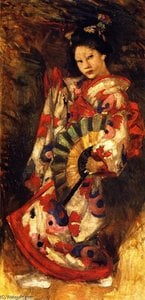
Este periodo de refinamiento se captura bellamente en obras como “Japanese Figures in a Garden” (1896) e “Dancing Geisha.” En estas pinturas, el artista va más allá de la simple representación para evocar una sensación de belleza serena y fugaz. Emplea magistralmente colores suaves y pinceladas delicadas para retratar el atuendo tradicional japonés y entornos de jardines tranquilos, creando escenas que se sienten tanto íntimas como de otro mundo. La influencia de Oriente permitió a Hornel fusionar la exuberancia del paisaje escocés con una elegancia decorativa y sofisticada, haciendo que su obra sea unívocamente reconocible dentro del movimiento impresionista más amplio.
Una vida inmersa en el arte y la herencia
El compromiso de Hornel con su oficio estuvo a la altura de su devoción por su hogar y su comunidad. Su residencia, Broughton House en Kirkcudbright, se convirtió en algo más que una simple vivienda; fue un santuario donde la arquitectura y la pasión estética estaban inextricablemente ligadas. Tras remodelar la casa señorial en 1901, vivió en un espacio que reflejaba su propia evolución artística: una mezcla de grandeza victoriana y un toque decorativo personal. A pesar de su creciente fama, Hornel permaneció como un miembro dedicado del Glasgow Art Club, optando por exponer allí anualmente en lugar de buscar la validación formal de la Royal Scottish Academy.
La importancia histórica de Edward Atkinson Hornel reside en su capacidad para tender un puente entre la pintura de paisaje tradicional y los impulsos decorativos modernos de principios del siglo XX. Su legado se define por varias contribuciones artísticas clave:
- Innovación textural: El uso pionero de técnicas de manipulación, como el raspado y el teñido, para crear superficies expresivas y táctiles.
- Síntesis cultural: La integración fluida de los principios estéticos japoneses —como la disposición espacial y la armonía del color— en la tradición del paisaje escocés.
- El movimiento Glasgow Boys: Su papel en la revitalización del arte escocés al alejarse del realismo académico hacia una visión más vibrante e impresionista.
- Sensibilidad botánica: Una dedicación de por vida a capturar la intrincada belleza de la flora y el follaje con detalle científico y gracia poética.
A través de sus evocadoras representaciones de jardines, flores y figuras, Hornel dejó tras de sí un cuerpo de obra que continúa encantando a los espectadores con su sentido de paz, movimiento y belleza perdurable.
Preguntas y respuestas
¿Qué obras de Edward Atkinson Hornel son las más vistas?
La página de Estadísticas de Edward Atkinson Hornel presenta estadísticas calculadas a partir de las obras del artista listadas en este sitio web.
¿Cuántas obras de Edward Atkinson Hornel hay disponibles para explorar?
Puede explorar 26 obras de arte obras de Edward Atkinson Hornel en la página Todas las obras.
¿Existe un recorrido virtual en 3D de las obras de Edward Atkinson Hornel?
Es posible realizar una visita virtual: la página Museo 3D de Edward Atkinson Hornel presenta las obras del artista en una galería tridimensional.