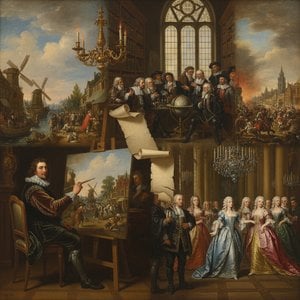
Ambrosius Brueghel: Un visionario del paisaje flamenco
Ambrosius Brueghel (1617-1675) se erige como una figura fundamental en el panorama artístico de Amberes y del Siglo de Oro holandés, reconocido por sus magistrales representaciones de la vida rural. Sus paisajes, infundidos con un detalle meticuloso, están impregnados de una profunda comprensión de la perspectiva atmosférica. A diferencia de muchos de sus contemporáneos, que centraban su atención en el retrato o en temas mitológicos, Brueleghel se dedicó a capturar la esencia de la campiña flamenca, elevando la pintura de género a nuevas cotas de sofisticación artística.- Primeros años y formación: Nacido en Amberes, sus años formativos coincidieron con un periodo de gran efervescencia artística en la ciudad, un legado de su padre, Pieter Bruegel el Viejo, quien estableció una formidable tradición en la pintura de paisajes. Ambrosius se formó bajo la tutela de Jan Brueghel III y Peter Paul Rubens, absorbiendo influencias de ambos maestros que moldearían profundamente su trayectoria estilística. Las composiciones dinámicas de Rubens y su uso magistral del color infundieron en Brueghel un deseo de grandeza y dinamismo expresivo.
- Estilo y técnica: El estilo distintivo de Brueghel se caracteriza por una atención inigualable a la precisión topográfica; investigaba minuciosamente los lugares para crear paisajes que parecen mapas en miniatura. Sus lienzos están poblados de figuras entregadas a las actividades cotidianas —agricultores cuidando sus campos, cazadores persiguiendo presas— presentadas dentro de entornos de ricas texturas. Crucialmente, empleó la perspectiva atmosférica, una técnica perfeccionación por Rubens, para transmitir profundidad y realismo, utilizando sutiles gradaciones de color y variaciones tonales para simular los efectos de la distancia.
Paisajes que dicen mucho: Temas y simbolismo
Los paisajes de Brueghel trascienden la mera representación visual; funcionan como vehículos para transmitir comentarios morales y filosóficos. Motivos recurrentes, tales como cuervos, molinos de viento y esqueletos, están cargados de un significado simbólico que refleja las ansiedades sobre la mortalidad y la precariedad de la existencia humana. Sus escenas suelen retratar los ciclos estacionales —la llegada de la primavera, la maduración de las cosechas— resaltando los ritmos de la naturaleza y recordando al espectador los patrones cíclicos de la vida y la muerte. Estas imágenes no eran simplemente bellas; estaban diseñadas para provocar la contemplación sobre la condición humana.- Obras notables: Entre las pinturas más celebradas de Brueghel se encuentran “Los cazadores en el paraíso”, una representación monumental de una partida de caza en un paisaje idílico poblado por criaturas fantásticas, y “La boda campesina”, que retrata una animada celebración acompañada de instrumentos musicales y figuras danzantes. Sus naturalezas muertas, particularmente aquellas con flores, son igualmente impresionantes por su detalle meticuloso y sus luminosas paletas cromáticas.
- Influencia y legado: La influencia de Brueghel se extendió mucho más allá de su propia vida, inspirando a generaciones posteriores de paisajistas. Estableció un linaje artístico distinto que persistió hasta el siglo XVIII, consolidando su lugar como una de las figuras más importantes del Barroco flamenco. Su uso pionero de la perspectiva atmosférica continúa resonando en los artistas de hoy, demostrando el poder perdurable de la observación y la técnica hábil.
Un reflejo de la estética del Siglo de Oro holandés
La visión artística de Brueghel se alinea perfectamente con las sensibilidades estéticas más amplias del Siglo de Oro holandés, un periodo marcado por la curiosidad intelectual, los ideales humanistas y un ferviente abrazo al naturalismo. Al igual que Rubens y Rembrandt, buscó capturar la grandeza y la complejidad de la experiencia humana, utilizando técnicas innovadoras para transmitir tanto belleza como seriedad moral. Sus paisajes permanecen como testimonio del compromiso de esta era por retratar el mundo con una honestidad inquebrantable y una profunda perspicacia artística.Significado histórico
La contribución de Ambrosius Brueghel a la historia del arte es innegable. No se limitaba a documentar la vida rural; la elevaba a un nivel de contemplación artística rara vez alcanzado antes de su tiempo. Sus pinturas ofrecen vislumbres invaluables de la cosmovisión de la Flandes del siglo XVII, reflejando las ansiedades sobre la mortalidad y celebrando la belleza del mundo natural, temas que continúan conmoviendo al público actual. A través de su observación meticulosa y su ejecución magistral, Brueghel aseguró su legado como un verdadero innovador y una piedra angular de la pintura de paisaje barroca.Preguntas y respuestas
¿En qué movimientos participó Ambrosius Brueghel?
Puedes explorar las obras de Ambrosius Brueghel por movimiento en su página de Todos los movimientos.
¿Puedo explorar las obras de Ambrosius Brueghel por tema?
La página Índice temático organiza las obras de Ambrosius Brueghel por temática.
¿De dónde es Ambrosius Brueghel?
Ambrosius Brueghel nació en Bélgica.