


 Vista previa
 Compartir
 Compartir
 Ver detalles

 Descargar
 Ver artículos similares
 Radiografía
 Presentación de diapositivas
 Estadísticas
Retrato de Sir Thomas More
 Acrílico sobre lienzo
- Arte de pared
- Northern Renaissance
 1527
1527- Renacimiento
 58.0 x 74.0 cm
 Leer más
Reproducción al óleo hecha a mano
Óleo sobre lienzo pintado a mano en el tamaño y marco de su elección, realizado por encargo por nuestros artistas. ( Cambiar a formato impreso Ver versión en imagen digital)




P118B $10

P118H $10

P118W $10

P438Z $10

P508JH $12

P508YH $12

P805H $10

P805Z $10

P919BZ $10

P919G $10

P919XJ $10

P959ZH $10

P968JZ $12

W106C $8

W218G $10

W218JH $8

W218Y $10

W307PJ $10

W316G $10

W316PJ $8

W316Y $10

W398PJ $8

W4111J $10

W500HY $15

W500JH $15

W692G $12

W849H $8

W940BG $15

W953PJ $8




Elija entre nuestros tamaños predefinidos que respetan las proporciones originales de la obra.

Puede ingresar sus propias dimensiones para adaptarse a un marco o espacio específico. Si el tamaño seleccionado no coincide con las proporciones de la imagen original, recortaremos la obra o extenderemos la pintura con elementos adicionales pintados a mano. Se le enviará una maqueta digital para su aprobación antes de comenzar la producción.
Tenga en cuenta que la vista previa en pantalla no refleja el recorte o la extensión reales. Solo la maqueta mostrará con precisión la composición final.
Si bien existen tamaños personalizados, recomendamos seleccionar una dimensión de la lista predefinida para preservar las proporciones originales.
Tras realizar el pedido, el equipo de ArtsDot.com enviará un correo electrónico al cliente para solicitar instrucciones y proporcionarle una vista previa del boceto.
Envío a todo el mundo () en 3-4 semanas en lugar de las 5 semanas estándar. (19 septiembre). Sin comprometer la calidad.

Envío exprés gratuito a todo el mundo

Lienzo de lino de alta calidad

Seguro de envío completo

Garantía de reembolso de impuestos aduaneros

Garantía de fidelidad cromática exacta

Política de devolución de 100 días (solo por defectos)

Garantía de devolución del 100% del dinero

Oferta por volumen
 La opción de vidrio solo está disponible en tamaños inferiores a 110 cm.

Retrato de Sir Thomas More
Técnica de reproducción
Tamaño de la reproducción
-


Precio total
$ 263
Portrait of Sir Thomas More
Hans Holbein the Younger’s Portrait of Sir Thomas More stands as a cornerstone of Northern Renaissance portraiture—a testament to Holbein’s unparalleled mastery in capturing the essence of human character and conveying profound psychological depth.
Painted in 1527 during his formative years in Basel, Switzerland, this masterpiece resides at the Frick Collection in New York City—a venue that allows visitors to experience firsthand the brilliance of this iconic artwork.
The Artist and His Style
Born around 1497 in Augsburg, Germany, Hans Holbein the Younger emerged as a pivotal figure within the burgeoning Northern Renaissance movement. He honed his artistic skills under the tutelage of his father, Hans Holbein the Elder—a respected painter and printmaker—establishing a foundation rooted in meticulous observation and technical precision.
Holbein’s distinctive style blended Late Gothic traditions with emerging humanist ideals prevalent across Italy, France, and the Netherlands. Influenced by these artistic currents, he embraced a method characterized by painstaking detail and subtle shading—techniques that would become synonymous with his oeuvre.
The Subject: Sir Thomas More
Sir Thomas More—a prominent English lawyer, philosopher, and statesman—served as Lord Chancellor from 1529 to 1532 but tragically fell out of favor with King Henry VIII due to his unwavering opposition to the English Reformation. Holbein recognized More’s intellectual integrity and moral fortitude as ideal subjects for portraiture—seeking not merely a likeness but an embodiment of virtue and conviction.
The painting depicts More in three-quarter right half-profile, dressed in a black robe adorned with a gold chain symbolizing loyalty to the crown. He holds a book—likely referencing humanist scholarship—and gazes directly at the viewer with a solemn expression reflecting his seriousness and contemplative nature.
Artistic Significance
Holbein’s Portrait of Sir Thomas More exemplifies the zenith of Northern Renaissance portraiture—demonstrating Holbein’s ability to convey psychological nuance through subtle gestures and masterful rendering.
Executed in oil on panel measuring 58 x 74 cm, the painting showcases Holbein's meticulous attention to texture and color. The rich fabrics of More’s robe—black satin and scarlet velvet—are rendered with astonishing realism, capturing the opulent grandeur of Tudor England.
Context and Legacy
Holbein’s work garnered considerable acclaim during his lifetime, earning him the moniker “Apelles of our time”—a comparison to the celebrated Greek painter Apelles of Cyrene known for his idealized portraits. Despite some losses of artworks after Holbein's death, his reputation as a portraitist endured—inspiring generations of artists and scholars alike.
The painting’s symbolism extends beyond mere representation; the Tudor Rose emblem signifies royal authority, while the Franciscan knot symbolizes More’s spiritual devotion. Its enduring influence testifies to Holbein’s profound understanding of human psychology and artistic innovation.
To explore this masterpiece further and delve into the broader context of Renaissance art history, visit https://ArtsDot.com for detailed information on Hans Holbein the Younger and his remarkable artistic legacy. You can also discover invaluable resources at Hans Holbein the Younger and List of paintings by Hans Holbein the Younger.
Obras relacionadas


Biografía del artista
vida temprana y formación
Hans Holbein el Joven, una figura destacada en la renacimiento norteño, nació en 1497 en Augsburg, Alemania. Aunque a menudo se le confunde con su padre, Hans Holbein el Viejo, un artista y grabador renombrado, la obra del joven Holbein es distinta y notable por sí misma.carrera artística
La carrera artística de Holbein el Joven comenzó bajo la tutela de su padre. Posteriormente viajó a Inglaterra, donde se convirtió en pintor de corte para el rey Enrique VIII. Esta posición le permitió capturar la esencia de la familia real y la aristocracia inglesa emergente. Su obra se caracteriza por:- realismo excepcional: los retratos de Holbein son celebrados por su calidad realista, como se ve en Retrato de una dama desconocida (renacimiento norteño).
- composición innovadora: su uso de la composición es evidente en Sir William Butts (37 x 46 cm, renacimiento norteño, óleo sobre tabla).
- estudio para el retrato familiar de Tomás Moro (38 x 52 cm, renacimiento norteño) muestra su habilidad para capturar la esencia de una familia.
obras notables y legado
La obra de Holbein el Joven se encuentra en varios museos, incluido el Museos Estatales de Berlín (Alemania, donde su Señor desconocido con libros de música y laúd (óleo sobre tabla) está en exhibición. Su influencia en el renacimiento norteño es innegable, y su obra continúa inspirando a los artistas hasta el día de hoy. Holbein el Joven falleció en 1543, pero su legado perdura a través de sus cautivadores retratos y estudios detallados. ver más obras de Hans Holbein el Joven en ArtsDot.
Hans Holbein el Joven
1497 - 1543 , Italia
Datos clave
- Artistas Que Influyeron:
- Hans Holbein el Viejo
- Albrecht Dürer
- Estilo Artístico: Renacimiento Nórdico
- Fecha De Muerte: 1543
- Fecha De Nacimiento: 1497
- Lugar De Nacimiento: Augsburgo, Italia
- Nacionalidad: Alemán
- Nombre Completo: Hans Holbein el Joven
- Obras Notables:
- Retrato de Enrique VIII
- El cuerpo del Cristo muerto
- Los embajadores
- Autorretrato
- Madonna del Burgomaestre Meyer
Artículos relacionados

Sir Joshua Reynolds: Las 25 Obras Maestras del Retrato Inglés | ArtsDot
Descubre las 25 obras maestras de Sir Joshua Reynolds, el pintor inglés que elevó el retrato a la categoría de arte. Explora su técnica clásica, estilo rococó y significado histórico en ArtsDot.com. ¡Encuentra reproducciones de alta calidad para tu hogar!
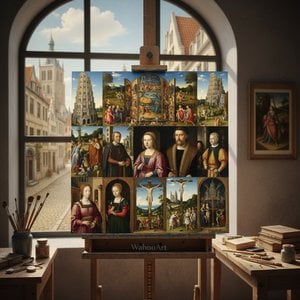
Renacimiento Nórdico: 10 Obras Maestras que Transformaron el Arte |
Descubre 10 obras maestras del Renacimiento Nórdico: Jan van Eyck, Durero y más. Explora la historia, el simbolismo y las técnicas de estos icónicos pintores. Encuentra reproducciones de arte exclusivas en .

Sir Thomas Lawrence: Portraiture, Power & Regency Society's Aesthetics
Explore the captivating world of Sir Thomas Lawrence, Regency England's premier portraitist. Discover his artistic techniques, powerful representations of society, and enduring legacy. Expert insights for discerning art collectors.

Hans Holbein the Younger: A Renaissance Portraitist's Mastery of Realism & Psychological Insight
Explore the life & art of Hans Holbein the Younger, a Renaissance master renowned for his strikingly realistic portraits and psychological insight. Discover iconic works like 'The Ambassadors' and delve into his lasting legacy.

Alfred Munnings: Las 25 Obras Maestras del Pintor de Caballos | ArtsDot
Descubre las 25 obras maestras de Alfred Munnings, el pintor británico de caballos por excelencia. Explora su impresionismo inglés, escenas campestres y técnica única. Encuentra reproducciones de arte de alta calidad en ArtsDot.com.


![Retrato Doble de Jean de Dinteville y Georges de Selve (también conocido como Los Embajadores) [detalle]](/media/artworks/images-thumb/bb/ab/bbab7ce77b7dd15d23d21114a63b51a4.jpg)


