

 Vista previa
 Compartir
 Compartir
 Ver detalles

 Descargar
 Ver similares
 Radiografía
 Presentación de diapositivas
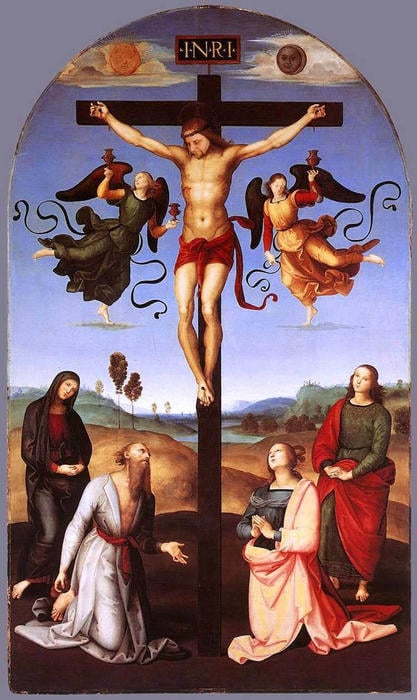
Crucifixión
 Óleo sobre tabla
- Alto Renacimiento
 1502
1502- Renacimiento
 281.0 x 165.0 cm
 Galería Nacional
 Leer más
Adquiera una imagen digital de alta resolución y optimizada, muy superior a la vista previa en línea.
Cada archivo es preparado meticulosamente por nuestros especialistas internos mediante el uso de herramientas avanzadas y un experto retoque manual. Nos aseguramos de que cada imagen posea una claridad excepcional, una precisión cromática impecable y un detalle minucioso.
El archivo final se entrega por correo electrónico en un plazo de 72 horas, optimizado para su uso inmediato en entornos profesionales, editoriales y de impresión. Esta es la misma calidad en la que confían los estudios de diseño, las editoriales y las galerías de primer nivel.
Imagen Digital
Descarga un archivo de alta resolución para exhibición personal, impresión y proyectos creativos. ( Pedir impresión Encargar reproducción pintada a mano)
Incluido en cada compra de imágenes digitales
Entrega digital experta, garantizada.
Al elegir ArtsDot.com, no solo está adquiriendo una imagen; está recibiendo una obra de arte digital mejorada profesionalmente, elaborada con precisión y respaldada por una garantía de satisfacción. Esto es todo lo que incluye su pedido, automáticamente:

Entrega rápida por email
Recibirá su archivo de imagen digital en alta resolución por correo electrónico en un plazo de 72 horas tras realizar su pedido, listo para su uso inmediato.

Archivo digital optimizado por IA
Su obra de arte se optimiza profesionalmente mediante herramientas avanzadas de IA y edición manual, garantizando el máximo detalle, claridad y precisión cromática.

Reenvío gratuito de por vida
¿Has borrado o perdido tu archivo por error? No te preocupes: te lo volveremos a enviar en cualquier momento, sin coste adicional.

Sin gastos de importación, siempre
Disfrute de su obra de arte al instante sin aduanas, aranceles ni gastos de envío; las descargas digitales siempre están libres de impuestos.

Garantía de precisión de color
Garantizamos que su imagen digital refleje los colores originales con la mayor fidelidad posible, mediante el uso de herramientas profesionales y gestión del color.

Garantía de satisfacción de 60 días
Si no está satisfecho con su imagen digital, la revisaremos o le reembolsaremos el 100% en un plazo de 60 días, sin preguntas.

100% Garantía de devolución de dinero
¿No está satisfecho? Obtenga un reembolso completo dentro de los 60 días posteriores a la recepción de su archivo digital, sin necesidad de explicaciones.

Descuentos por volumen
Compra 3 imágenes, ahorra 10% - Compra 5, ahorra 15% - Compra 10+, ahorra 20%. Ideal para proyectos creativos, galerías y agencias.
Descripción del coleccionable
A Renaissance Masterpiece of Faith and Suffering
Raffaello Sanzio da Urbino, known to the world as Raphael, emerged from a remarkably fertile cultural landscape. Born in 1483 within the walls of Urbino, a small but intellectually vibrant city-state in central Italy, his earliest years were steeped in an atmosphere that prized both artistic skill and humanist learning. His father, Giovanni Santi, was not merely a painter employed by Duke Federico da Montefeltro—he was a man deeply engaged with the currents of Renaissance thought, a poet who chronicled the Duke’s life and actively sought out innovative artistic ideas from across Italy and beyond. This immersion in a courtly environment, one that valued refinement and intellectual discourse, profoundly shaped the young Raphael's sensibilities.
The loss of his father at age eleven thrust responsibility upon him, but also provided an opportunity to hone his skills within the family workshop, absorbin ## Compositional Harmony and Artistic Style
The composition is remarkably balanced, a hallmark of Raphael’s style. Christ occupies the central focus, yet the surrounding figures – angels, mourners, and witnesses – are arranged in a harmonious manner that draws the eye throughout the scene. Raphael’s mastery of perspective creates depth, while his use of *sfumato*—a subtle blending of colors—softens forms and lends an ethereal quality to the work. The painting exemplifies High Renaissance characteristics: realism achieved through anatomical accuracy, idealized beauty in the figures, and a focus on emotional expression. It's a clear departure from earlier, more stylized depictions of this biblical scene.
## Symbolism Woven into the NarrativeBeyond its immediate depiction of the crucifixion, *The Crucifixion* is rich with symbolic meaning. Three birds are prominently featured, often interpreted as representing the Holy Spirit and the souls of the righteous ascending to heaven. Perhaps most intriguing is the inclusion of a clock in the upper left corner. This detail has sparked debate among art historians; it could symbolize the passage of time leading up to Christ’s death, or represent the precise moment of sacrifice. The *INRI* inscription—Jesus Nazarene, King of the Jews—is clearly visible on the cross, reinforcing the narrative's religious core.
## Historical Context and Renaissance IdealsCreated during a period of immense artistic flourishing in Italy, Raphael’s *Cruifixion* reflects the humanist spirit of the Renaissance. Artists were increasingly interested in portraying human emotion and experience alongside traditional religious themes. Raphael, along with contemporaries like Leonardo da Vinci and Michelangelo, pushed the boundaries of artistic technique and subject matter. This painting demonstrates a shift towards more naturalistic representations and a greater emphasis on individual expression within a sacred context. While influenced by artists such as Taddeo Gaddi and Hieronymus Bosch in terms of broader Renaissance ideals, Raphael forged his own distinct style characterized by grace and clarity.
## Emotional Resonance and Enduring Appeal*The Crucifixion* is not merely a historical or religious artwork; it’s an emotionally resonant experience. Raphael captures the profound sorrow and sacrifice inherent in the scene, inviting viewers to connect with the suffering of Christ and the grief of those who witnessed his death. The painting's enduring appeal lies in its ability to evoke empathy and inspire contemplation on universal themes of faith, mortality, and hope. It remains a powerful testament to Raphael’s artistic genius and his profound understanding of the human condition.
- Explore high-quality reproductions of *The Crucifixion* and other masterpieces by Raphael at ArtsDot.
- Discover related works, such as Madonna of Loreto and The Canigiani Madonna, also available through ArtsDot.
- Learn more about Raphael’s life and artistic legacy on Wikipedia.
The Urbino Renaissance: Raphael’s Early Life and Formation
Raffaello Sanzio da Urbino, known to the world as Raphael, emerged from a remarkably fertile cultural landscape. Born in 1483 within the walls of Urbino, a small but intellectually vibrant city-state in central Italy, his earliest years were steeped in an atmosphere that prized both artistic skill and humanist learning. His father, Giovanni Santi, was not merely a painter employed by Duke Federico da Montefeltro—he was a man deeply engaged with the currents of Renaissance thought, a poet who chronicled the Duke’s life and actively sought out innovative artistic ideas from across Italy and beyond. This immersion in a courtly environment, one that valued refinement and intellectual discourse, profoundly shaped the young Raphael's sensibilities.
Obras relacionadas


Biografía del artista
**vida temprana y formación**
Rafael (rafaello sanzio da urbino), un renombrado pintor y arquitecto italiano, nació entre el 28 de marzo y el 6 de abril de 1483, en la pequeña pero culturalmente significativa ciudad de Urbino. Su padre, Giovanni Santi, era pintor de corte para el duque, proporcionando a Rafael una exposición temprana al mundo artístico. Después de fallecer su padre a los once años, Rafael probablemente administró el taller familiar, consolidando aún más su base artística.**carrera artística e influencias**
El viaje artístico de Rafael puede categorizarse en tres fases distintas, cada una marcada por un estilo único:- primeros años en Umbría: caracterizado por la influencia de su padre y el ambiente cultural de Urbino.
- período florentino (1504-1508): absorbiendo las tradiciones artísticas de Florencia, que influyeron significativamente en su estilo.
- período romano (1508-1520): trabajando para dos papas y sus asociados, produciendo algunas de sus obras más celebradas, incluyendo la escuela de Atenas en la stanza della segnatura del Vaticano.
**obras notables y legado**
Algunas de las obras notables de Rafael incluyen:- el juicio de Salomón (ver en ArtsDot)
- la madona de Esterházy (ver en ArtsDot)
- Stanze Vaticane - vista de la stanza della segnatura (ver en ArtsDot)
- San Sebastián (ver en ArtsDot)
- La dama velada (ver en ArtsDot)
**influencia y legado**
La influencia de Rafael en el arte es profunda, con su obra siendo un pilar del Renacimiento italiano. Su estilo sereno y armonioso ha sido un modelo para la pintura neoclásica, como señaló el historiador de arte Johann Joachim Winckelmann. A pesar de la influencia posterior del estilo de Miguel Ángel, Rafael sigue siendo uno de los artistas más reverenciados en la historia. ver el perfil de Rafael en ArtsDot
Rafael
1483 - 1520 , Italia
Datos clave
- Artistas Influyentes:
- Giovanni Santi
- Pietro Perugino
- Estilo Artístico: Alto Renacimiento
- Fecha De Muerte: 06/04/1520
- Fecha De Nacimiento: 28/03/1483
- Influencia En Artistas: Neoclasicismo
- Lugar De Nacimiento: Urbino, Italia
- Nacionalidad: Italiano
- Nombre Completo: Rafael (Raffaello Sanzio)
- Obras Notables:
- El Juicio de Salomón
- Madonna del Cardellino
- La Escuela de Atenas
- San Sebastián
- La Dama Velada

