Vista previa
 Compartir
 Compartir
 Ver detalles
 Guía
Guía

 Descargar
 Ver artículos similares
 Radiografía
 Presentación de diapositivas
 Estadísticas
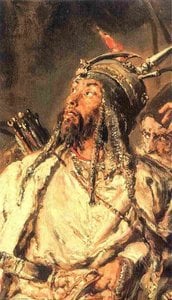
Stańczyk
 Oil On Canvas
- WallArt
- Romanticism
 1862
1862- 19th Century
 88.0 x 120.0 cm
 Muzeum Narodowe
 Leer más
Reproducción al óleo hecha a mano
Óleo sobre lienzo pintado a mano en el tamaño y marco de su elección, realizado por encargo por nuestros artistas. ( Cambiar a formato impreso Ver versión en imagen digital)




P118B €10

P118H €10

P118W €10

P438Z €10

P508JH €12

P508YH €12

P805H €10

P805Z €10

P919BZ €10

P919G €10

P919XJ €10

P959ZH €10

P968JZ €12

W106C €8

W218G €10

W218JH €8

W218Y €10

W307PJ €10

W316G €10

W316PJ €8

W316Y €10

W398PJ €8

W4111J €10

W500HY €15

W500JH €15

W692G €12

W849H €8

W940BG €15

W953PJ €8




Elija entre nuestros tamaños predefinidos que respetan las proporciones originales de la obra.

Puede ingresar sus propias dimensiones para adaptarse a un marco o espacio específico. Si el tamaño seleccionado no coincide con las proporciones de la imagen original, recortaremos la obra o extenderemos la pintura con elementos adicionales pintados a mano. Se le enviará una maqueta digital para su aprobación antes de comenzar la producción.
Tenga en cuenta que la vista previa en pantalla no refleja el recorte o la extensión reales. Solo la maqueta mostrará con precisión la composición final.
Si bien existen tamaños personalizados, recomendamos seleccionar una dimensión de la lista predefinida para preservar las proporciones originales.
Tras realizar el pedido, el equipo de ArtsDot.com enviará un correo electrónico al cliente para solicitar instrucciones y proporcionarle una vista previa del boceto.
Envío a todo el mundo () en 3-4 semanas en lugar de las 5 semanas estándar. (11 octubre). Sin comprometer la calidad.

Envío exprés gratuito a todo el mundo

Lienzo de lino de alta calidad

Seguro de envío completo

Garantía de reembolso de impuestos aduaneros

Garantía de fidelidad cromática exacta

Política de devolución de 100 días (solo por defectos)

Garantía de devolución del 100% del dinero

Oferta por volumen
 La opción de vidrio solo está disponible en tamaños inferiores a 110 cm.

Stańczyk
Técnica de reproducción
Tamaño de la reproducción
-


Precio total
€ 226
A Portrait of Solitude and National Soul
In the quiet, heavy atmosphere of Jan Matejko’s 1862 masterpiece, Stańczyk, one does not merely encounter a portrait, but a profound psychological landscape. The painting presents us with the legendary court jester, not in the midst of a comedic performance or a moment of levity, but captured in a state of deep, melancholic introspection. Seated alone amidst the opulence of a grand interior, his hands are tightly clasped, and his gaze wanders toward an unseen horizon, heavy with the weight of foreknowledge. This is not the face of a fool, but that of a visionary—a man who perceives the gathering shadows of political decline while those around him remain lost in the festivities of the moment.
The composition is a masterclass in Romantic Grandeur, where every element serves to heighten the emotional tension. Matejko utilizes a striking color palette dominated by the vibrant, commanding crimson of Stańczyk’s robe. This deep red acts as the visual heartbeat of the canvas, symbolizing both the resilience of the Polish spirit and the simmering passion of a man burdened by duty. The brilliance of this hue is set against a backdrop of somber, shadowy drapery and muted tones, creating a chiaroscuro effect that pulls the viewer’s eye directly into the sitter's contemplative expression. Through his expert use of impasto, Matejko breathes life into the fabric; the thick, textured layers of paint give the heavy velvet of the cloak a palpable weight, making the physical presence of the figure feel almost overwhelming.
Historical Echoes and Symbolic Depth
To understand Stańczyk is to understand the heartbeat of 19th-century Poland. Painted during a period of profound national mourning following the territorial losses of the Austro-Prussian War, the work serves as a silent, powerful protest. The setting—a scholarly and courtly environment suggested by the presence of manuscripts and fine furniture—contrasts sharply with the internal turmoil of the protagonist. While figures in the distant background appear engaged in the trivialities of social life, Stańczyk remains isolated by his wisdom. He embodies the "intellectual's burden," representing a nation that possesses the dignity and history to endure, yet faces an uncertain, fragmented future.
For the discerning collector or interior designer, this painting offers more than mere decoration; it provides a focal point of intellectual and emotional gravity. The meticulous attention to detail—from the intricate patterns on the floor to the subtle light reflecting off the scholarly documents—makes it an ideal centerpiece for spaces that demand character and narrative depth. Whether placed in a private library or a sophisticated contemporary salon, a high-quality reproduction of this work brings with it an aura of historical importance and a timeless conversation about resilience, wisdom, and the enduring strength of the human spirit.
Preguntas y respuestas
¿Quién creó "Stańczyk"?
"Stańczyk" se atribuye a Jan Matejko.
¿Para qué estancia se recomienda "Stańczyk" de Jan Matejko, teniendo en cuenta sus colores?
Teniendo en cuenta sus colores Earthy, se sugiere "Stańczyk" para un/a Living Room.
¿Quién es el autor y en qué año se creó "Stańczyk"?
Jan Matejko realizó "Stańczyk" en 1862.
¿Qué edad tenía Jan Matejko cuando se creó "Stańczyk"?
Cuando se creó "Stańczyk" en 1862, Jan Matejko —nacido/a en 1838— tenía 24 años.
¿Muestra "Stańczyk" contrastes marcados entre luces y sombras?
"Stańczyk" de Jan Matejko muestra un contraste Serene entre sus zonas de luz y sombra.
¿Qué estado de ánimo y emoción se entrelazan en "Stańczyk"?
El estado de ánimo capturado en "Stańczyk" de Jan Matejko es Romantic, y su tono emocional es Melancholic.
¿En qué año se creó "Stańczyk"?
"Stańczyk" data de 1862. La fecha sitúa la obra dentro de la trayectoria de Jan Matejko y de su época.
Obras relacionadas


Biografía del artista
Primeros años y educación
Jan alojzy matejko, un renombrado pintor polaco, nació el 24 de junio de 1838 en krakúv, polonia. Su padre, franciszek ksawery matejko, era un tutor y maestro de música nacido en chequia. La vida temprana de jan se vio marcada por la revolución de krakúv de 1846 y el sitio de 1848 de krakúv por los austriacos, eventos que más tarde influirían en sus temas artísticos. Matejko asistió a la escuela secundaria st. ann pero abandonó en 1851 debido a su mal rendimiento académico. Sin embargo, demostró un talento excepcional para el arte desde una edad temprana. Estudió en la escuela de bellas artes de krakúv de 1852 a 1858, especializándose en pintura histórica bajo la tutela de wojciech korneli stattler y włodysław łuszczkiewicz.Carrera artística
El primer trabajo importante de matejko, los zares shuyski ante zygmunt iii, se completó en 1853. Comenzó a exhibir sus pinturas históricas en la sociedad de amigos de las bellas artes de krakúv en 1855. Obras notables incluyen:- Rejtan (1866): una gran pintura al óleo sobre lienzo que representa un momento crucial en la historia polaca.
- Unión de lublin (1869): una pieza significativa que muestra la habilidad de matejko para capturar eventos históricos.
- Batalla de grunwald (1878): una obra maestra que destaca su capacidad para transmitir la intensidad de las escenas de batalla.
Influencias y desarrollo artístico
El estilo de matejko estuvo profundamente influenciado por el romanticismo europeo, particularmente por artistas como eugène delacroix. Sin embargo, también se inspiró en el arte polaco anterior, especialmente en los trabajos de jan matthew gutenmacher. A medida que su carrera avanzaba, matejko desarrolló un enfoque distintivo caracterizado por composiciones grandiosas, una atención meticulosa al detalle histórico y un uso dramático del color y la luz. Sus pinturas a menudo representan momentos clave de la historia polaca, enfatizando el patriotismo y el orgullo nacional.Logros importantes y legado
Matejko pasó la mayor parte de su vida en krakúv, convirtiéndose finalmente en director de la academia de bellas artes jan matejko, anteriormente conocida como la academia de bellas artes de krakúv. Sus alumnos incluyeron a pintores destacados como maurycy gottlieb, jacek malczewski, józef mehoffer y stanisław wyspiański. Obras notables disponibles en ArtsDot:- Jan matejko: varna (romanticismo)
- Jan matejko: bodegón (romanticismo)
- Jan matejko: la unión de lublin (298 x 512 cm, romanticismo, óleo sobre lienzo)
Referencias:
descubriendo las obras maestras del muzeum narodowe krakúv, polonia (wikipedia.org)
Jan Matejko
1838 - 1893 , Polonia
Datos clave
- Artistas Influenciados:
- Maurycy Gottlieb
- Jacek Malczewski
- Artistas Que Influyeron:
- Wojciech Korneli Stattler
- Władysław Łuszczkiewicz
- Fecha De Fallecimiento: 1 de noviembre de 1893
- Fecha De Nacimiento: 24 de junio de 1838
- Lugar De Nacimiento: Kraków, Polonia
- Movimiento Artístico: Romanticismo
- Nacionalidad: Polaco
- Nombre Completo: Jan Alojzy Matejko
- Obras Notables:
- Rejtan (1866)
- Unión de Lublin (1869)
- Batalla de Grunwald (1878)
Artículos relacionados

Jan Matejko: Historical Narrative & National Identity in 19th-Century Polish Painting
Explore the powerful historical paintings of Jan Matejko, Poland's national artist. Discover his iconic works & learn how he shaped Polish identity in the 19th century. High-quality reproductions available.

El Óleo sobre Lienzo: Historia, Técnica y la Persistencia de un Medio Artístico Atemporal
Descubre la historia y técnica del óleo sobre lienzo. Explora reproducciones fieles hechas a mano, personalización artística y consejos de expertos con ArtsDot. ¡Colecciona arte con confianza!

Crimson Threads of Narrative: Exploring Symbolism & Representation in Artworks Featuring the Red Dress
Explore the rich symbolism of the red dress in art history! From ancient power displays to iconic portraits like Cézanne’s 'Madame Cezanne', discover the cultural and artistic significance behind this captivating color. Expert analysis & insights.

The Enduring Power of Painting: A Historical & Contemporary Exploration of Form and Emotion
Explore the rich history & enduring techniques of oil painting with ArtsDot. Discover masterpieces, learn about art collecting, and find authentic handmade reproductions crafted by skilled artists.

The Enduring Legacy of Oil on Canvas: Technique, History & Aesthetic Impact
Explore the rich history & techniques of oil painting – from Renaissance masters to Impressionism. Discover pigments, layering methods, and why this timeless medium endures. Expert insights for artists & art enthusiasts.