


 Vista previa
 Compartir
 Compartir
 Ver detalles
 Guía
Guía

 Descargar
 Ver artículos similares
 Radiografía
 Presentación de diapositivas
 Estadísticas
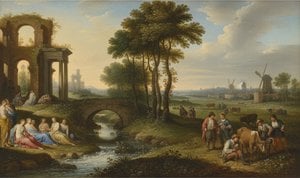
Paisaje italiano con guerreros romanos
 Óleo sobre lienzo
- Arte de pared
- Paisaje Barroco
 1650
1650 154.0 x 174.0 cm
 Museo del Hermitage
 Leer más
Reproducción al óleo hecha a mano
Óleo sobre lienzo pintado a mano en el tamaño y marco de su elección, realizado por encargo por nuestros artistas. ( Cambiar a formato impreso Ver versión en imagen digital)




P118B €10

P118H €10

P118W €10

P438Z €10

P508JH €12

P508YH €12

P805H €10

P805Z €10

P919BZ €10

P919G €10

P919XJ €10

P959ZH €10

P968JZ €12

W106C €8

W218G €10

W218JH €8

W218Y €10

W307PJ €10

W316G €10

W316PJ €8

W316Y €10

W398PJ €8

W4111J €10

W500HY €15

W500JH €15

W692G €12

W849H €8

W940BG €15

W953PJ €8




Elija entre nuestros tamaños predefinidos que respetan las proporciones originales de la obra.

Escriba el ancho y el alto que necesite para adaptarse a su marco o a su pared. Al ser una obra pintada a mano, para un tamaño con una forma distinta, el artista puede pintar un poco más alrededor de la imagen o recortar un poco; usted elige. Le enviaremos una maqueta digital para su aprobación antes de comenzar la pintura. La imagen que se muestra en esta página no refleja el resultado real; solo la maqueta lo hace.
Tras realizar el pedido, el equipo de ArtsDot.com enviará un correo electrónico al cliente para solicitar instrucciones y proporcionarle una vista previa del boceto.
Envío a todo el mundo () en 3-4 semanas en lugar de las 5 semanas estándar. (24 octubre). Sin comprometer la calidad.

Envío exprés gratuito a todo el mundo

Lienzo de lino de alta calidad

Seguro de envío completo

Garantía de reembolso de impuestos aduaneros

Garantía de fidelidad cromática exacta

Política de devolución de 100 días (solo por defectos)

Garantía de devolución del 100% del dinero

Oferta por volumen
 La opción de vidrio solo está disponible en tamaños inferiores a 110 cm.

Paisaje italiano con guerreros romanos
Técnica de reproducción
Tamaño de la reproducción
-


Precio total
€ 231
La visión de Jan Both: Una obra maestra mediterránea
“Paisaje italiano con guerreros romanos” de Jan Dirksz Both, pintado alrededor de 1650, no es simplemente la representación de una pintoresca vista italiana; es una experiencia inmersiva. Nacido en Utrecht y formado bajo las tradiciones de la pintura flamenca, Both emprendió un viaje transformador hacia Roma, un momento crucial que alteró fundamentalmente su trayectoria artística. Esta obra se erige como testimonio de ese cambio: una síntesis vibrante del realismo del norte y la luz del sur, capturando no solo una escena, sino un estado de ánimo, una atmósfera impregnada de la grandeza y el drama del Renacarrimiento italiano.
La pintura atrae la mirada de inmediato con su composición expansiva. Un río serpenteante domina el primer plano, reflejando el cielo azur que lo cubre, mientras colinas onduladas caen hacia la distancia, culminando en montañas brumosas que parecen fundirse con el horizonte. Sin embargo, no se trata de una simple representación topográfica; Both emplea magistralmente la perspectiva atmosférica —una técnica tomada de Claude Lorrain y otros maestros del paisaje italiano— para crear una ilusión de profundidad y vastedad. Los colores se vuelven más suaves, fríos y menos saturados a medida que retroceden, guiando el ojo del espectador hacia el corazón mismo de la escena.
El lenguaje de la luz: Una revelación barroca
El estilo distintivo de Both se caracteriza por una cualidad luminosa que eleva el paisaje más allá de la mera representación. Estuvo profundamente influenciado por la tradición barroca, particularmente por su énfasis en la iluminación dramática y los efectos teatrales. Se puede observar cómo la luz del sol, que parece originarse de una fuente invisible, baña la escena con un resplandor dorado, resaltando elementos específicos: el agua centelleante, el follaje texturizado y las posturas seguras de los guerreros romanos. No se trata de una iluminación plana y uniforme; es un juego dinámico de luces y sombras que imbuye a la pintura con una sensación de vitalidad y movimiento.
El uso del color es igualmente deliberado. Ocres ricos, verdes profundos y azules vibrantes se yuxtaponen para crear interés visual y profundidad. Los tonos terrosos del paisaje contrastan marcadamente con la armadura reluciente de los soldados, enfatizando aún más su poder y autoridad. Las sutiles variaciones en el matiz —un toque de púrpura en las montañas distantes, una pizca de rosa en las nubes— contribuyen al sentido general de realismo y detalle atmosférico.
Simbolismo y poder: La presencia romana
Más allá de sus cualidades puramente estéticas, “Paisaje italiano con guerreros romanos” está cargado de significado simbólico. La presencia de los soldados romanos, ataviados con su imponente armadura y blandiendo lanzas, evoca temas de poder, conquista y fuerza militar. No son simples figuras dentro de un paisaje; son participantes activos que moldean la escena y afirman su dominio sobre ella. Los bandidos que conducen a los prisioneros refuerzan aún más esta narrativa, sugando un mundo de conflicto e intriga política.
Sin embargo, la pintura no se centra únicamente en la guerra. La inclusión de un río, árboles y una sensación de ocio sugiere una visión más compleja, una que reconoce tanto la belleza como la brutalidad del paisaje italiano. Las figuras participan en actividades que sugieren una coexistencia armoniosa entre la humanidad y la naturaleza, aunque dentro de un marco de poder y control.
Un legado de luz: La influencia perdurable de Both
“Paisaje italiano con guerreros romanos” de Jan Dirksz Both representa un momento crucial en el desarrollo de la pintura de paisaje holandesa. Muestra su maestría técnica, su profundo conocimiento del color y la luz, y su capacidad para sintetizar diversas influencias artísticas. Su obra continúa cautivando a los espectadores hoy en día, ofreciendo un vistazo a un mundo de belleza, drama y simbolismo atemporal. Las reproducciones de esta impresionante obra capturan la esencia de la visión de Both, permitiéndonos experimentar de primera mano su cualidad luminosa y su poder evocador.
Preguntas y respuestas
¿En qué estancia se sugiere exhibir "Paisaje italiano con guerreros romanos", teniendo en cuenta su paleta de colores?
Con su paleta de Tonos tierra, "Paisaje italiano con guerreros romanos" de Jan Both es ideal para una Salón principal. Sus colores son parte de la razón de esta sugerencia.
¿Qué comparte "Paisaje italiano con guerreros romanos" con el resto de la obra de Jan Both?
Dentro de la obra de Jan Both, "Paisaje italiano con guerreros romanos" se inscribe en el estilo Paisaje Barroco, junto a los temas de luz mediterránea, ideales romanos, paisaje clásico, figuras heroicas, alegoría religiosa, temas morales, drama barroco, profundidad emocional.
¿Qué tipo de colores utiliza "Paisaje italiano con guerreros romanos"?
Los colores de "Paisaje italiano con guerreros romanos" conforman una paleta Tonos tierra. Esta clasificación describe las familias de colores dominantes.
Obras relacionadas


Biografía del artista
Jan Both (1610-1652): Maestro de la Luz Mediterránea
Jan Dirksz Both fue un pintor, dibujante y aguafuerte neerlandés que emergió como una de las figuras más prominentes del floreciente movimiento del paisaje "italianizante" durante la Edad de Oro holandesa. Nacido hacia 1615/1618 en Utrecht, era el hermano menor de Andries Both; su padre, Dirck Both, un pintor de vidrio o vidriero, les inculcó desde temprana edad un profundo aprecio por la maestría artesanal. Aunque los detalles biográficos son algo escasos, las investigaciones académicas sugieren que la formación de Jan incluyó la instrucción de maestros como Abraham Bloemaert y Gerrit van Honthorst, situándolo entre los artistas más influyentes de su época.- Primeros años y formación: Los años formativos de Both transcurrieron en Utrecht, donde perfeccionando sus habilidades junto a su hermano Andries, absorbió técnicas provenientes del oficio de vidriería de su padre, un arte profundamente arraigado en las tradiciones flamencas.
- Influencia romana: Alrededor de 1638, Jan y Andries emprendieron un viaje transformador hacia Roma a través de Francia, sumergiéndose en el fervor artístico de la corte papal y encontrándose con luminarias como Bloemaert y Gerrit van Honthorst. Esta exposición moldeó profundamente sus sensibilidades estilísticas.
El estilo romanista y la colaboración con Lorrain
Roma se convirtió en el crisol para el desarrollo artístico de Both. Mientras que Andries se centró en escenas de género al estilo de Pieter van Laer, Jan se dedicó primordialmente a la pintura de paisajes, un estilo fuertemente inspirado por Claude Lorrain, capturando la belleza etérea de la región mediterránea con una maestría inigualable de la luz y el color. Cabe destacar su estrecha colaboración con Herman van Swanevelt en un proyecto monumental para el Palacio del Buen Retiro en Madrid, demostrando su ambición y destreza artística dentro de los más altos niveles del mecenazgo europeo. Esta alianza consolidó la reputación de Both como un innovador líder en el género del paisaje.Obras notables y características artísticas
La obra de Both se caracteriza por paisajes expansivos e imaginativos, bañados por una luminosa luz dorada, sello distintivo del estilo de Lorrain e indicativo de las corrientes artísticas más amplias que circulaban por toda Europa. Su obra maestra, “Paisaje con bandidos conduciendo prisioneros” (Museum of Fine Arts, Boston), ejemplifica este brillo estético. El camino diagonal atrae la mirada hacia el interior de la escena, yuxtaponiendo figuras realistas contra un trasfondo de vistas idílicas pobladas por una vegetación meticulosamente representada. Los motivos recurrentes incluyen figuras religiosas o mitológicas —como se observa en “El juicio de Paris” (Londres, National Gallery)— a menudo ejecutadas por colegas de Utrecht como Cornelis van Poelenburch, lo que subraya el compromiso de Both con los ideales humanistas y las convenciones artísticas.Legado e influencia
El hermano de Jan Both, Andries, sucumbió trágicamente a una enfermedad en Venecia durante su viaje de regreso desde Roma. A pesar de la brevedad de su vida, Andries se estableció como un artista respetado, especializado en escenas campesinas, un género que reflejaba las realidades sociales de la época. El legado artístico de Jan Both se extiende más allá de sus pinturas individuales; ejerció como maestro de talentosos discípulos como Barend Bispinck y Willem de Heusch, asegurando que sus innovaciones estilísticas continuaran inspirando a generaciones de artistas. Su obra sigue siendo celebrada por su atmósfera evocadora, su técnica magistral y su contribución al desarrollo de la pintura de paisaje holandesa, un testimonio de la influencia perdurable de Both en la historia del arte europeo.Colecciones
- Fitzwilliam Museum en la Universidad de Cambridge
- Hermitage, San Petersburgo
- Kunsthistorisches Museum, Viena
- Louvre, París
- Mauritshuis Royal Picture Gallery

Jan Both
1610 - 1652 , Países Bajos
Datos clave
- Artistic Movement Or Style: Pintura de paisaje italianizante
- Artists Or Movements Influenced By This Artist: ['Claude Lorrain']
- Artists Who Influenced This Artist:
- Abraham Bloemaert
- Gerrit van Honthorst
- Date Of Birth: Utrecht, Países Bajos (1610)
- Date Of Death: 9 de agosto de 1652
- Full Name: Jan Dirksz Both
- Nationality: Neerlandés
- Notable Artworks:
- Santa Ana con la Virgen y el Niño
- Paisaje con bandidos llevando prisioneros
- El juicio de Paris
- Place Of Birth: Utrecht
Artículos relacionados
Cornelis van Poelenburch: Bridging Mannerism & the Dutch Baroque Landscape
Discover Cornelis van Poelenburch, a pivotal Dutch Baroque landscape painter bridging Mannerism & Italianate styles. Explore his life, key works, and lasting influence on 17th-century art with ArtsDot.

Paisajes Románticos: 10 Obras Maestras que Definieron un Movimiento Artístico
Descubre los 10 paisajes románticos más influyentes de artistas como Caspar David Friedrich y Turner. Explora la belleza, el simbolismo y las técnicas del movimiento romántico. Reproducciones de arte exclusivas en ArtsDot.com.

Evocations of Place: A Historical Journey Through Landscape Art
Explore the rich history of landscape art with ArtsDot. Discover renowned artists, movements like Impressionism & Romanticism, and expert guidance for collecting timeless pieces. Find your perfect serene escape today!

Jan Brueghel the Elder: A Master of Flemish Landscape & Allegory – Exploring Innovation & Influence
Explore the captivating world of Jan Brueghel the Elder, a Flemish Baroque master renowned for his stunning landscapes & allegorical paintings. Discover his collaborations with Rubens and lasting artistic legacy.

Claude Lorrain: Master of Light & Landscape in the Golden Age
Explore the luminous landscapes of Claude Lorrain, a Baroque master renowned for his masterful use of light & atmosphere. Discover his life, techniques, key works & enduring influence on art history.

