


 Vista previa
 Compartir
 Compartir
 Ver detalles
 Guía
Guía

 Descargar
 Ver artículos similares
 Radiografía
 Presentación de diapositivas
 Estadísticas
Spring
 Oil On Canvas
- WallArt
- Symbolism
 1901
1901- 19th Century
 102.0 x 129.0 cm
 Leer más
Giclée / Impresión de arte
Impresiones giclée o en lienzo de calidad de museo con producción rápida y opciones de acabado flexibles. ( Encargar reproducción pintada a mano Ver versión en imagen digital)




P118B €10

P118H €10

P118W €10

P438Z €10

P508JH €12

P508YH €12

P805H €10

P805Z €10

P919BZ €10

P919G €10

P919XJ €10

P959ZH €10

P968JZ €12

W106C €8

W218G €10

W218JH €8

W218Y €10

W307PJ €10

W316G €10

W316PJ €8

W316Y €10

W398PJ €8

W4111J €10

W500HY €15

W500JH €15

W692G €12

W849H €8

W940BG €15

W953PJ €8




Elija entre nuestros tamaños predefinidos que respetan las proporciones originales de la obra.

Introduzca el ancho y el alto que necesite para adaptarse a su marco o pared. Una impresión solo puede recortarse, nunca hacerse más grande que la imagen original, por lo que un tamaño con una forma distinta perderá parte de la obra. Le enviaremos una maqueta digital para su aprobación antes de realizar cualquier impresión. La imagen que se muestra en esta página no refleja el recorte real; solo la maqueta lo hace.
Envío a todo el mundo () en 2 semanas en lugar de las 4/5 semanas estándar. (20 octubre)

Envío exprés gratuito a todo el mundo

Lienzo de lino de alta calidad

Seguro de envío completo

Garantía de reembolso de impuestos aduaneros

Garantía de fidelidad cromática exacta

Política de devolución de 100 días (solo por defectos)

Garantía de devolución del 100% del dinero

Oferta por volumen
 La opción de vidrio solo está disponible en tamaños inferiores a 110 cm.

Spring
Giclée / Impresión de arte
Tamaño de la reproducción
-


Precio total
€ 54
A Vision of Ephemeral Beauty: Exploring Ferdinand Hodler's "Spring"
To gaze upon Ferdinand Hodler’s Spring is to step directly into a moment suspended between dreams and reality. This painting, executed in 1901, is not merely a depiction of nature reviving; it is an eloquent meditation on cyclical life, renewal, and the delicate interplay between humanity and the burgeoning world. The scene unfolds in a sun-drenched field, carpeted with vibrant yellow blossoms that seem to hum with captured sunlight. At its heart are two figures—one seated in quiet contemplation upon the earth, the other standing watchfulness behind them. Their near-nudity strips away artifice, presenting the human form in a state of elemental grace, making the viewer feel an immediate, intimate connection to their vulnerability and repose.
Symbolism and the Cycle of Life
Hodler, deeply influenced by Symbolist currents, imbued his work with profound meaning. The very title, Spring, speaks volumes about rebirth. In art history, spring is rarely just a season; it represents potentiality, the overcoming of winter’s dormancy, and the promise of life renewed. The flowers are not simply decorative accents; they are emblems of fleeting joy and natural abundance. Furthermore, the pairing of the two figures suggests themes of companionship, transition, or perhaps even the soul's journey through time. Hodler often explored mortality in his work, making this depiction of vibrant, almost breathless vitality feel both utterly alive and profoundly transient—a beautiful reminder that all perfect moments must eventually yield to change.
Technique and Luminous Atmosphere
The technical mastery evident in this piece is breathtaking. While the subject matter feels spontaneous and pastoral, the execution speaks to a highly controlled hand. Hodler utilized color with an almost luminous quality; the yellows of the flowers pop against the deeper tones of the earth and the expansive sky, creating a palpable sense of depth. The handling of light seems integral to the composition itself, suggesting that the illumination is not just from the sun, but perhaps from the very spirit of renewal captured on canvas. For those considering a reproduction, one must appreciate how this technique translates—the goal being to capture that ethereal glow and the soft blending of tones that give the scene its dreamlike quality.
An Emotional Resonance for Modern Spaces
For the collector or designer seeking an anchor piece imbued with narrative depth, Spring offers unparalleled emotional resonance. It possesses a serene power—a quiet majesty that can transform any room from mundane to muse-filled. It speaks to the human desire for beauty, connection, and the enduring promise of hope after hardship. Imagine this painting gracing a gallery wall or serving as the focal point in a sunlit drawing-room; it invites pause, contemplation, and a deep breath. It is an artwork that does not shout its message but whispers it gently across centuries, inviting the viewer to reconnect with nature's most enduring magic.
Preguntas y respuestas
¿Cuál es el tono predominante de "Spring" de Ferdinand Hodler?
El tono dominante de "Spring" de Ferdinand Hodler es Ochre to Sepia. El tono es la base cromática de la paleta.
¿De qué tamaño es "Spring" de Ferdinand Hodler en la realidad?
Las dimensiones registradas de "Spring" de Ferdinand Hodler son 102 x 129 cm. Se pueden solicitar reproducciones en otros tamaños manteniendo las mismas proporciones.
¿Existe una guía para "Spring" de Ferdinand Hodler?
La guía de "Spring" es la página Guía de la obra: una ficha imprimible que muestra la pieza con su pie de foto, línea de crédito y tabla de identidad (artista, fechas, técnica, tamaño original, colección).
Obras relacionadas


Biografía del artista
Primeros años y formación artística
Ferdinand Hodler, pintor suizo, nació el 14 de marzo de 1853 en Berna, Suiza. Sus primeras obras se caracterizaron por retratos, paisajes y pinturas de género en un estilo realista. Sin embargo, posteriormente adoptó una forma personal de simbolismo, que él denominó "paralelismo".Evolución del estilo de Hodler
A medida que avanzaba la carrera de Hodler, su obra evolucionó para combinar influencias de varios géneros, incluyendo el simbolismo y el art nouveau. En 1890, completó Noche, una pintura que marcó su transición hacia la imaginería simbolista. Esta pieza, que presenta varias figuras reclinadas, fue inicialmente recibida con controversia pero finalmente obtuvo atención favorable en París.Obras destacadas y colecciones
- El Día (1893), una pintura histórica a gran escala, es un ejemplo notable del trabajo de Hodler. Esta pieza, expuesta en el Kunsthaus Zúrich, demuestra su mezcla única de simbolismo y realismo.
- El Museo Kunsthaus Zúrich, Suiza, cuenta con una impresionante colección de obras de Hodler, incluyendo Verdad II (1897), que puede ser vista en /es/art/show/art-d3b4gt-es/
Legado e influencia
La adopción del simbolismo por parte de Hodler y el desarrollo del "paralelismo" han tenido un impacto duradero en el mundo del arte. Su trabajo puede verse como un precursor del expresionismo, con su énfasis en figuras fuertemente coloreadas y geométricas.- La biografía de Ferdinand Hodler está disponible en ArtsDot, proporcionando una visión profunda de su vida y evolución artística.
- La historia del desnudo en el arte, que ha sido un tema de interés a lo largo de la carrera de Hodler, puede explorarse más a fondo en [https://en.wikipedia.org/wiki/history_of_the_nude_in_art](https://en.wikipedia.org/wiki/history_of_the_nude_in_art).
Fechas clave
- 1853: Nació en Berna, Suiza
- 1890: Completó Noche, marcando su transición hacia la imaginería simbolista
- 1918: Falleció el 19 de mayo
- https://ArtsDot.com/@@/d3xnx9-ferdinand-hodler-the-day para ver El Día (1893)
- https://en.wikipedia.org/wiki/ferdinand_hodler para una biografía completa de Ferdinand Hodler
- https://ArtsDot.com/@/ferdinand-hodler para una extensa colección de sus obras y una biografía detallada.

Ferdinand Hodler
1853 - 1918 , Suiza
Datos clave
- Artistas Que Influyeron:
- Alexandre Calame
- Gustave Courbet
- Hans Holbein
- Fecha De Muerte: 19 de mayo de 1918
- Fecha De Nacimiento: 14 de marzo de 1853
- Influencia En Artistas: ['Expresionismo']
- Lugar De Nacimiento: Bern, Suiza
- Movimiento Artístico: Simbolismo, Art Nouveau
- Nacionalidad: Suizo
- Nombre Completo: Ferdinand Hodler
- Obras Notables:
- La noche
- El día
- Verdad II
Artículos relacionados

The Enduring Legacy of Fine Art Prints: Technique, History & Aesthetic Impact
Explore the rich history & techniques of fine art prints. Discover investment potential, assess authenticity, and learn how to preserve your collection with expert guidance. Trusted insights for discerning collectors.
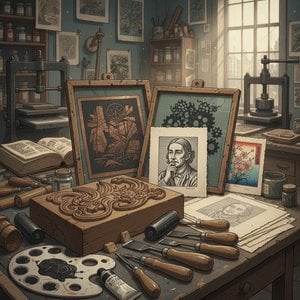
The Enduring Legacy of Printmaking: Techniques, Themes & Artistic Innovation Across Centuries
Explore the rich history of printmaking with ArtsDot. Discover techniques from intaglio to lithography, learn about collecting valuable prints & find museum-quality reproductions. Expert insights for art enthusiasts and collectors.

Echoes of Time: Exploring the Enduring Appeal & Historical Context of Vintage Art Prints
Explore the captivating world of vintage art prints! Discover their history, collecting tips & enduring appeal. Expert insights on chromolithography and building a legacy collection with ArtsDot.

The Enduring Allure of the Nude: A Historical & Artistic Exploration of the Human Form
Explore the captivating history of nude art! Discover iconic paintings & artists from classical to modern eras. Uncover symbolism, techniques & find museum-quality reproductions at ArtsDot.

Giclée Prints: Archival Quality & Aesthetic Nuances for the Discerning Collector
Explore the world of giclée prints with ArtsDot. Learn about archival quality, aesthetic nuances & investment potential. Expert guidance for discerning art collectors seeking museum-quality reproductions and lasting value.


