


 Ver en contexto
 Enviar
 Compartir
 Detalles

 Descargar
 Similares
 Radiografía
 Presentación de diapositivas
Journey
 Oil
Oil- WallArt
- Bengal School of Art
 1913
1913- 19th Century
 210.0 x 150.0 cm
 Galería Nacional de Arte Moderno
 Ver más
Reproducción al óleo hecha a mano
Óleo sobre lienzo pintado a mano en el tamaño y marco de su elección, realizado por encargo por nuestros artistas. ( Comprar impresión Comprar imagen)




P118B $10

P118H $10

P118W $10

P438Z $10

P508JH $12

P508YH $12

P805H $10

P805Z $10

P919BZ $10

P919G $10

P919XJ $10

P959ZH $10

P968JZ $12

W106C $8

W218G $10

W218JH $8

W218Y $10

W307PJ $10

W316G $10

W316PJ $8

W316Y $10

W398PJ $8

W4111J $10

W500HY $15

W500JH $15

W692G $12

W849H $8

W940BG $15

W953PJ $8




Elija entre nuestros tamaños predefinidos que respetan las proporciones originales de la obra.

Puede ingresar sus propias dimensiones para adaptarse a un marco o espacio específico. Si el tamaño seleccionado no coincide con las proporciones de la imagen original, recortaremos la obra o extenderemos la pintura con elementos adicionales pintados a mano. Se le enviará una maqueta digital para su aprobación antes de comenzar la producción.
Tenga en cuenta que la vista previa en pantalla no refleja el recorte o la extensión reales. Solo la maqueta mostrará con precisión la composición final.
Si bien existen tamaños personalizados, recomendamos seleccionar una dimensión de la lista predefinida para preservar las proporciones originales.
Tras realizar el pedido, el equipo de ArtsDot.com enviará un correo electrónico al cliente para solicitar instrucciones y proporcionarle una vista previa del boceto.
Envío a todo el mundo () en 3-4 semanas en lugar de las 5 semanas estándar. (1 septiembre). Sin comprometer la calidad.

Envío exprés gratuito a todo el mundo

Lienzo de lino de alta calidad

Seguro de envío total

Garantía de reembolso de impuestos aduaneros

Garantía de fidelidad cromática exacta

Política de devolución de 60 días (solo por defectos)

Garantía de devolución del 100% del dinero

Descuento por cantidad
 La opción de vidrio solo está disponible en tamaños inferiores a 110 cm.

Journey
Técnica de reproducción
Dimensiones de la reproducción
-


Precio total final
$ 263
The Soul of the Bengal School: A Study of Abanindranath Tagore’s Journey
In the twilight of the 19th century, a profound artistic revolution began to stir within the heart of India, led by a visionary who sought to reclaim a national identity through the brush. Abanindranath Tagore, a central figure of the illustrious Tagore family, stood at the forefront of this movement, challenging the rigid dominance of British academic realism. His masterpiece, Journey (often referred to as Journey’s End), serves as a poignant testament to this era of transition. Created in 1913, the painting is not merely a depiction of a weary animal; it is a soulful rejection of Western oil traditions in favor of a new, indigenous aesthetic that blended the delicate precision of Mughal miniature traditions with the ethereal, misty qualities of the Japanese wash technique.
The composition invites the viewer into a moment of profound stillness and quietude. At its center lies a camel, collapsed under the immense weight of a heavy load, resting upon a bed of cloth. There is an undeniable intimacy in how Tagore captures this scene; the subject matter—a traditional vignette of trade and travel—is stripped of grandiosity to focus on the raw, emotive essence of endurance. The palette is masterfully subdued, dominated by warm, earthy tones that evoke a sense of dust, heat, and the passage of time. Through his precise yet delicate linework, Tagore defines the contours of the camel’s body and the irregular folds of its burden, creating a rhythmic harmony between the organic forms of the animal and the textured layers of the surrounding fabric.
Technique and the Ethereal Atmosphere
What distinguishes Journey from the heavy, physical presence of contemporary European oil paintings is its luminous, almost translucent quality. Tagore utilized a technique that favored a soft, atmospheric glow over harsh shadows. The light appears to descend from above, casting gentle shadows that lend a subtle three-dimensionality to the forms without breaking the flattened, decorative perspective characteristic of the Bengal School. This approach creates a misty, dreamlike appearance, where the boundaries between the subject and its environment seem to blur into a unified, emotive atmosphere.
For the discerning collector or interior designer, this artwork offers a sophisticated balance of texture and tone. The brushstrokes, while appearing slightly rough in certain areas to suggest the grit of travel, are applied with a finesse that allows for a sense of light to permeate the surface. This interplay of light and shadow makes the piece an exceptional focal point for spaces that require a sense of calm, depth, and historical resonance. It is a work that does not shout for attention but rather commands it through its quiet, persistent beauty.
Symbolism and Emotional Resonance
Beyond its technical brilliance, Journey is steeped in profound symbolism. The camel, burdened by its heavy load after long distances, serves as a powerful metaphor for resilience and the indomitable spirit of endurance. It reflects the very struggle of the Indian art movement itself—the weight of colonial influence being carried toward a new, self-determined destination. The load represents the labor, commerce, and the heavy history of a nation in flux, while the stillness of the scene suggests a moment of necessary reflection and rest amidst the toil.
To possess a reproduction of this masterpiece is to bring a piece of the Bengali Renaissance into one's personal sanctuary. The painting evokes a melancholic yet peaceful mood, making it an ideal selection for those seeking to infuse their interiors with intellectual depth and emotional warmth. It remains an unforgettable image, capturing a pivotal moment in art history where tradition was not merely preserved but reimagined to create something truly eternal.
Obras relacionadas


Biografía del artista
Vida Temprana y Antecedentes
- Nacimiento: 7 de mayo de 1861, Joransanko, Calcuta, India Británica
- Fallecimiento: 5 de diciembre de 1951
- Familia: Miembro de la distinguida familia Tagore; sobrino de Rabindranath Tagore. Su abuelo fue Girindranath Tagore y su padre Gunendranath Tagore.
- Educación: Estudió en el Colegio Sanskrit de Calcuta en la década de 1880 y luego asistió a la Escuela de Arte de Calcuta.
Desarrollo Artístico e Influencias
- Primeros Estudios: Aprendió pasteles de O. Ghilardi y pintura al óleo de Charles Palmer en la Escuela de Arte de Calcuta.
- Estilos Mughal y Rajput: Buscó modernizar estos estilos, rechazando los modelos occidentales.
- Valores Swadeshi: Incorporó valores Swadeshi en su arte, promoviendo las tradiciones indias.
- Aestheticismo de Whistler: Influenciado por los principios estéticos de Whistler.
- Influencia Japonesa: Más tarde incorporó tradiciones caligráficas chinas y japonesas a su estilo después de conocer a los artistas Tikan y Hesida.
Obras Principales y Contribuciones Artísticas
- Rohini II: Una obra notable que muestra su habilidad artística.
- El Paso de Shah Jahan: Otra pintura significativa que refleja su estilo.
- Flor de Temporada en un Jarrón: Demuestra su dominio de la técnica y el tema.
- Serie de Las Mil y Una Noches (1930): Considerada uno de sus logros más destacados, utilizando historias de Las Mil y Una Noches para explorar Calcuta colonial.
- Bharat Mata: Una pintura significativa que simboliza a la Madre India.
- Fundador de la Escuela Bengalí de Arte: Desempeñó un papel fundamental en la configuración de la pintura india moderna y la promoción del arte nacionalista.
- Sociedad de Arte Oriental Indio (1907): Fundó esta sociedad para promover las formas tradicionales de arte indio.
Legado y Significado Histórico
- Pionero de la Pintura India Moderna: Reconocido como una figura clave en el desarrollo del arte indio moderno.
- Influencia en Artistas Posteriores: Mentor de artistas notables como Nandalal Bose, Asit Halder, Kshitindranath Majumdar y Jamini Roy.
- Revival de Formas de Arte Tradicionales: Abogó por un retorno a las técnicas y estilos indios tradicionales.
- Impacto en la Literatura Infantil Bengalí: Escribió libros infantiles influyentes como Rajkahini, Budo Angla, Nalak y Khirer Putul.
- Tesoro Nacional de Arte: Sus obras son consideradas Tesoros Nacionales de Arte.

Abanindranath Tagore
1871 - 1951 , India
Datos clave
- Artistas Influenciados:
- Nandalal Bose
- Kshitindranath Majumdar
- Jamini Roy
- Artistas Que Influyeron:
- Whistler
- Mughal artistas
- Rajput artistas
- Fecha De Fallecimiento: 5 de diciembre de 1951
- Fecha De Nacimiento: 7 de mayo de 1871
- Lugar De Nacimiento: Jorasanko, India
- Movimiento Artístico: Bengal School of Art
- Nacionalidad: Indio
- Nombre Completo: Abanindranath Tagore
- Obras Notables:
- Rohini II
- Paso de Shah Jahan
- Flor de temporada
Artículos relacionados

Raja Ravi Varma: Bridging Tradition & Modernity in 19th-Century Indian Art
Explore the life & art of Raja Ravi Varma, a pioneer who fused European techniques with Indian iconography. Discover his iconic paintings, lasting legacy, and influence on modern Indian art at ArtsDot.

La Escuela de La Haya: Realismo, Atmósfera y el Amanecer del Impresionismo Holandés
Descubre la Escuela de La Haya: el movimiento realista que revolucionó la pintura holandesa del siglo XIX. Analizamos a sus artistas clave, su técnica atmosférica y su influencia en el impresionismo. ¡Un viaje por el arte y la historia!

Los 10 Maestros del Río Hudson: Obras que Definieron un Movimiento Artístico
Descubre los 10 lienzos más emblemáticos de la Escuela del Río Hudson. Explora las obras maestras de Thomas Cole, Church y Bierstadt que capturan la belleza del paisaje americano. Encuentra reproducciones de arte exclusivas en ArtsDot.com.

El Sublime Paisaje Americano: Explorando el Movimiento de la Escuela del Río Hudson
Descubre la Escuela del Río Hudson: un movimiento artístico clave en la historia de la pintura estadounidense. Explora su estética romántica, sus artistas más destacados y el concepto del sublime paisaje americano.
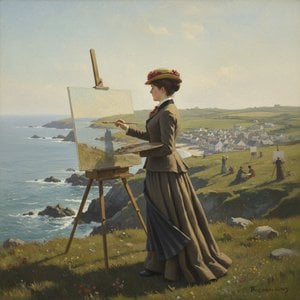
Elizabeth Adela Forbes: A Pioneering Impressionist of the Newlyn School
Explore the life & art of Elizabeth Adela Forbes, a pioneering Impressionist of the Newlyn School. Discover her captivating paintings, unique style, and lasting legacy with ArtsDot.


