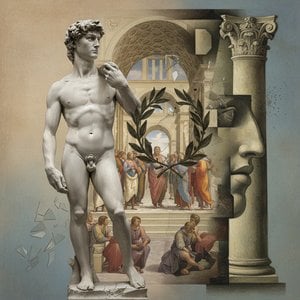
A Legacy Etched in Stone and Silk: The Soul of Athens
In the heart of Athens, where the whispers of antiquity meet the vibrant pulse of modern life, stands the Benaki Museum—a sanctuary of human creativity that transcends the mere boundaries of a gallery. To step into this institution is to embark on a profound journey through the very essence of Greek identity. Founded in 1930 by Antonis Benakis as a poignant tribute to his father, Emmanuel, the museum has blossomed from a private family devotion into a global beacon of cultural heritage. It is not merely a repository for the past, but a living, breathing dialogue between eras, where the echoes of prehistoric civilizations harmonize with the sophisticated aesthetics of the twentieth century.
The museum’s primary residence, the Benaki family mansion on Queen Sofias Avenue, serves as a breathtaking introduction to its grandeur. This neoclassical jewel, completed in 1897 by the architect Ernst Zaha, exudes an elegance that mirrors the Belle Époque aspirations of its benefactors. For the art lover and the interior designer alike, the architecture itself is a masterpiece; its stately façade and refined proportions provide a majestic stage for the treasures held within. The mansion’s walls do more than shelter art; they embody the intellectual heritage of Greece, offering an atmosphere of timeless sophistication that invites deep contemplation.
A Tapestry of Civilizations: From Byzantine Gold to Islamic Grace
The true magic of the Benaki Museum lies in its extraordinary breadth, a breathtaking panorama that captures the multifaceted nature of the Hellenic spirit. Within its galleries, one encounters a seamless transition of styles and textures. The collection is a masterclass in contrast and continuity, featuring sculptures that breathe life into the myths of Homer’s Iliad and Odyssey alongside the ethereal glow of Byzantine icons. These sacred works, meticulously crafted with shimmering gold leaf and vibrant pigments, offer a window into the spiritual heart of the Eastern Orthodox Church during its most luminous age.
Yet, the museum’s vision extends far beyond the borders of Greece, celebrating the dynamic interplay of East and West. The inclusion of exquisite Islamic Art—with ceramics adorned in intricate geometric patterns and delicate floral motifs—reveals a world of profound cultural exchange. As one wanders through the collections, the boundaries between civilizations blur; Persian influences, Roman grandeur, and Egyptian artistry converge to tell a story of a Mediterranean world that was never isolated, but rather constantly enriched by the movement of people, ideas, and beauty. This interconnectedness makes the Benaki an essential pilgrimage for those seeking to understand the complex roots of global art history.
A Living Institution: Preserving the Infinite
What distinguishes the Benaki Museum from a traditional archive is its role as an active participant in the contemporary cultural landscape. It is a place where history is meticulously preserved through state-of-the-art restoration workshops, ensuring that every fragment of pottery and every thread of silk remains vibrant for future generations. This commitment to preservation is matched by a dedication to education and community engagement, with satellite museums—such as the Museum of Islamic Art and the Ghika Gallery—offering specialized perspectives that deepen the visitor's narrative experience.
For the collector or the connoisseur, the museum offers more than just observation; it offers inspiration. The way the light falls upon ancient marble or the way a modern painting reflects the shadows of history provides a sensory richness that is rare in the modern world. Through its rotating exhibitions and scholarly depth, the Benaki Museum continues to challenge conventional narratives, fostering a deeper appreciation for the enduring power of human creativity. It remains an invitation to connect with the very soul of Greece, discovering a legacy that is as much about our shared human journey as it is about a single nation's glorious past.