

 Send
Send Share
Share
 Details
 Guide
Guide

 Download
 Similars
 Diaporama
 Q&A
Q&A Stats
StatsSt George


 Read More
Giclée / Art Print
Museum-quality giclée or canvas print with fast production and flexible finish options. ( Buy Hand Made Painting Switch to Digital Image)




































Pick from our preset sizes that match the artwork's original proportions.

Type the width and the height you need, to fit your frame or your wall. A print can only be cut, never made bigger than the picture, so a size with a different shape loses a part of the image. We send you a digital mockup to approve before we print anything. The picture shown on this page does not show the real cut — only the mockup does.
Worldwide Delivery () in 2 weeks instead of standard 4/5 weeks. (2 November)

Free Worldwide Express Shipping

High-Quality Linen Canvas

Full Shipping Insurance

Customs Tax Refund Guarantee

True Color Matching Guarantee

100-Day Return Policy (Defects Only)

100% Money-Back Guarantee

Bulk Discount Offer
 Glass option is only available in size under 110 CM

St George
Giclée / Art Print
Reproduction Size
-


Total Price
$ 63
The Knight’s Valor: Donatello's St. George
Donatello’s “St. George,” sculpted in 1416 for the Museo Nazionale del Bargello in Florence, isn’t merely a depiction of a biblical hero; it’s a potent distillation of Renaissance ideals – courage, virtue, and the burgeoning humanist fascination with classical antiquity. This marble statue, standing proud within the museum's hallowed halls, immediately commands attention not just through its imposing scale but also through the remarkably lifelike quality of its subject. The sculpture captures St. George in the midst of his legendary triumph over the dragon, a scene brimming with dramatic tension and heroic resolve.
Donatello’s genius lies in his masterful manipulation of form and texture. He eschews the overly stylized representations common in earlier medieval art, opting instead for a remarkably naturalistic approach. The musculature of St. George is powerfully rendered, conveying both strength and vulnerability. Note the subtle creases in his armor, meticulously sculpted to suggest movement and the weight of battle. The folds of his cloak ripple with an almost palpable energy, mirroring the dragon’s fury. Donatello's use of *contrapposto*, a technique borrowed from classical Greek sculpture where the figure shifts its weight, creates a dynamic sense of balance and poise – a hallmark of Renaissance art.
A Synthesis of Faith and Classical Influence
The creation of “St. George” occurred during a pivotal moment in Florentine history—the early Renaissance. Florence was experiencing a renewed interest in the artistic and philosophical achievements of ancient Greece and Rome. Donatello, deeply influenced by this revival, sought to integrate classical principles into his work while simultaneously retaining a distinctly Christian subject matter. The statue’s composition – reminiscent of Roman portrait sculpture – is a testament to this dual influence. The heroic stance, the idealized physique, and the emphasis on individual character all echo the values celebrated in classical art.
Furthermore, St. George himself held significant symbolic weight for the Florentines. He was revered as a protector against evil, a symbol of Christian virtue battling pagan darkness. The dragon, often interpreted as representing sin or temptation, is vanquished not through brute force alone but through faith and righteous action – mirroring the broader Renaissance emphasis on moral strength and spiritual fortitude.
The Dragon’s Shadow and the Hero's Resolve
Donatello doesn’t shy away from depicting the brutality of the encounter. The dragon, rendered with a terrifying realism—its scales meticulously detailed, its eyes burning with malevolent intent—looms large in the background, casting a dramatic shadow over St. George. This visual contrast underscores the hero's struggle and highlights his unwavering commitment to his faith. The spear, held aloft by St. George, isn’t simply a weapon; it represents divine intervention and the triumph of good over evil.
Despite the intensity of the scene, “St. George” possesses an underlying sense of dignity and composure. The hero's gaze is direct and unwavering, conveying both determination and a quiet confidence in his mission. This combination of action and serenity elevates the sculpture beyond a mere historical narrative; it becomes a timeless meditation on courage, faith, and the enduring power of the human spirit.
A Timeless Masterpiece for Collectors and Designers
Reproductions of Donatello’s “St. George” offer an exceptional opportunity to bring this iconic Renaissance masterpiece into any setting. Whether adorning a grand salon or a more intimate space, its powerful presence and exquisite detail will undoubtedly captivate viewers. The sculpture's inherent symbolism continues to resonate today, reminding us of the timeless values of bravery, faith, and the pursuit of righteousness. Consider how the cool tones of the marble and the dynamic composition can complement a variety of interior design styles – from classic elegance to modern minimalism.
Questions & Answers
What technique was used for "St George" by Donatello?
"St George" is executed in marble.
Can I use augmented reality to see "St George" by Donatello in my room?
"St George" by Donatello can be previewed on your own wall with the artwork's AR Preview page, using augmented reality on a compatible device.
What does "St George" by Donatello bring to an interior?
With its elegant mood, "St George" is suggested for a hotel lobby.
Related Artworks


Artist Biography
early life and career
donato di niccolò di betto bardi, known as donatello, was born in florence, italy around 1386. he studied classical sculpture, which heavily influenced his development of an early renaissance style. this new approach to art and culture would eventually become the hallmark of the florentine renaissance.key works and innovations
donatello's most famous work, david, was the first freestanding nude male sculpture since antiquity. commissioned by the medici family, it showcased his innovative style and technical expertise. other notable works include:- st. louis of toulouse (now in the museum of the basilica di santa croce), which featured a classical frame designed by donatello.
- the sacrifice of isaac, created for the campanile of santa maria del fiore in florence, characterized by strong portrait details.
- crucifix (1425) for santa croce, which portrayed christ in a moment of agony.
artistic style and legacy
donatello's style can be divided into broad phases, beginning with the development of expressiveness and classical monumentality. his work was not immediately accepted by the community but eventually became the most popular, influencing other italian courts and european artists. key art movements:personal life and working style
donatello was known for being amiable and well-liked, but poor at the business side of his career. he tended to accept more commissions than he could handle, often completing works late or handing them over to other sculptors. notable artworks and artists:- leonardo da vinci: annunciation (detail)
- amico aspertini: statua di pan/leone che azzanna un cavallo
- michelangelo buonarroti: tondo pitt
museums and art collections:
- museo della collegiata (empoli, italy): a hidden gem of the renaissance, featuring works by francesco botticini and raffaello botticini.
- the early italian renaissance art movement

Donatello
1386 - 1466 , Italy
Quick Facts
- Full Name: Donatello di Niccolò
- Nationality: Italian
- Date Of Birth: 1386
- Date Of Death: 1466
- Place Of Birth: Florence, Italy
- Notable Artworks:
- David
- St. Louis of Toulouse
- Sacrifice of Isaac
- Crucifix
- Artistic Movement Or Style: Early Renaissance
- Artists Who Influenced This Artist: ['Classical sculpture']
- Artists Or Movements Influenced By This Artist:
- Italian Renaissance
- Early Renaissance
- Florentine Renaissance
Related Articles
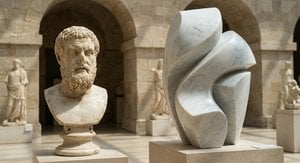
The Enduring Allure of Marble in Art History: From Classical Sculpture to Modern Abstraction
Explore the captivating history of marble sculpture from ancient Greece to modern art. Discover renowned artists like Canova & Michelangelo, carving techniques, and investment insights at ArtsDot.

Bronze Sculptures That Defined Art History | ArtsDot
Journey through art history with our Top 10 bronze sculptures! Explore masterpieces by Rodin, Michelangelo & more. Discover stories behind iconic statues and find museum-quality reproductions for your home decor at ArtsDot.com.

The Enduring Form: Exploring Themes & Techniques in Sculpture Across Historical Periods
Explore the rich history of sculpture from ancient masterpieces to contemporary innovations. Discover key techniques, influential artists & investment potential for discerning art collectors.

Mastering Cubism: The Top 25 Georges Braque Artworks
Explore 25 iconic Georges Braque masterpieces and the birth of Cubism. Discover museum-quality art on ArtsDot.com.

Georges Seurat's Masterpieces: 25 Paintings That Defined Pointillism | ArtsDot
Explore 25 iconic Georges Seurat paintings & discover the brilliance of Pointillism. From 'La Grande Jatte' to his harbor scenes, delve into art history with ArtsDot.com. Find museum-quality reproductions for your home decor. Explore the full collection online!


