


Πίνακας Περιεχομένων
Σημαντικά στοιχεία
- Featured artists:
- Melozzo da Forlì
- Giovanni Paolo Panini
- Location: Ρώμη, Ιταλία
- Works on APS: 3
- Alternate names:
- Παλιό Κυρκαλείο
- Κυρκαλείο
ΚВИΖ Τέχνης
Για κάθε ερώτηση υπάρχει μόνο μία σωστή απάντηση.
Palazzo Quirinale: A Symphony of Power and Art
The Palazzo Quirinale stands as a monumental testament to Italian history—a building that breathes with centuries of papal grandeur, regal ambition, and republican resilience. Located atop Monte Cavallo, Rome’s highest hill, it's more than just stone and mortar; it’s a living chronicle etched in frescoes, sculptures, and meticulously preserved gardens. Its story unfolds across millennia, beginning long before the Roman Empire itself, reaching its zenith during the Baroque era and continuing to resonate today as the seat of Italy’s presidency. ### Ancient Roots and Mythic Beginnings Archaeological excavations reveal evidence of habitation dating back to Etruscan times—the Quirinal Hill served as a sacred site for the Etruscans, who erected temples dedicated to deities like Jupiter Optimus Maximus and Juno Regina. The hill's strategic position ensured its importance throughout Roman history, witnessing successive rulers establish their dominion. Virgil’s Aeneid recounts the tale of Romulus and Remus—legendary twins rescued by a she-wolf and destined to found Rome—solidifying the Quirinal Hill’s place in Italian mythology as the birthplace of civilization. The temple of Jupiter Optimus Maximus, erected during the reign of Augustus, remains one of Rome's most impressive monuments, symbolizing imperial power and piety. ### Renaissance Splendor: Shaping a Palace for Papal Residence The palazzo’s transformation into a papal residence began in 1574 under Pope Gregory XIII—a visionary who sought to elevate Rome as the spiritual capital of Christendom. Domenico Fontana spearheaded the ambitious construction project, employing innovative engineering techniques to raise the palace's foundations and create its expansive courtyards. Carlo Maderno and Gian Lorenzo Bernini, titans of Baroque art, subsequently embellished the palazzo’s interiors with breathtaking frescoes and sculptures—Bernini’s Loggia delle Benedizioni exemplifies the grandeur and dynamism characteristic of the era, capturing the essence of papal authority and artistic patronage. The palace became a focal point for artistic innovation, attracting artists from across Europe and fostering a vibrant cultural environment. ### Baroque Majesty: A Celebration of Light and Form Gian Lorenzo Bernini’s Loggia delle Benedizioni is arguably the palazzo's crowning achievement—a monumental space designed to inspire awe and convey divine grace. Its soaring columns, intricate sculptures, and shimmering marble surfaces embody the Baroque aesthetic—characterized by dramatic contrasts of light and shadow, opulent ornamentation, and theatrical grandeur. The Loggia’s frescoes depict scenes from biblical narratives, reinforcing its symbolic significance as a testament to papal piety and artistic excellence. Bernini's masterful craftsmanship transformed the space into an unforgettable experience for visitors—a symbol of Rome’s artistic heritage and spiritual legacy. ### From Royalty to Republic: A Palace Through Time The palazzo transitioned into a royal residence during the unification of Italy in 1861—becoming home to monarchs who sought to solidify their nation's identity and prestige. The palace adapted to its new role as a symbol of national sovereignty, reflecting the evolving political landscape of Italy. In 1946, Palazzo Quirinale became the official seat of the President of the Italian Republic—a momentous occasion marking continuity amidst profound change—affirming Rome’s enduring importance as the heart of Italian democracy and culture. Today, the palazzo continues to host exhibitions showcasing contemporary art alongside its historic collections—demonstrating a commitment to preserving artistic heritage while embracing innovation and dialogue across generations. ### Gardens of Tranquility: Panoramic Views and Artistic Inspiration Beyond its opulent interiors lies a sprawling garden complex—a tranquil oasis offering panoramic vistas of Rome’s iconic landmarks, including St. Peter's Basilica and the Colosseum. Designed in the 16th century, these gardens exemplify Italian landscape design—characterized by geometric flowerbeds, rare tree species, and enchanting pergolas. The Fontana dell'Organo—a remarkable fountain featuring a functioning mechanical organ—adds a whimsical touch to the garden setting—serving as a reminder of Rome’s artistic past and its enduring fascination with innovation. These serene spaces inspire artists and visitors alike—providing a contemplative backdrop for appreciating Rome’s beauty and grandeur.Σχετικά Άρθρα
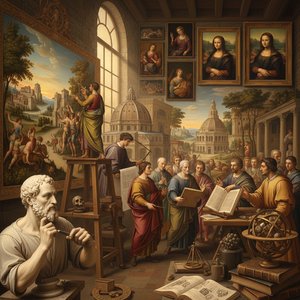
Η Διαχρονική Κληρονομιά της Αναγέννησης: Καινοτομία, Ανθρωπισμός & Αριστοτεχνία
Εξερευνήστε την Αναγέννηση: μια εποχή αριστοτεχνίας, ανθρωπισμού και καινοτομίας που διαμόρφωσε τον σύγχρονο κόσμο. Ανακαλύψτε τα μυστικά των μεγάλων καλλιτεχνών και τις ρίζες αυτού του πολιτιστικού θαύματος.


The Enduring Legacy of Architecture in Art: A Historical Survey of Representation & Meaning
Explore the rich history of architecture in art, from Renaissance theory to 19th-century reconstructions. Discover key artists & movements shaping visual representation – a guide for discerning collectors.

The Enduring Legacy of Architecture in Art: A Historical Survey of Representation & Aesthetic Influence
Explore the rich history of architecture's influence on art! Discover Renaissance perspective techniques, symbolism, & iconic masterpieces. Enhance your understanding with our expert analysis.
Κατάλογος Έργων Τέχνης
Δεν βρέθηκαν έργα τέχνης.


Εγγραφείτε στο ενημερωτικό μας δελτίο
Μείνετε ενημερωμένοι για τις τελευταίες ειδήσεις σχετικά με την τέχνη, αποκλειστικές προσφορές και ιδέες διακόσμησης.
Λάβετε 3 Δωρεάν Προτάσεις Έργων Τέχνης
Πείτε μας περισσότερα για το έργο σας και οι ειδικοί μας στην τέχνη θα σας προσφέρουν 3 εξατομικευμένες προτάσεις έργων τέχνης.
Not Sure Where to Start?
Let Us Curate 3 Options Just for You - Free!